Ayurvedic Spiritual History
What Is Amnaya Tantraka?
Amnaya Tantraka refers to a system of spiritual knowledge and practices, structured and transmitted throughout history within certain schools or initiatory lineages. In this context, “Amnaya” signifies a form of fundamental knowledge preserved and passed down from generation to generation, while “Tantraka” refers to the collection of methods and techniques applied to achieve spiritual aims and discover the inner resources of the human being.
Each of the renowned traditional Ayurvedic works—Charaka-Samhita, Sushruta-Samhita, Ashtanga-Hridaya, Kashyapa-Samhita, and Sharangadhara-Samhita—contains references, in greater or lesser detail, describing aspects specific to the Ayurvedic tradition. These traditional Ayurvedic writings each record events representative of the Ayurvedic tradition (Ayurveda-Amnaya), whether gatherings of Ayurvedic sages (rishi) or famous statements by great deities of the Ayurvedic tradition, such as the great god Indra.
The Ayurvedic tradition presents two representative streams. The first is the tradition of celestial or divine beings (Divya-pratna), referring to exceptional higher, superhuman beings such as Brahma, the great god of the Hindu Trimurti who represents God (Brahman) as Creator of the Universe; Daksha; the two Ashvins; the great god Indra; the great god Dhanvantari; the goddess Sarasvati; and the great god Agni. The second is the tradition of the Ayurvedic sages (Rishi-pratna), encompassing all the great Ayurvedic sages who each contributed, in their own way, to preserving and advancing this millennia-old Science of Life (Ayurveda): Atreya, Bharadvaja, Kashyapa, Sushruta, Nagarjuna, Marichi, Charaka, Agnivesha, Jatukarna, Harita, Kumara-Sira, Badisha, Jivaka, Bhela, Vagbhata, Ksharapani, Chayavana, Parashara, and Chakrapani.
The sphere of consciousness of each Ayurvedic sage can be approached through profound meditation, performed in an elevated, evocative manner by focusing on the sage’s distinctive qualities. Such meditations, intended to identify with the sphere of consciousness of a great deity or Ayurvedic sage, may reveal essential aspects that serve as subtle keys to higher forms of resonant affinity with the elevated sphere of consciousness of that being.
The appropriate activation of a heightened state of selective attention, then maintained for a period of time upon the representative aspects of the sphere of consciousness of such an exceptional being, allows the practitioner of this form of meditation to establish points of reference in their consciousness. These may then serve as genuine resonant keys for entering into and maintaining a state of spiritual, telepathic communion with the sphere of consciousness of that higher being.
Access Video Presentations
The Ayurvedic Sage Asvalayana-Rishi
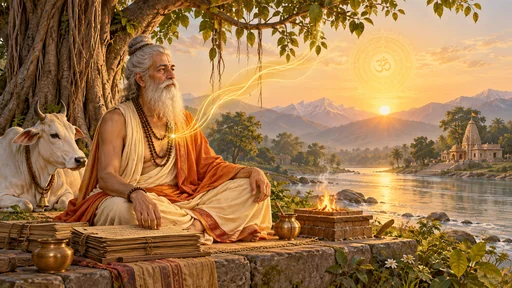
Asvalayana’s name appears among the great sages assembled in the Charaka Samhita, while the Rig Vedic tradition recognizes him as a disciple of Shaunaka and a guardian of established order. In the Prashna Upanishad, he asks the sage Pippalada about prana: where it comes from, how it enters a person, and how it finds its place there. This question opens an ancient mystery: how life, shared by all, assumes its own unique form within each of us.
The Ayurvedic Sage Katyayana-Rishi
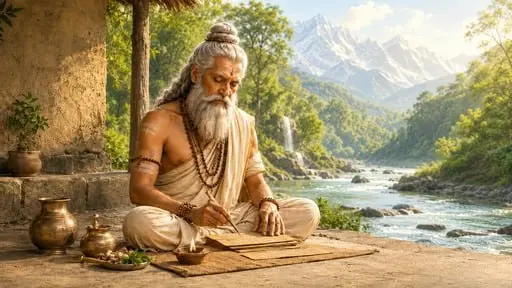
The sage Katyayana is recorded among the great rishi gathered in the original assembly described in the Charaka Samhita, in the opening chapter of the Sutra Sthana. His name—a patronymic formed with the Sanskrit suffix -ayana, which indicates descent from the lineage of Katya —designates one who continues a lineage of knowledge transmission. The teaching associated with his name draws attention to sound judgment, precision of language, and applied discernment: beyond asking “What is the appropriate intervention?” it asks “To what extent is it necessary?”
The Ayurvedic Sage Parikshi-Rishi

In the Ayurvedic tradition, the sage Parikshi-Rishi appears at the very beginnings of the science of life, among the great sages named in the Charaka Samhita. His name echoes the Sanskrit root pariksha —examination, careful investigation, and thorough verification—and, in Chapter 25 of the Sutra Sthana, he is the first to open the discussion of the deeper causes of human suffering. This places him as a representative of discriminating thought in Ayurvedic inquiry.
The Ayurvedic Sage Galava-Rishi

The Ayurvedic tradition sometimes mentions sages about whom the texts preserve only brief references, yet in meaningful contexts. The sage Galava is one of them. He is cited in the Charaka Samhita as a participant in the gathering of great sages who deliberated on the conditions of human health and well-being. Although the text provides no details about his particular role, his presence in this setting shows that Galava belonged to the circle of great authorities on the science of life.
The Ayurvedic Sage Sarkaraksha-Rishi
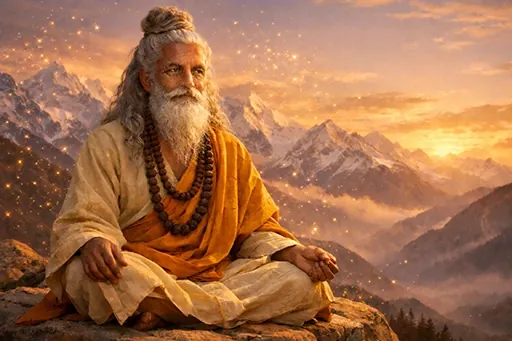
The introductory Sutra Sthana section of the Ayurvedic work Charaka Samhita describes a gathering of great sages (rishi) at the foot of the Himalayas. They met to find solutions and remedies for emerging difficulties, illnesses, and suffering, and to restore the conditions of a healthy life through effective methods. Of all the names recorded in the text, only three share the ending aksha (eye, sight), and these appear together in sequence: Sarkaraksha, Hiraṇyaksha, and Lokaksha.
The Sage Gargya-Rishi
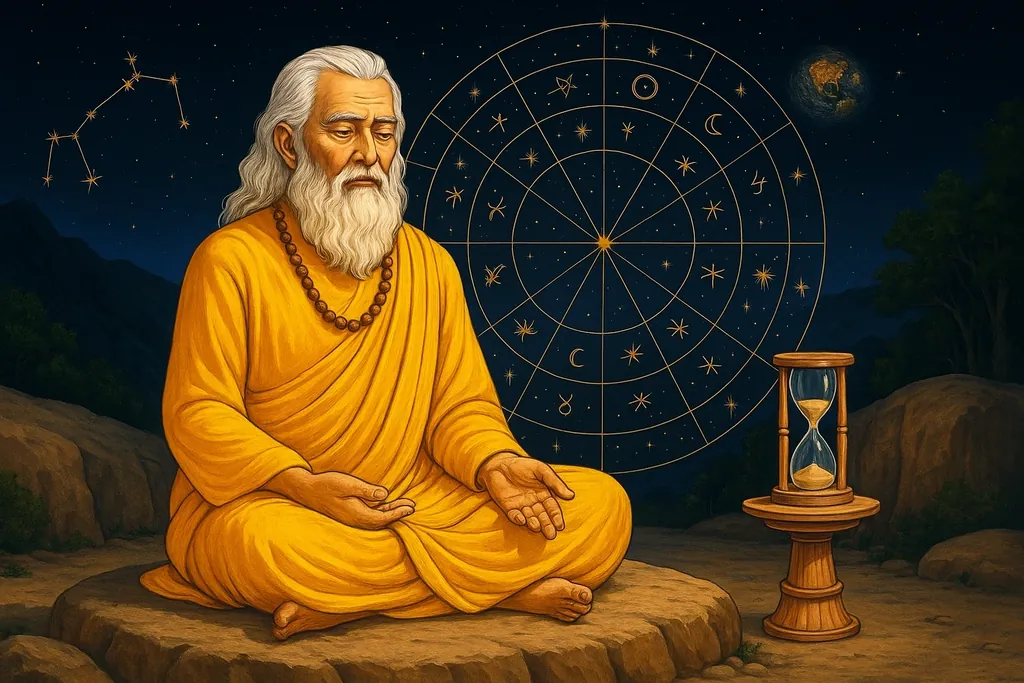
The Ayurvedic sage Gargya is one of the notable figures from the beginnings of the Ayurvedic tradition, mentioned in the Charaka Samhita as a participant in the assembly of great rishi led by the great sage Atreya. A descendant of the Vedic lineage of Garga, he brings together teachings about macrocosmic order and the science of life, offering a vision that unites an understanding of the universe with an understanding of the human being.
The Sage Ashmarathya-Rishi

The sage Ashmarathya is one of the lesser-known yet highly authoritative figures within the Vedic and Ayurvedic traditions. His name appears in the account of the sacred assembly held at the foot of the Himalayas, where an impressive number of the great rishi of that era gathered to seek solutions to the suffering and fragility of human life.
The Ayurvedic Sage Vamadeva-Rishi

The sage Vamadeva is a prominent figure in the Indian spiritual tradition, known for the depth of his practices and the way he employed the power of words and consciousness in the process of inner transformation. Drawing on Vedic principles and a practical understanding of human nature, he inspired valuable approaches to regeneration, purification, and the elevation of the human being.
The Ayurvedic Sage Shukracharya

The sage Shukracharya, also known as Usanas, is a legendary figure in the Ayurvedic tradition, valued for his clarity, pure knowledge, and practical wisdom. These qualities are reflected in his extensive contributions to a deeper understanding of Ayurveda, ethics, and strategies intended to support harmony, spiritual transformation, and collective well-being.
The Ayurvedic Sage Nimi-Rishi

King Nimi, a legendary figure and one of the great Ayurvedic sages of the ancient Indian tradition, is recognized for his significant contributions to strengthening and applying the principles of Ayurveda. He distinguished himself not only through his involvement in holistic medicine but also through his profound practice of yoga, wisely combining knowledge of healing with spiritual discipline.
The Ayurvedic Sage Maudgalya-Rishi

The Ayurvedic sage Maudgalya promoted a holistic view of human beings and health, emphasizing the connections between body, mind, and spirit. This perspective deeply influenced the practice of Ayurveda and therapeutic approaches, highlighting the complex interconnections of human nature.
The Ayurvedic Sage Saunaka-Rishi

Statements attributed to the sage Saunaka offer a distinctive perspective on how the structure of the human being and its dynamics were perceived and understood in the past by the great Ayurvedic sages (rishi).
The Ayurvedic Sage Sharaloma-Rishi

The name Sharaloma is a compound derived from “shara,” a term connected to the word “shirsha” (head), and “loma,” meaning hair (hair on the head). The symbolism of this name points to an ancient custom whereby great ascetics allowed their hair to grow very long, indicating an enhanced capacity to receive certain subtle energies from the macrocosm in this way.
The Ayurvedic Sage Hiranyaksha-Rishi

In ancient esoteric teachings, the word “hiranyaksha” is used to designate a quest of the human spirit that carries consciousness beyond the tangible limits of embodied material existence and encourages human beings to discover the light (shining gold, hiranya) and the riches (artha) present, at least in a latent state, within each person’s spiritual heart.
The Ayurvedic Sage Jamadagni-Rishi

Jamadagni is the name of a great ancient sage from Hindu mythology, widely regarded as a renowned practitioner of traditional spiritual methods, a profoundly insightful sage (rishi), and a human being endowed with an exemplary state of holiness.
The Ayurvedic Sage Asita-Rishi

The sage Asita is described as an elderly monk. Written accounts recording local popular traditions portray him as an expert in numerous fields of knowledge of his time, a great scholar, and a celebrated ascetic. With a spiritual discipline and way of life considered exemplary, Asita was seen as a model spiritual practitioner and an accomplished yogi.
The Ayurvedic Sage Jivaka-Rishi

The sage Jivaka is an emblematic figure in the Ayurvedic tradition. His name, derived from Sanskrit, means “that which lives” or “a living being,” suggesting a profound connection with the vital forces of nature.
Enrollment and Participation
How to Access the Presentations
The presentations are available exclusively as recordings, giving participants the freedom to access the content at any time, without scheduling restrictions, and the flexibility to manage their own schedules.
How Can I Watch?
To access the presentations, please complete the required payment. Once payment is complete, you can watch the recordings directly on this website page.
Participation Cost
Each recording can be viewed for just 38 lei.
Access Period
Access to each recording is available for 60 days from the payment date.