Ayurvedic Thematic Explorations
Ayurvedic thematic explorations offer a structured, in-depth introduction to the fundamental concepts of this traditional system of knowledge. They clarify key terms and essential ideas, bring out their practical relevance, and help readers relate Ayurvedic principles to everyday life. This section aims to illuminate their meaning and applications, providing guidance for understanding and personal exploration.
What Are Thematic Explorations?
Terms such as “rasayana,” “vajikarana,” “agni,” “manas,” “sattva,” and “sattvavajaya” may initially sound remote from everyday life. Yet in their Ayurvedic context, they address fundamental themes such as lasting health, inner balance, clarity, and vitality. Through detailed presentations and explanations, these ideas can become useful points of reference for anyone seeking a more conscious and harmonious way of living, whether through nutrition, natural care, or a more balanced lifestyle.
Over time, Ayurveda has developed into a rich, practical, and deeply human-centered system that offers accessible approaches to well-being. Among its valuable resources are medicinal plants, which are also studied in Western herbal medicine. For those wishing to explore this area more closely, the volumes in the “Index ayurvedic sistematic selectiv” series serve as guides to understanding medicinal plants and their traditional uses.
Ayurvedic concepts also continue to inspire the development of newer alternative approaches, such as narrative therapy, psychophonotherapy, and volitional therapy. These perspectives are presented as potentially relevant to modern life, opening avenues for integrative approaches that consider the physical, psycho-emotional, and spiritual dimensions of human experience.
Access Video Presentations
Analyzing and Understanding Lifestyle Through the Lens of the Experiential Landscape

Why do two people living under similar circumstances lead such different lives? The presentation begins with the experiential landscape (anubhava-vinyasa)—how each of us selects, values, and organizes experiences—and asks how much we can consciously change our own lifestyle.
An Interdisciplinary Study of the Cognitive Dynamics of Instrumental Consciousness

What is the difference between data, information, and knowledge? Attention selects, consciousness organizes and evaluates, and accumulated experience helps create meaning. This perspective relates modern cognitive research to the traditional description of instrumental consciousness, antahkarana: manas, buddhi, citta, and ahamkara.
Autonomous Attention and the Emergence of Value in Cognitive Space

Attention can be understood not only as a mechanism for selecting information but also as an active principle that organizes cognitive experience. When directed coherently inward, it can help structure meaning, consolidate understanding, and generate new forms of cognitive value.
Synergology: The Study of Body Language

We communicate not only through words but also through posture, gaze, gestures, and bodily responses. Synergology examines posture, demeanor, and small movements systematically and, in this presentation, relates them to Ayurvedic constitutional types and the dynamics of the kapha, pitta, and vata doshas.
Awareness and Understanding

We may become aware of a state without understanding its origin, just as we may explain a phenomenon without having observed it directly in our own experience. Awareness, samvedana, and understanding, avabodha, are two distinct yet complementary dimensions of knowing.
The Volitional Function of Consciousness

Why do some intentions become reality while others remain wishes? Will is more than motivation or resolve: it is how a chosen direction is sustained and turned into action, step by step. The Ayurvedic perspective, considered alongside ideas from psychology and neuroscience, offers ways to understand the transition from intention to accomplishment.
Sapta-Samaya – The Seven Stages of Harmonious Existential Integration

Sapta-Samaya describes seven stages of harmonious existential integration, an ascending system of conscious transformation. Presented as a counterpart to Shat-kriya-kala—the six stages of health deterioration—and attributed to the sage Atreya, the system offers a way to observe inner development one stage at a time.
Healing Plants in the Christian Tradition
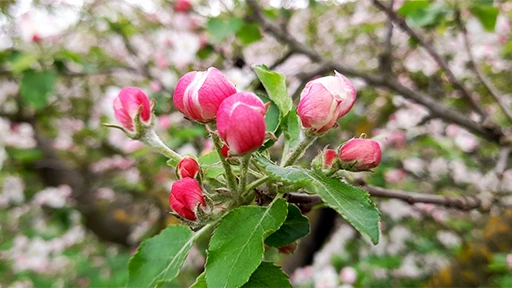
Healing plants in the Christian tradition offer a perspective on nature as a gift of divine compassion. The topic ranges from plants mentioned in Scripture—such as hyssop, myrrh, aloe, the olive tree, and the grapevine—to their use in monastic settings and folk culture.
“Secret Medicine” – Gupta-Cikitsa

Teachings attributed to the sage Atreya and recorded in the Charaka-Samhita describe a distinct therapeutic approach known as Gupta-Cikitsa, or “secret medicine,” concerned with subtle causes of illness and conscious activity within the sphere of consciousness.
Vimshati Guna and Human Adaptive Processes

The Vimshati Guna system describes the 20 general qualities of the Ayurvedic tradition, providing a conceptual framework for understanding physiological responses and the emotional, mental, and behavioral dynamics involved in human adaptation.
Herbal Applications Based on Constitutional Criteria in Prakriti-Nikasha

Prakriti-Nikasha is a specialized branch of Ayurveda devoted to assessing constitutional criteria. Herbal practice based on those criteria is described as an art of contextual adaptation, in which plants may be used with the aim of gently and precisely restoring constitutional balance.
Avesha

The term avesha means “complete penetration,” “total infusion,” or “becoming one with something.” Throughout history, different traditions have described this state of identificatory absorption of consciousness as mystical ecstasy, samadhi, or a state of unity.
Focusing Consciousness

Focusing is a process of attention that directs the cognitive resources of consciousness toward a particular object, phenomenon, thought, or task while filtering out aspects considered unnecessary or irrelevant to the intended goal.
Historical Perspectives on Herbal Medicine

Herbal medicine is among the oldest and most enduring approaches to human health. From the ancient civilizations of Egypt, China, and India to Greco-Roman traditions and the renewed study of medicinal plants in modern times, herbal practice has evolved from empirical traditions into a field also informed by scientific research.
Volitional Therapy

The Panchadasa Virya system, attributed to the Ayurvedic sage Nimiraja, offers a framework for understanding inner forces through which a person may cultivate the capacity to act consciously in directions that support spiritual development and inner balance.
A Cognitronic Perspective on Unconventional Thinking

According to this presentation, cognitronics—the esoteric study of the existence and manifestation of cognitronic flows (Prabodha-Vijnana)—was initiated by the sage and yogi Bharadvaja. Within this tradition, cognitronics is said to offer prepared practitioners access to a higher, supramental form of knowledge.
Optimizing Cognitive Performance Through Pratyahara Practices That May Enhance Inhibitory Brain Functions

Comparing descriptions of pratyahara (withdrawal of the senses) in ancient Eastern texts with contemporary neuroscientific explanations of nervous-system control reveals intriguing parallels. This perspective highlights our capacity for self-regulation and suggests connections between traditional wisdom and modern scientific findings.
Registration and Participation
How to Access
The presentations are available exclusively as recordings, allowing participants to watch at any time and manage their schedules flexibly.
How can I watch?
To access the presentations, please complete the required payment. Once payment is complete, you can watch the recordings directly on this website.
Participation Fee
Each recording is available to watch for just 38 lei.
Access Period
Access to a recording lasts for 60 days from the date of payment.