| 1 | Dialogue on developing knowledge of Ayurveda in Romania |
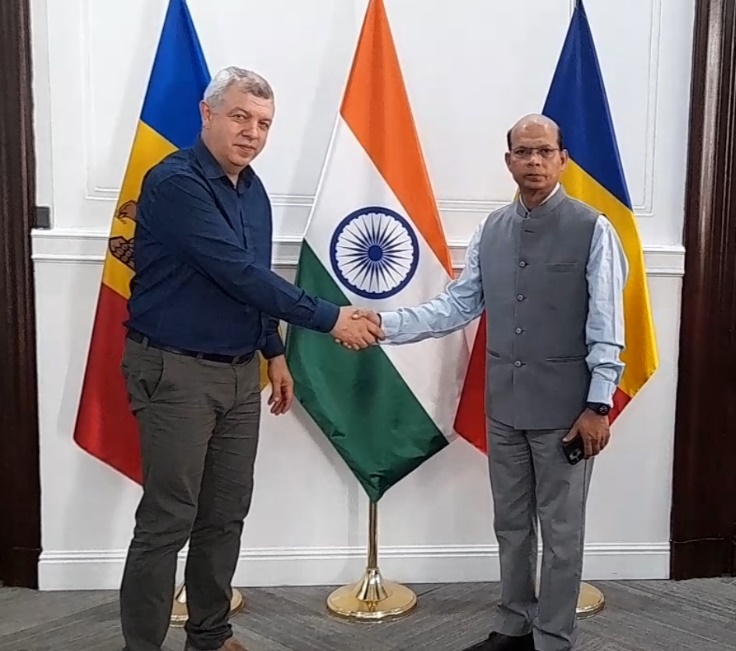
Meeting between His Excellency Dr. Manoj Kumar Mohapatra, Ambassador of India to Romania, and Andrei Gămulea, president of AMN-România.
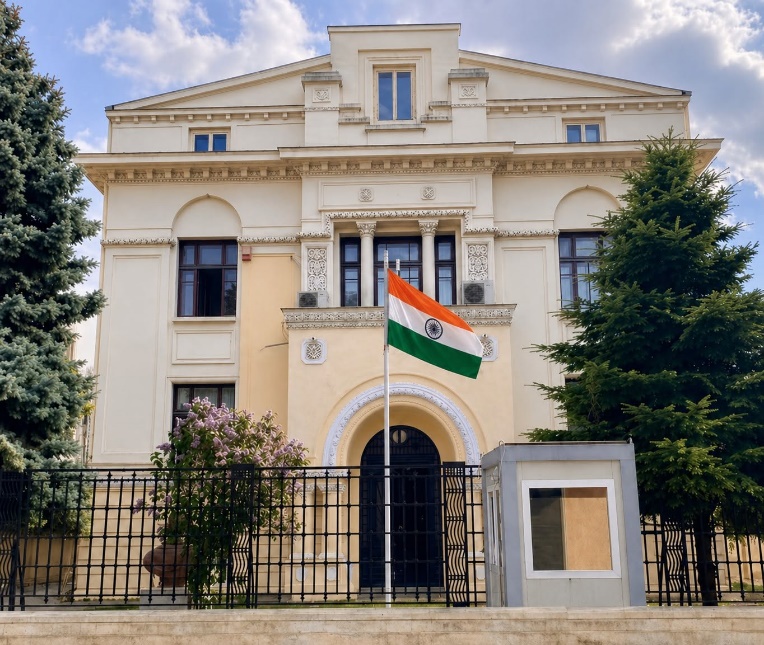
On July 31, 2026, a meeting took place at the Embassy of India in Bucharest between His Excellency Dr. Manoj Kumar Mohapatra, Ambassador of India to Romania, and Andrei Gămulea, president of the National Association for the Promotion of Nonconventional Medicines in Romania (AMN-România) and coordinator of the AYUSH Information Center – Ayush Cell Romania.
The discussion provided an opportunity for a broad and comprehensive presentation of activities in Romania aimed at promoting knowledge of Ayurveda.
It also highlighted the value of ongoing dialogue between Indian representatives and Romanian organizations involved in health education, medicinal plant research, and deeper study of the traditional Ayurvedic system.
Andrei Gămulea described the continuing development of activities coordinated by Ayush Cell Romania and AMN-România to promote knowledge of the different branches of Ayurveda.
Over more than 30 years, Ayurveda study and research centers have been established, together with an extensive network of educational and promotional activities in different localities and online.
A varied range of current activities supports the transmission of traditional Ayurvedic knowledge, and participation in the different Ayurveda study and training programs organized in Romania through Ayush Cell Romania, AMN-România and Ayus Grup România has been substantial.
These results demonstrate sustained interest in Ayurveda in Romania. They also show the ability to organize coherent programs and bring together people interested in Ayurvedic principles, balanced lifestyles, and traditional natural resources.
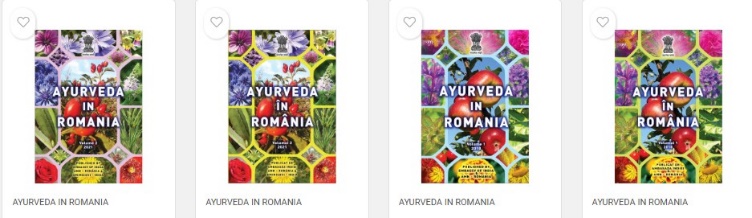
An important part of the discussion concerned the bilingual publishing series Ayurveda in Romania. Through its Romanian- and English-language content, the series publicizes the results of documentation activities and provides a broad picture of how Ayurveda has been received in Romania.
The volumes help circulate information between Romania and India and highlight interest in medicinal plants, their many properties, and traditional ways of understanding health.
Bilingual publication allows work produced in Romania to become known abroad. The series thus serves as a publishing record of the continuity of these activities and the connection between the two cultural spheres through Ayurvedic knowledge.
His Excellency Dr. Manoj Kumar Mohapatra supported continued dialogue and emphasized the importance of a scientific foundation for understanding Ayurveda. Research findings have universal value, but their presentation must be adapted to each country’s context.
In Romania, this approach can take account of experience already gained with medicinal plants and the long tradition of local Romanian phytotherapy.
The discussion highlighted the particular attention India gives to scientific research into Ayurvedic knowledge.
Rigorous data facilitates communication with specialists from different fields and allows a more precise understanding of Ayurvedic principles, mechanisms, and applications. Research thus becomes a shared language through which traditional Ayurvedic experience can engage with the standards of contemporary knowledge.
Andrei Gămulea pointed out that this scientific dimension can be linked to areas already developed in Romania and Europe.
Cooperation with institutions responsible for plant-related matters offers a direct perspective on how traditional information can be presented rigorously and responsibly. The dialogue also emphasized the need to present Ayurveda as a complex system of knowledge.
Ayurveda encompasses a profound vision of life, the relationship between human beings and the environment, and the factors contributing to balance.
Understanding Ayurveda requires connecting several levels, from personal processes to the broader relationships that integrate human beings into nature and society. This perspective explains the diversity of educational, promotional, and research activities developed in Romania.
Education, documentation, medicinal plant research, publishing, and dialogue with specialists are complementary expressions of the same commitment to a thorough understanding of Ayurveda.
The results achieved have led to institutional structures capable of sustaining regular study programs and making a substantial contribution to establishing Ayurveda in Romania.
The July 31, 2026 meeting was characterized by openness and shared appreciation of the role of knowledge, research, and dialogue.
The favorable position expressed by His Excellency Dr. Manoj Kumar Mohapatra confirms the importance of direct communication and a clear presentation of results achieved in Romania in studying and promoting Ayurveda.
Through accumulated experience, the breadth of educational activities, and continuity of publishing projects, Ayurveda has an active, well-established presence in Romania.
The dialogue at the Embassy of India highlighted this reality and reaffirmed the value of bringing Romania and India closer through a particularly valuable traditional body of knowledge that continues to be studied, documented, and shared for the benefit of everyone.