| 1 | International Ayurveda Lecture at DMIHER Wardha on Evaluating Formulations from Charaka Samhita |
Academic Collaboration Between Romania and India to Advance Ayurvedic Clinical Reasoning Among Undergraduate and Postgraduate Students
An International Academic Setting for Dialogue and Education in Ayurveda
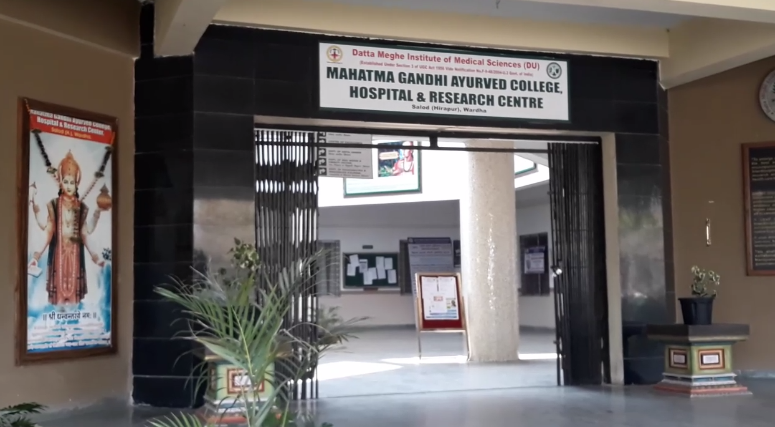
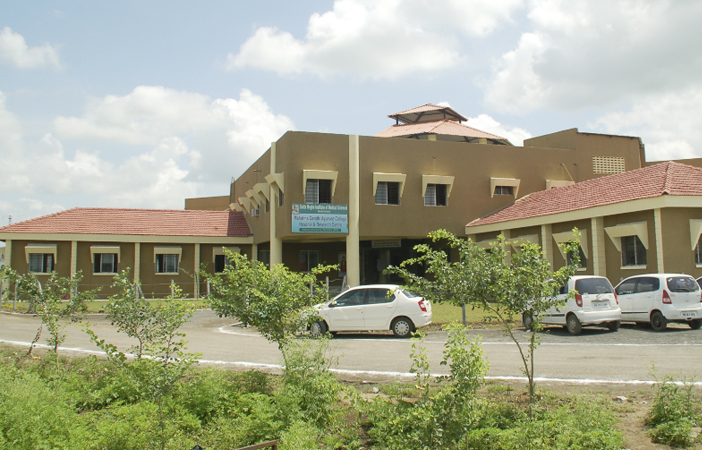
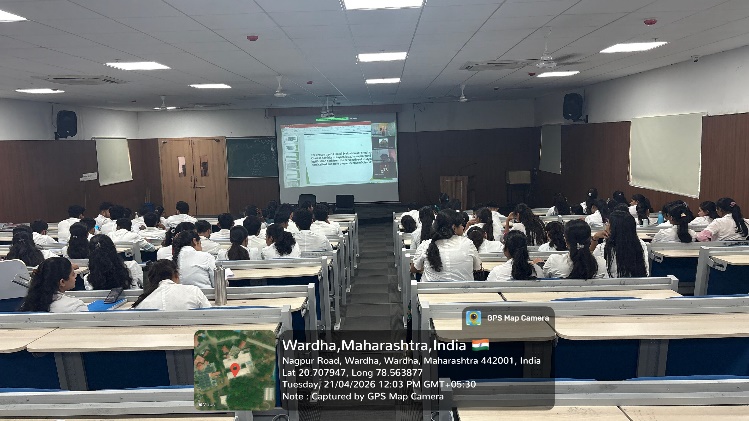
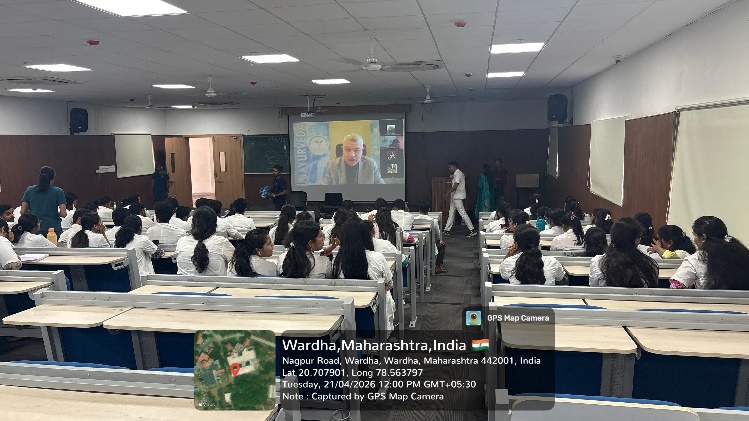
On April 21, 2026, an online academic meeting organized by Datta Meghe Institute of Higher Education and Research (DMIHER), Wardha, and Mahatma Gandhi Ayurved College, Hospital & Research Centre (MGACH&RC), Salod, featured a lecture for undergraduate and postgraduate students in the Department of Kayachikitsa.
The event, coordinated by the Department of Kayachikitsa, brought together students and faculty from India for international discussion of fundamental Ayurvedic knowledge. The presentation delivered by Andrei Gămulea, a representative of Ayush Cell România and president of AMN-România, formed part of active Romania–India collaboration in Ayurveda, focused on sharing knowledge and deepening understanding of its clinical dimension.
Methodological Foundations of Clinical Assessment in Charaka Samhita
The lecture, “Clinical Evaluation of Charaka Formulations in Kayachikitsa,” emphasized the central role of Vimana-Sthana in organizing Ayurvedic clinical reasoning. This section provides an essential methodological framework for the systematic transition from diagnostic assessment (nidana) to treatment (cikitsa).
It emphasized that Ayurvedic formulations are therapeutic structures based on precise relationships among the dosha, agni, dhatu, srota, and individual patient characteristics. Assessment bridges clinical observation and therapeutic decisions.
Ayurvedic Assessment Is an Essential Step Between Diagnosis and Treatment
A central aspect of the presentation was the role of Ayurvedic assessment as the link between diagnosis and treatment. This step allows clinical information to be evaluated consistently and interventions to be properly directed. Two fundamental sets of reference points were presented: ten parameters for accurate Ayurvedic diagnosis (including analysis of causes, symptoms, predominance, and disease progression) and twelve factors preparing for treatment (dosha, remedy, patient condition, timing, constitution, nutrition, etc.). Together, they form a comprehensive assessment framework for adapting interventions to actual circumstances.
The Role of the Rasa–Dosha Relationship in Selecting and Evaluating Ayurvedic Formulations
Another important topic was the role of taste (rasa) as a fundamental assessment tool. Taste was described as a functional bridge between a remedy and the dosha, providing clinicians with an accessible language for understanding therapeutic formulations' direction of action.
The rasa–dosha relationship was presented as a selection criterion, highlighting how different tastes influence the balance of vital principles and help direct therapy. This provides a direct link between a patient's condition and the remedy's properties.
Vipaka, the Recipient's Condition, and the Principle of Predominance in Clinical Assessment
The lecture also addressed essential concepts in advanced clinical practice, including vipaka (post-digestive effect), the recipient's condition, and the principle of predominance (pradhanya). Vipaka was presented as an indicator of a substance's actual effect after digestion and as a crucial factor in assessing therapeutic effectiveness.
The presentation emphasized that formulation assessment cannot be separated from patient assessment, because each intervention takes place in a particular biological and functional context. The principle of predominance also gives clinicians guidance in complex situations, enabling them to identify the dominant factor shaping the clinical picture and therapeutic decisions.
Examples, Practical Applications, and Educational Relevance to Participants
Examples were drawn from classical chapters of Charaka Samhita, including Jvara Chikitsa, Prameha Chikitsa, Atisara Chikitsa, and Kasa Chikitsa, to illustrate these traditional Ayurvedic principles in practice. They showed how formulation selection depends on assessing the disorder's stage, dosha predominance, digestive condition, and patient characteristics. For participating students, these examples provided immediate insight into the relationship between theory and practice and helped develop nuanced, adaptable clinical reasoning.
An Expression of Romania–India Academic Collaboration in Ayurveda
The April 21, 2026 lecture offered a concrete example of academic collaboration between Romania and India in Ayurveda, reflecting a shared interest in deepening traditional Ayurvedic knowledge in a contemporary university setting. The participation of undergraduate and postgraduate students confirmed the subject's relevance and the openness to international dialogue in educating future Ayurvedic practitioners. Such initiatives reaffirm Ayurveda as a universal system of knowledge capable of bringing tradition and practice together in a global educational environment grounded in rigor, discernment, and academic cooperation.