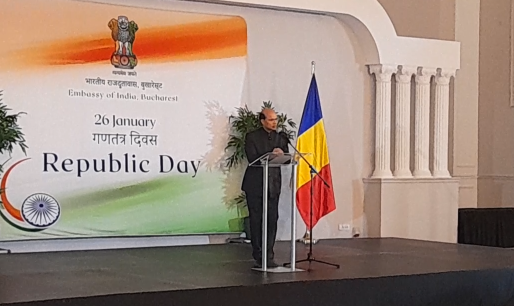
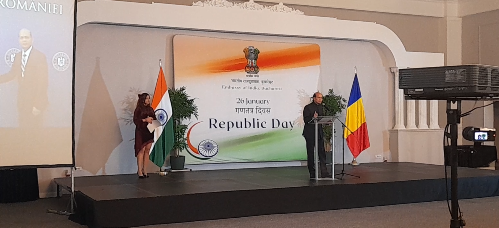
India Day 2026: Celebrating the 77th Anniversary of the Republic of India
An event highlighting opportunities for strategic cooperation in key areas such as education, energy, digital transformation, investment, and stronger international partnerships.
India and Romania: Strategic Milestones in a Strengthened Bilateral Dialogue, Marked at the 2026 Republic Day of India Celebration
Explanatory notesExplanatory notes
Specialized courses
Ayurvedic Nutrition – Fundamental Principles and Practical Application
An introductory course exploring nutrition as a process of regulation, adaptation, and support for personal balance.
The Ayurvedic nutrition training program offers a structured approach to nutrition from an Ayurvedic perspective. Food is understood not merely as a source of substances, but as part of the complex relationship between a person, their constitution, their environment, and their overall condition. The program introduces the fundamental principles governing nutrition in Ayurveda, with an emphasis on connecting foods to Ayurvedic constitutional type, digestive capacity, and personal circumstances.
The first module of this Ayurvedic nutrition training program clarifies the role of digestion (agni), food qualities (guna), and the ways foods are combined and prepared, providing a coherent framework for making dietary choices.
The content is organized to support both theoretical understanding and the practical application of Ayurvedic principles in everyday life.
The applied practical Ayurvedic nutrition training program is intended both for beginners in Ayurveda and for those seeking a solid foundation in the relationship between nutrition, inner balance, and health. It provides an important basis for further study of Ayurvedic knowledge and of a lifestyle aligned with Ayurvedic principles.
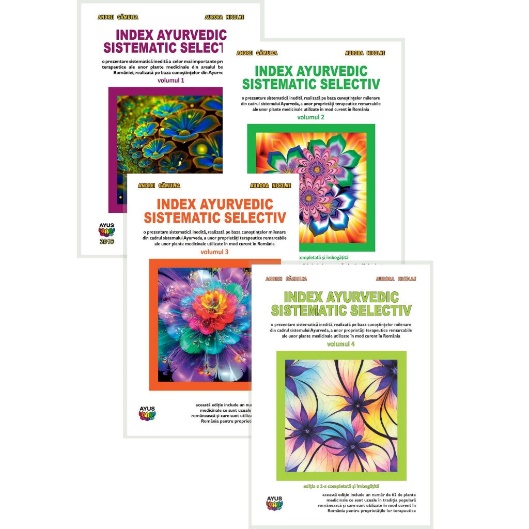
Selective Systematic Ayurvedic Index – Medicinal Plants of Romania – Volumes 1–4
An extensive synthesis of Ayurvedic tradition and contemporary uses of medicinal plants.
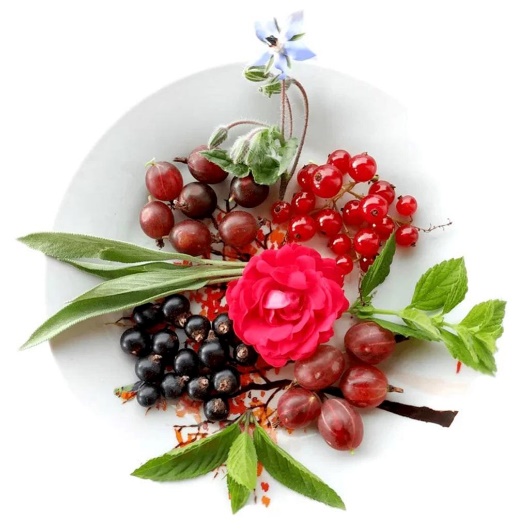
The 248 medicinal plants selected and profiled in the four volumes of the Selective Systematic Ayurvedic Index are plants traditionally used in Romania and elsewhere in Europe, recognized for their many beneficial properties for health and the body's functional balance.
Types of Ayurveda Courses – A Guide to Educational Resources
To help readers navigate educational resources clearly and consistently, Ayurveda Agenda uses precise terminology to describe the types of changes made to written Ayurveda lessons. The distinctions below explain both the degree of novelty and the extent of changes made to these study materials.
New course: content introduced for the first time into the structure of written Ayurveda courses
Explanatory note
Revised course: existing content refined with updated terminology, without changing its structure
Explanatory note
Updated course: existing content that has been expanded, supplemented, completed, or reconfigured
Explanatory note
Three New Courses for Ayurveda Study Year 32 – Therapeutic Discernment in Evaluation Processes (Phalamātrā-Siddhi)
Lessons 1–3 of the Phalamātrā-Siddhi chapter, Siddhi-Sthāna section, explain how the effects of ingredients are evaluated, emphasizing the role of therapeutic discernment.
This series includes three Ayurveda courses for Study Year 32 (Siddhi-Sthāna section, Phalamātrā-Siddhi chapter), lessons 1–3 (2026 edition), available as easy-to-read A4 PDFs and foldable A5 PDFs. These three new courses may be requested only by participants in Study Year 32 who are studying or have completed this chapter.
Phalamātrā-Siddhi – Therapeutic Discernment and Measuring Effects in Ayurveda (Lessons 1–3)
Explanatory noteExplanatory note
Three New Courses for Ayurveda Study Year 2 – Kapha-Dosha Balance and Signs of Kapha-Dosha Imbalance in Svasthavritta Practice
Lessons 20–22 of the Svasthavritta chapter, Dosha-Vaiṣamya section, describe the expression of kapha-dosha in a state of balance and harmony, as well as the mechanisms through which that state may be disrupted.
This series includes three Ayurveda courses for Study Year 2, lessons 20–22, available as easy-to-read A4 PDFs and foldable A5 PDFs. They complete the series on signs of dosha imbalance in the Svasthavritta section, focusing on the dynamics of kapha-dosha in everyday life. Graduates of Ayurveda Study Year 2 who have covered this chapter may request these courses.
Svasthavritta – The Balanced State of Kapha-Dosha and Signs of Kapha Imbalance (Lessons 20–22)
Explanatory notes
Current Procedure and Requirements for Requesting Written Ayurveda Course Materials
Requests may be sent by email to ayusgrup@gmail.com. After the details in the request have been verified, a response will be sent to the specified email address, in the order requests are received, within up to 14 days. Requests must state the Ayurveda course group in which you participate through AMN-România, Ayush Cell Romania, or Ayus Grup, as well as your Ayurvedic Practitioner Code (CPA) assigned to you, consisting of five digits. Required information:
Written Ayurveda course materials: study year [year], section [section], chapter [chapter], lesson numbers [nr-nr], A4 and A5 formats, full name: [First Name Last Name], CPA (5 digits): [12345], course group: [number], [city], email: [email@exemplu.ro].
Current updates
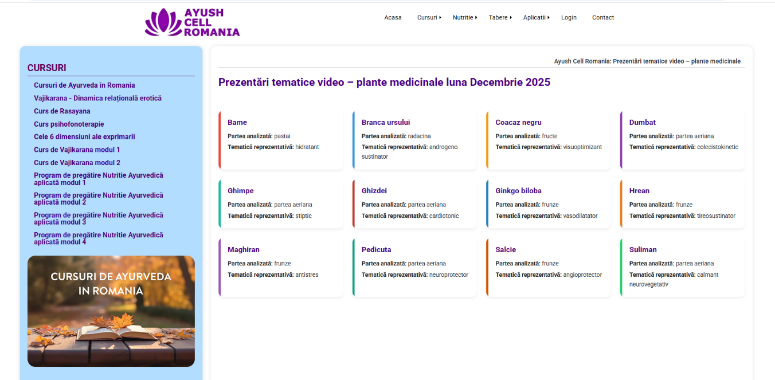
Digital Medicinal Plants Magazine – December 2025 Presentation Set