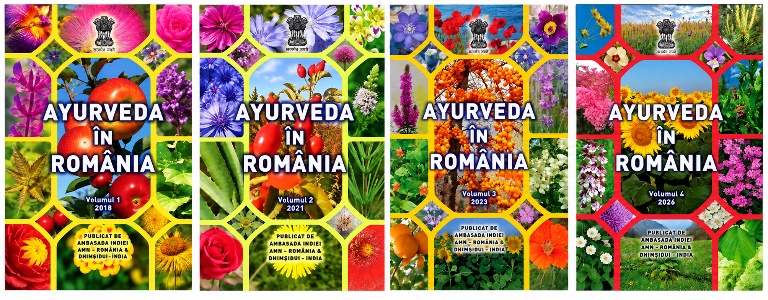
| 1 | Launch of Volume 4 of “Ayurveda in Romania” during the Gandhi Jayanti celebration |
A gathering devoted to Mahatma Gandhi’s legacy brought together the Gandhi Jayanti celebration and the launch of Volume 4 of “Ayurveda in Romania.”
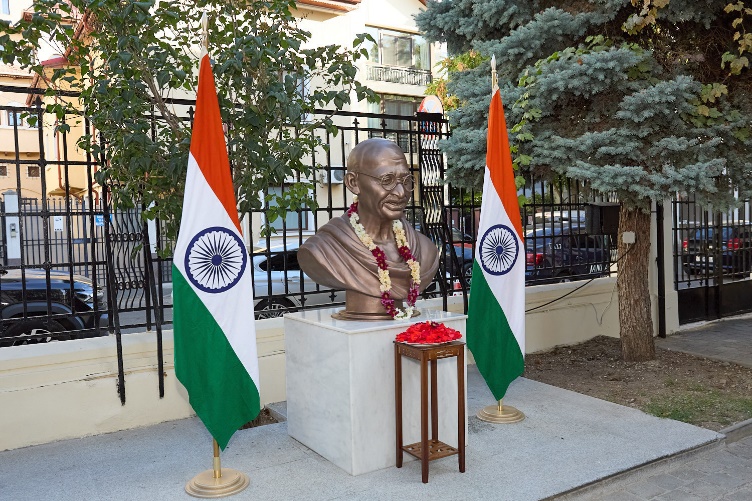
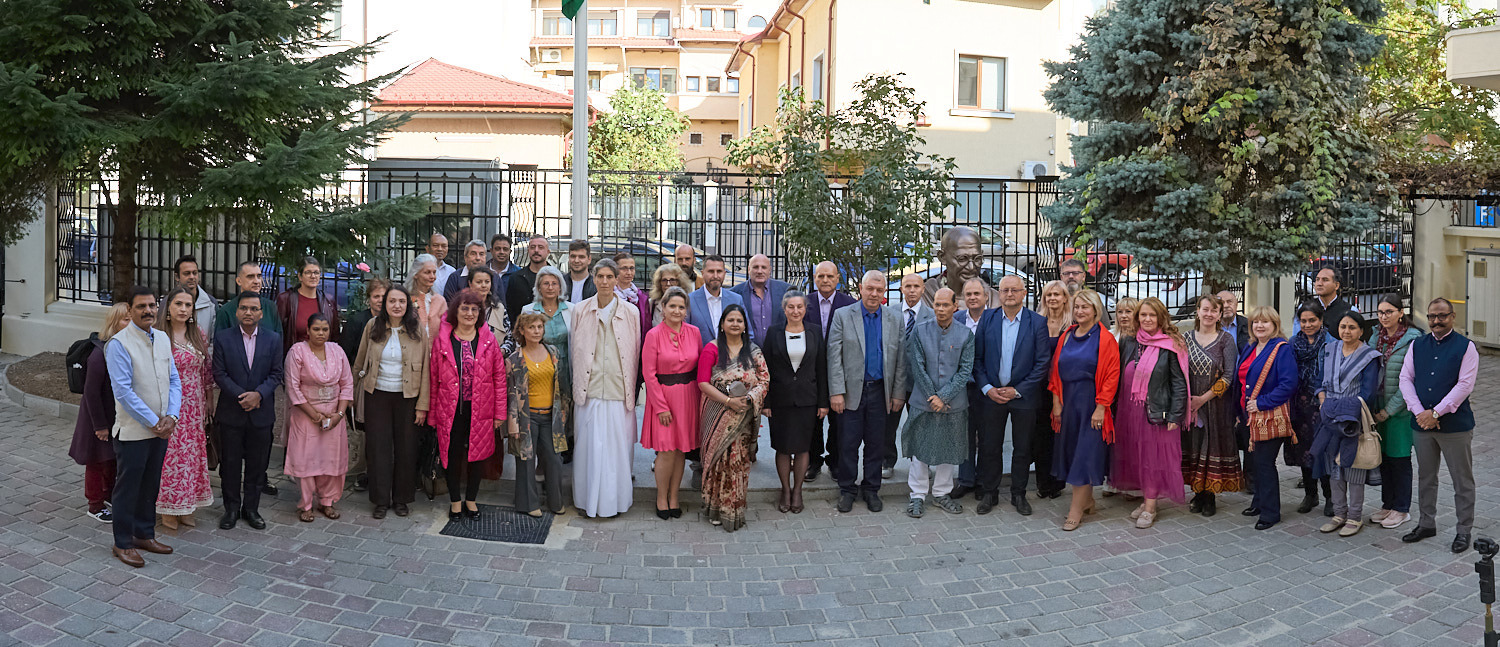
On Friday, October 2, 2026, the Embassy of India in Bucharest hosted an event of special significance for cultural and educational relations between India and Romania.
On the day India and Indian communities worldwide celebrate Gandhi Jayanti, participants paid tribute to Mahatma Gandhi and also attended the launch of Volume 4 of “Ayurveda in Romania.”
These two occasions gave the gathering particular significance. The first recalled the personality and legacy of Mohandas Karamchand Gandhi, born on October 2, 1869, whose ideas about truth, nonviolence, responsibility, simplicity, and respect for life gained universal resonance. The second looked to the present and future through the launch of a book documenting the development of Ayurvedic studies in Romania.
Volume 4: A new stage in a major project launched in 2018
Now in its fourth volume, “Ayurveda in Romania” highlights the continuity of cooperation between institutions and individuals who have helped bring Romania and India closer culturally and educationally over the years.
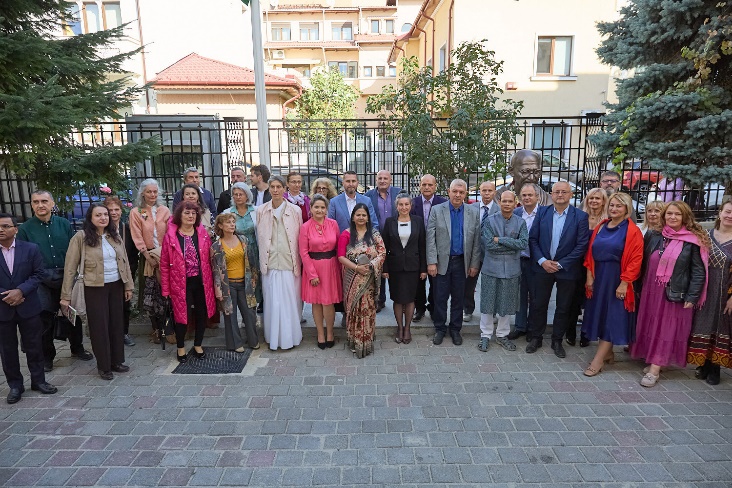
The event began at 9:00 a.m. and brought together members of the Indian community, Embassy representatives, and friends of India.
The tribute to Mahatma Gandhi, the planting and watering of a neem tree, and the launch of Volume 4 of “Ayurveda in Romania” were three distinct moments united by one idea: continuity is built through values that are cultivated and passed on.
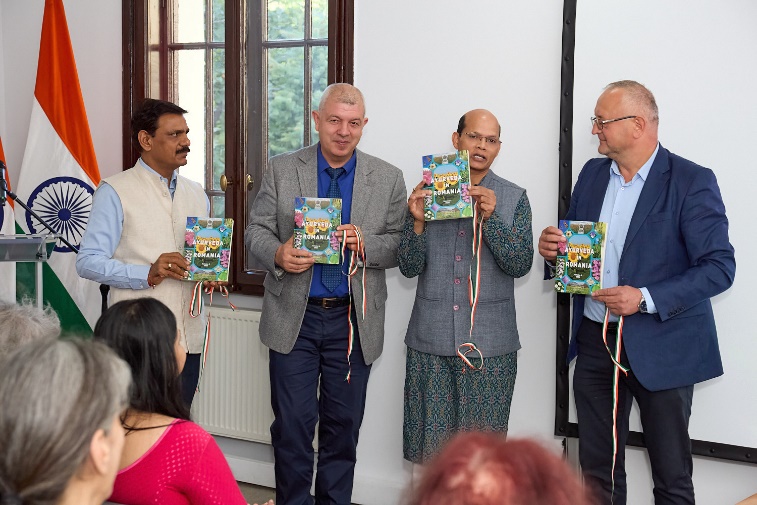
The Ayurveda component centered on the launch of Volume 4 of “Ayurveda in Romania,” published in separate Romanian and English editions.
The appearance of a fourth volume changes how the project as a whole can be viewed. A first volume may record an event, initiative, or the beginning of a partnership. A series of four volumes, however, begins to trace a development. Each subsequent publication adds documents, activities, projects, people, and experiences, making it possible to follow how Ayurvedic studies have evolved in Romania and how relations with institutions in India have diversified over time.
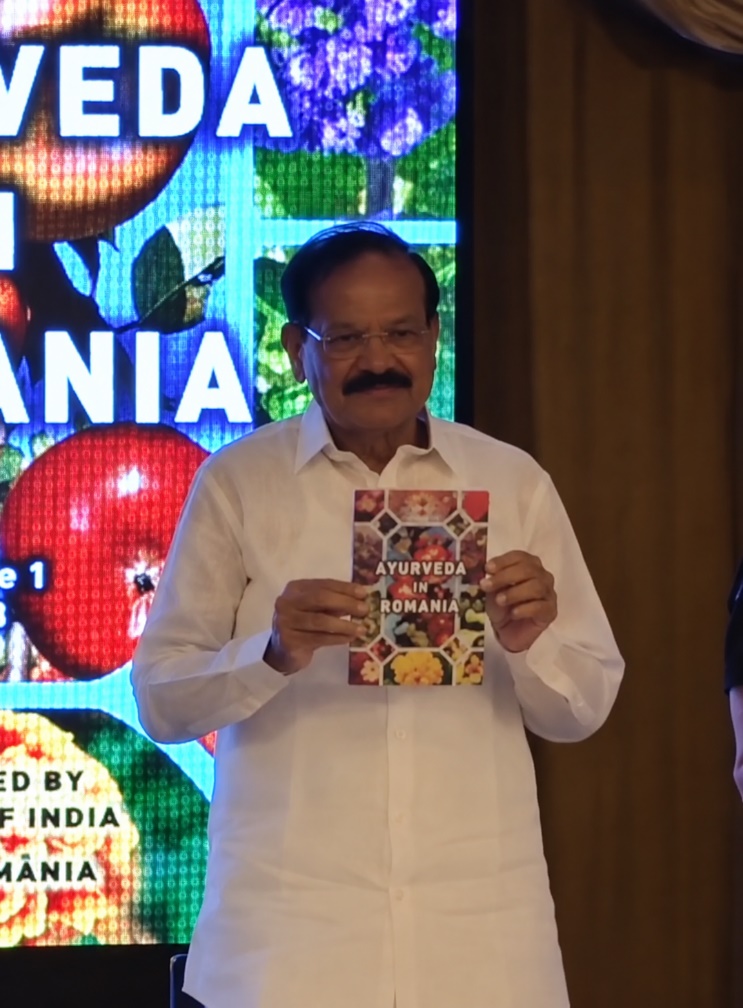
The first volume was launched in 2018 in a notable diplomatic setting, during the official visit to Romania of the then Vice President of the Republic of India, M. Venkaiah Naidu. From the outset, the project was conceived as bilingual.
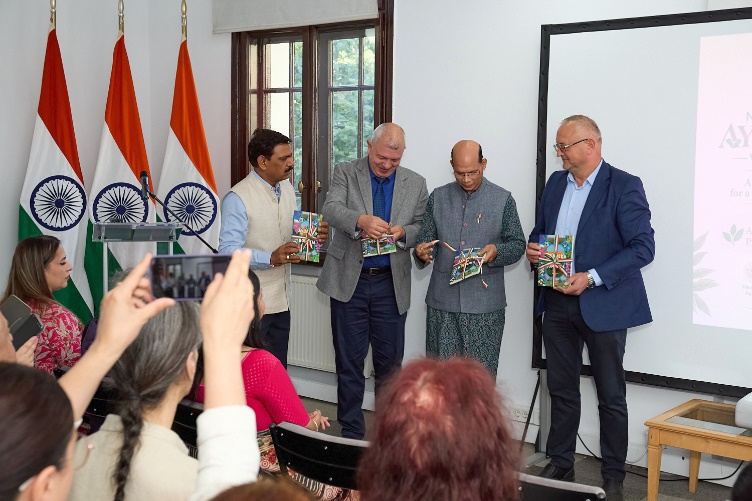
The Romanian edition naturally addresses readers in Romania, while the English edition makes Romania’s experience accessible to partners in India and to international audiences interested in Ayurveda. Since then, successive volumes have documented educational, publishing, and institutional activities; collaborations with Indian teachers and institutions; public information projects; and the many ways Ayurveda has gradually become a field of Romanian–Indian cultural and educational dialogue.
The publication of Volume 4 in 2026 therefore offers an opportunity to look back on a journey that can now be traced over several years. This continuity was among the important ideas highlighted in presentations at the book launch.
The book was presented as part of a wider endeavor: carefully documenting the development of Ayurveda in Romania and creating a solid foundation for future educational, cultural, and research cooperation with India.
Speakers at the launch emphasized this dual dimension. “Ayurveda in Romania” is about Ayurveda, but also about the relationships formed around it. The series records educational activities, conferences, meetings, academic collaborations, publishing projects, and public information initiatives. Viewed separately, these may seem like unrelated events. In chronological order, however, they reveal something else: how a tradition of knowledge can become a meeting place for people, institutions, and cultures.
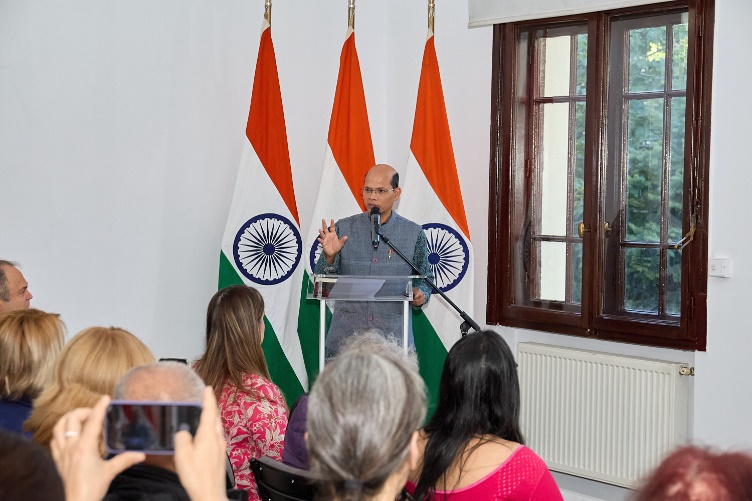
This is a major strength of the “Ayurveda in Romania” project. International cooperation becomes lasting when supported by continuity. A meeting creates contact; repeated collaboration builds trust; and projects carried out over years create shared experience. Recording that experience preserves its memory and makes it accessible to those who continue the work. This idea was expressed by placing Volume 4 within a broader commitment to knowledge, dialogue, and friendship between India and Romania. The book is thus both a document and a testimony to an evolving partnership.
Seeing all four volumes together provided a symbolic view of this journey. From the first volume in 2018 to the edition launched in 2026, the series records the stages of a process in which Ayurvedic education, cultural activities, research, and cooperation have converged in different ways.
Gandhi Jayanti and the book launch: Two occasions connected by a common meaning
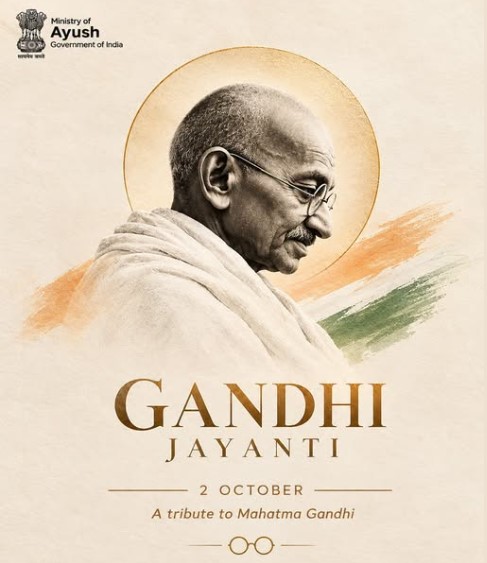
Choosing October 2 gave the launch an additional dimension. Gandhi Jayanti is one of India’s national holidays, and October 2 is also recognized internationally as the International Day of Non-Violence. In 2026, it marked 157 years since Mahatma Gandhi’s birth.
The connection between celebrating Gandhi and presenting a book devoted to Ayurveda runs deeper than the coincidence of the two occasions on the same program. Mahatma Gandhi strongly favored what he called “nature cure,” experimented extensively with diets and lifestyles aimed at well-being, and at times sharply criticized failures in health care. His independent stance makes his relationship with Ayurveda particularly interesting.
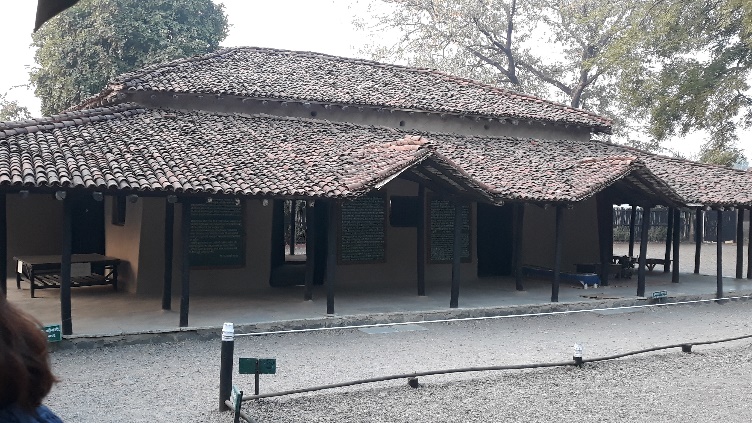
On May 6, 1925, speaking at Ashtanga Ayurveda Vidyalaya in Calcutta, Gandhi declared his support for an approach that attaches greater importance to prevention than to intervention after illness has developed. In the same speech, he urged practitioners to adopt a much deeper view of the human being, going beyond an exclusive concern with the body.
On other occasions, Gandhi called on Ayurvedic practitioners to show rigor, humility, and above all a genuine spirit of inquiry. He valued the perseverance of modern researchers in their search for truth and believed that Ayurveda could build on its heritage through this investigative attitude, carefully examining, verifying, and developing traditional knowledge.
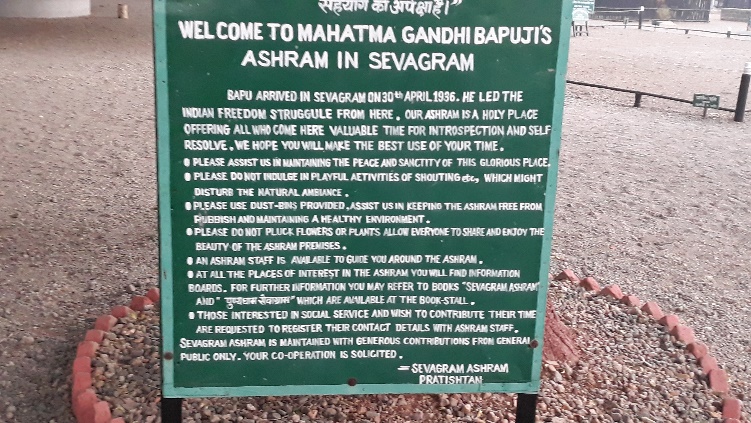
Seen from today’s perspective, these profound ideas of Gandhi remain remarkably relevant, especially when dialogue between tradition and modern research is essential to deepening, validating, and responsibly developing Ayurvedic knowledge.
A connection grounded in prevention and responsibility
Ayurveda defines health in a broad framework in which maintaining balance is fundamental. Its classical statement of purpose places protecting the health of healthy people alongside addressing the imbalance of those affected by illness or other disorders. Institutional sources from India’s Ministry of AYUSH likewise present Ayurveda as the “science of life,” concerned both with maintaining health and with treating disease through appropriate means.
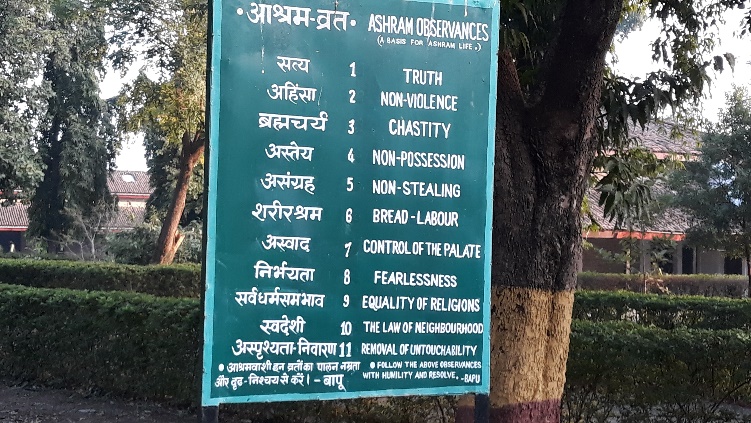
Mahatma Gandhi came, by his own path, to a similar concern for prevention. For him, health was closely related to daily conduct, diet, moderation, hygiene, physical activity, the relationship with nature, and personal responsibility.
This affinity may be understood as a convergence of principles. Ayurveda offers a complex traditional system with its own epistemology, concepts, and body of texts.
Gandhi proposed an ethical and social philosophy in which health, simplicity, self-discipline, and respect for the laws of nature held an important place. The two perspectives intersect in prevention, moderation, responsibility, attention to diet and lifestyle, and understanding health as more than the mere absence of disease.
The Indian Council of Medical Research maintains a special “Gandhi & Health” section today, reflecting contemporary interest in and appreciation for reassessing his contribution to deeper reflection on health.
A spirit of responsible inquiry: A surprisingly timely connection
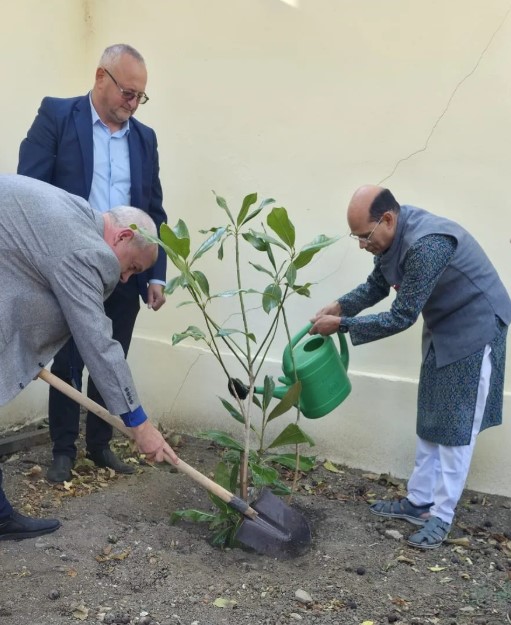
Research provides another meeting point for the Ayurveda in Romania project. Gandhi respected tradition but believed genuine respect required the ability to examine it with clarity. In addresses to Ayurvedic practitioners, he called for research, intellectual honesty, and a readiness to acknowledge the limits of existing knowledge.
This perspective is especially relevant today. Preserving a living tradition requires more than repeating inherited formulations.
Making the most of Ayurveda’s ancient tradition requires careful study of its sources, understanding their context, documenting experience, confronting contemporary questions, and developing research directions that connect traditional knowledge with modern investigative tools.
Seen in this light, the October 2 launch of Volume 4 of “Ayurveda in Romania” takes on added significance.
The “Ayurveda in Romania” series records experience, and documentation is one of the conditions of responsible research. What is recorded can be traced, compared, analyzed, and developed. What remains solely in participants’ memories may fade over time, but a book becomes a way to carry experience forward.
A tree planted and a book launched
One of the most memorable moments of the Bucharest event was planting a neem tree. Participants helped place soil around it and water it, turning the ceremony into a shared gesture.
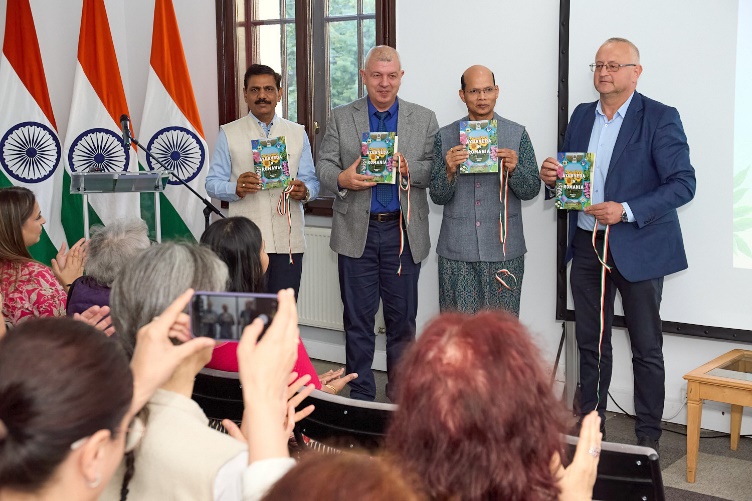
It was a special moment expressing the patience required for any lasting relationship: growth requires care, while closer ties between societies are strengthened through repeated constructive initiatives and mutual trust built over time.
The juxtaposition of the planted tree and the launched book is one of the memorable images that may define the event. Both speak of continuity.
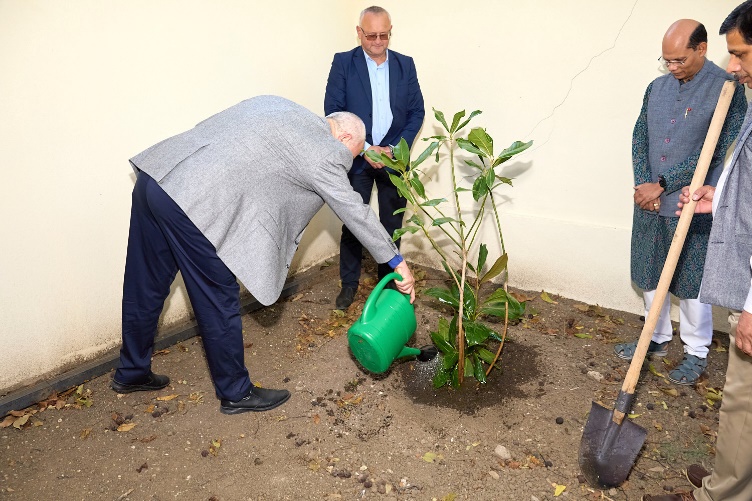
A tree grows through its roots and through care over time. A tradition of knowledge grows through study, transmission, and the ability of each generation to add to the experience it has inherited.
The four “Ayurveda in Romania” volumes can be viewed in that sequence. Each records a stage; together they preserve the memory of lasting development.
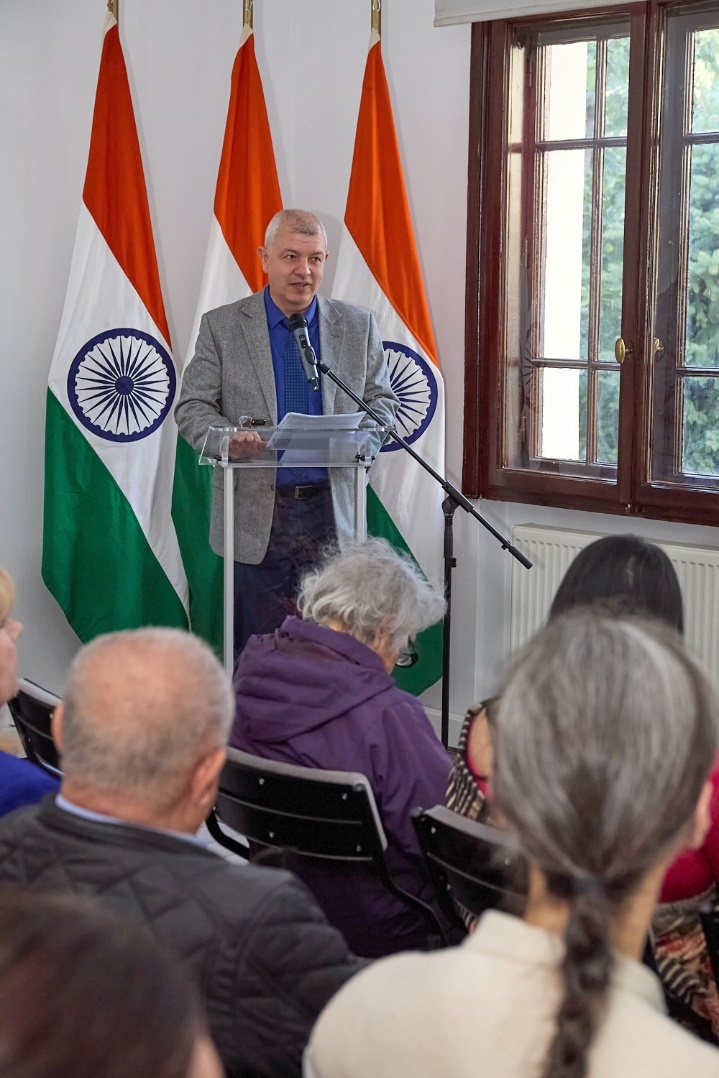
There is a parallel here with a profound aspect of Mahatma Gandhi’s thought: lasting change is achieved through consistency. Great principles acquire value when translated into appropriate gestures, conduct, and ongoing activities.
From the first volume toward an archive of Ayurvedic studies and development in Romania
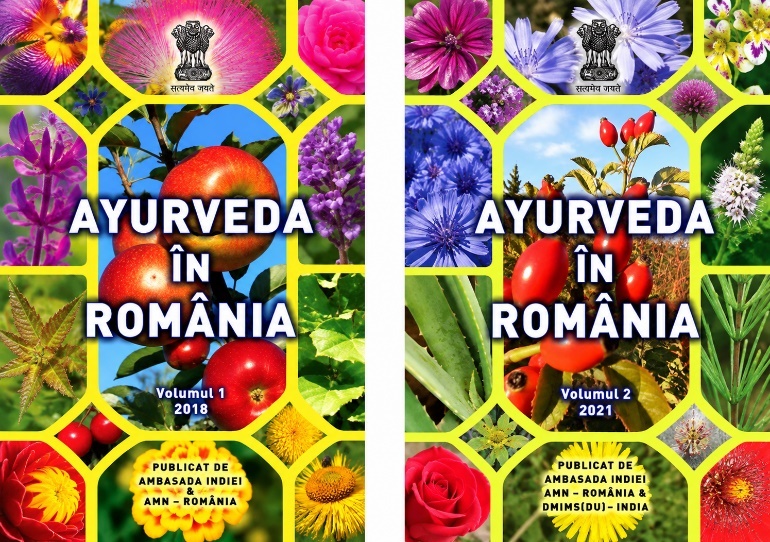
Looking back, the series begun in 2018 is gradually becoming a publishing archive.
This may be one of its most important contributions. The history of a field’s development consists of many seemingly minor events: a lesson, conference, visit, collaboration, book, meeting with a teacher, research project, or new educational resource.
At the time, each event’s meaning is perceived separately. Years later, systematic documentation makes their connections visible. The “Ayurveda in Romania” volumes offer this long-term view.
The four volumes show how educational activities in different fields of Ayurveda have evolved, how contacts with India have developed, how new academic collaborations have emerged, and how publishing projects have begun to complement Ayurvedic training programs.
In recent years, this framework has expanded through the work of Ayush Cell Romania — the AYUSH Information Center in Bucharest — and new forms of information and documentation, including the weekly Ayurveda Agenda magazine.
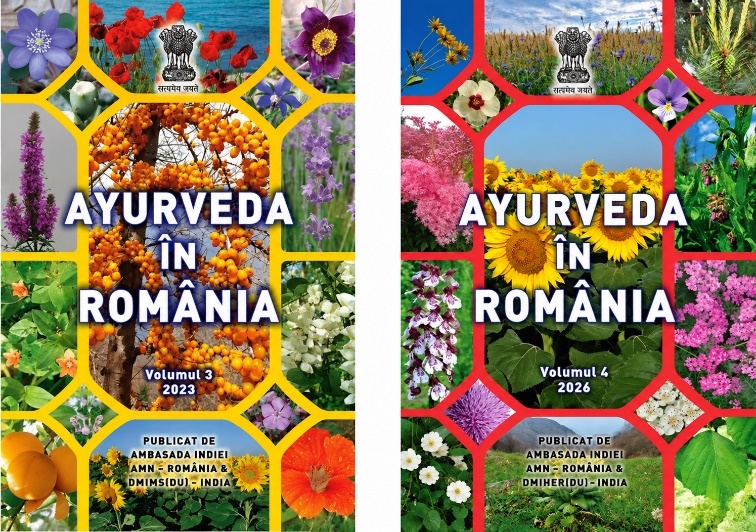
In this sense, Volume 4 of “Ayurveda in Romania” records a new milestone in the project’s development.
Genuine knowledge: A bridge between Romania and India
Speakers at the launch expressed the belief that Volume 4 of “Ayurveda in Romania” can make a significant contribution to continuing the dialogue between Romania and India. This statement captures the wider purpose of the project initiated in 2018.
Relations between countries are built through diplomacy and institutions, but they gain depth especially through people and mutual understanding.
Education, culture, and research create bonds that develop over time, allowing cooperation to move beyond formal international relations. Ayurveda has a distinctive place in this process. It belongs to India’s heritage of knowledge, yet the international interest it attracts creates opportunities for constructive dialogue with other cultures, institutions, and communities, giving the traditional science of Ayurveda a universal dimension.
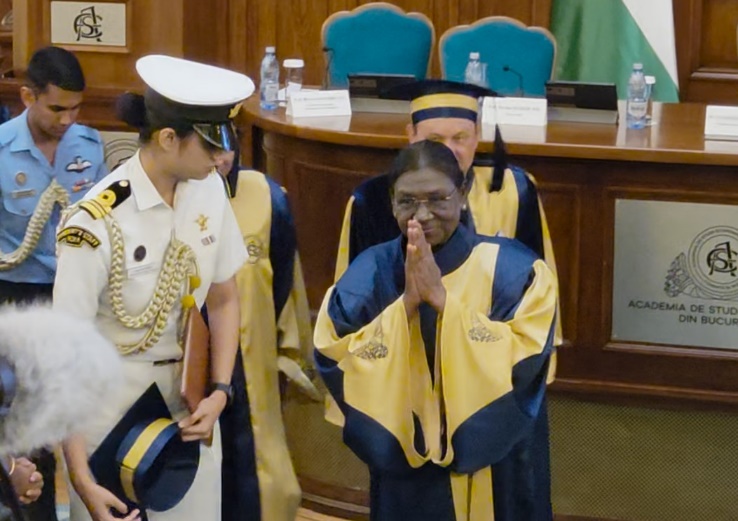
The state visit to Romania in July 2026 by Her Excellency Shrimati Droupadi Murmu, President of the Republic of India, highlighted the importance of education, culture, and traditional knowledge in relations between the two countries. In her speeches, Ayurveda was mentioned among the cultural values through which India contributes to universal heritage. The launch of Volume 4 of “Ayurveda in Romania” just a few months after this visit naturally forms part of that same continuity.
From respect for Ayurvedic tradition to responsibility for the future
The event of October 2, 2026 thus brought together two points in time.
Gandhi Jayanti directed attention to a foundational figure of modern India and values that have remained relevant across generations. The launch of Volume 4 pointed toward the present and future — toward what can be built through education, documentation, research, and cooperation. A profound link connects the two: responsibility.
For Gandhi, freedom was inseparable from personal and collective responsibility. In reflecting on health, he connected an individual’s condition with conduct, diet, hygiene, self-control, and the relationship with nature. His respect for Ayurvedic tradition was accompanied by demands for research and professional honesty.
For Ayurveda, responsibility is expressed by cultivating a balanced life, attending to individual characteristics, the environment, and the rhythms of life, and seeking to preserve health.
For a contemporary project devoted to Ayurveda, responsibility means rigorous study, appropriate methods, careful distinction between tradition and modern demonstration, openness to research, and transmitting knowledge in a form accessible to future generations.
Perhaps here lies the deepest meaning of associating Gandhi Jayanti with the launch of a book on Ayurveda.
A significant day with two dimensions and a shared perspective
At the close of the October 2, 2026 gathering, two powerful images remained: a freshly planted tree and a new volume placed alongside the three that preceded it. The first speaks of roots, growth, and care; the second of memory, knowledge, and continuity.
Together, they may symbolize the cultural and educational relationship between Romania and India: one that develops through concrete initiatives, successive encounters, mutual respect, and projects that leave a documented record.
The launch of Volume 4 of “Ayurveda in Romania” at the Embassy of India in Bucharest was therefore more than the presentation of a new book.
It was a moment when a project begun eight years earlier could be viewed in its continuity and, at the same time, projected into its next stages.
The celebration of Gandhi Jayanti provided a special setting. Truth, nonviolence, simplicity, responsibility, respect for nature, concern for prevention, and a commitment to honest research remain ideas capable of inspiring us today. Gandhi himself called for Ayurveda to remain alive, responsible, and open to inquiry; this appeal, made a century ago, is still timely.
Volume 4 continues a story that remains open. By carefully documenting the development of Ayurveda in Romania, publishing a bilingual edition, and reflecting cooperation with India, the book helps build shared memory and provides a reference point for future projects. This new volume can contribute significantly to continued dialogue between the two countries.
Knowledge brings people closer, continuity strengthens ties, and projects built patiently transform human connections into enduring relationships between cultures and institutions.
On the morning of October 2, the tribute to Mahatma Gandhi, the planting of a tree, and the launch of Volume 4 of “Ayurveda in Romania” each expressed, in a different language, the same orientation toward the future. The roots were acknowledged and respected, what had been built was documented, and continuity remained open to new stages of Romanian–Indian cooperation.