Interviews – a new editorial space devoted to direct dialogue
A section in which Ayurveda Agenda features notable individuals, specialists, and experiences relevant to the study, research, and contemporary development of Ayurveda.
With its new “Interviews” section, Ayurveda Agenda opens an editorial space for direct conversations with notable figures, specialists, teachers, researchers, and people actively involved in preserving, exploring, and developing Ayurveda and related fields today.
The “Interviews” section will present a series of conversations in which readers can learn not only about the guests' work, but also how they view their field of expertise, the experiences that shaped their careers, their current interests, and their perspectives on the future.
An interview conducted within Ayurveda Agenda creates a special kind of connection by giving guests a direct voice and allowing their ideas to be presented in the context of the personal, academic, and professional experiences from which they arise.
The section also aims to offer a vivid perspective on how Ayurveda is studied, practiced, taught, and researched today in different cultural and academic environments in India, Romania, and other parts of the world.
These conversations may address Ayurvedic education, research, practice, classical texts, medicinal plants, prevention, lifestyle, and current forms of international cooperation.
Special attention will be given to individuals and institutions with which collaborative relationships, cultural and academic exchanges, and joint initiatives have developed in Romania over time.
Through these conversations, readers can get to know the people behind projects, educational programs, and research activities and better understand the contexts in which collaborations emerge.
In this way, “Interviews” is intended to complement Ayurveda Agenda's informational and educational character through dialogue. Beyond reporting facts or events, the section highlights human experience, professional reflection, and the direct exchange of ideas, helping build lasting bridges between individuals, institutions, and communities interested in Ayurveda.
2
“Interviews,” a new Ayurveda Agenda section devoted to experience, research, and dialogue
Important perspectives on Kayachikitsa, the training of Ayurvedic practitioners, contemporary research, and the development of academic cooperation between India and Romania.
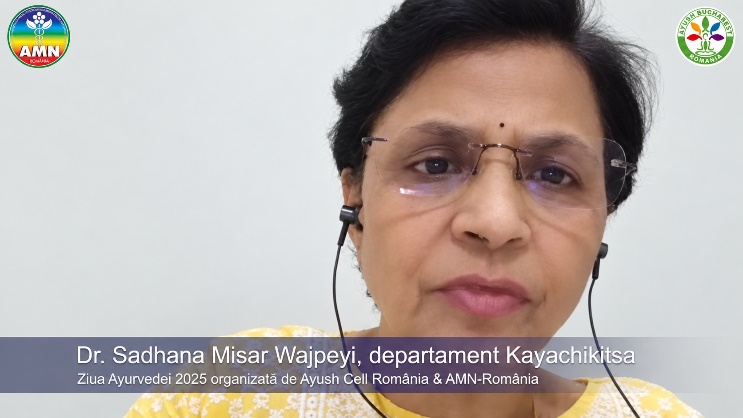
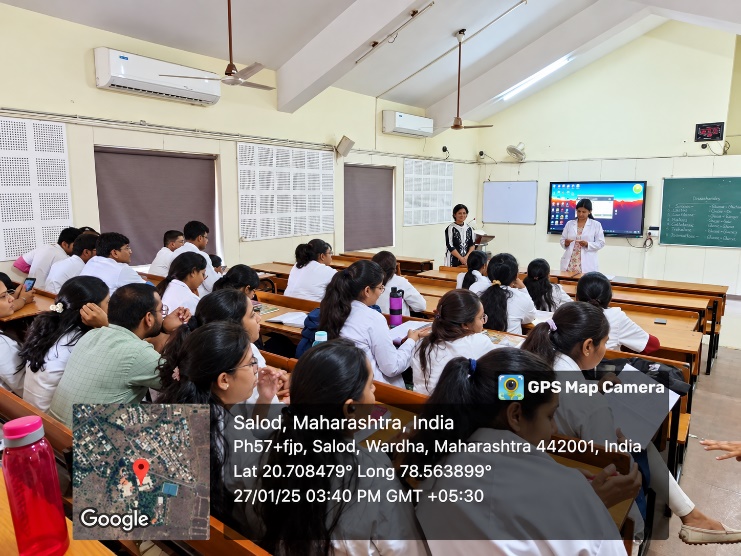
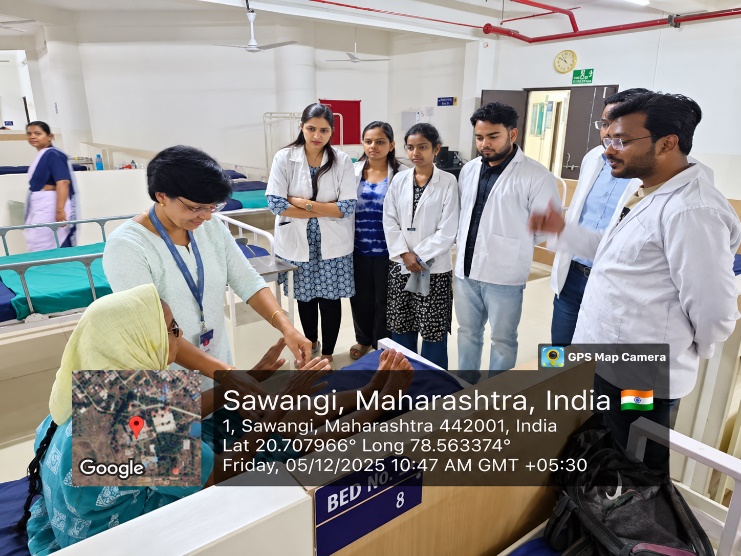
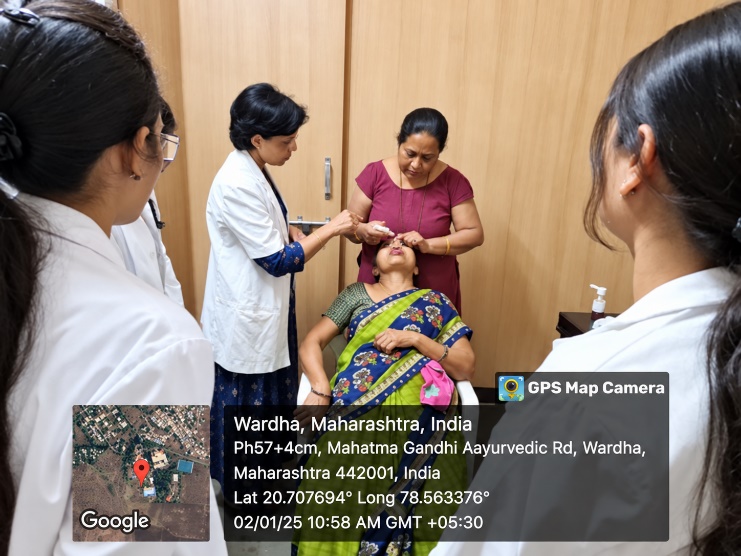
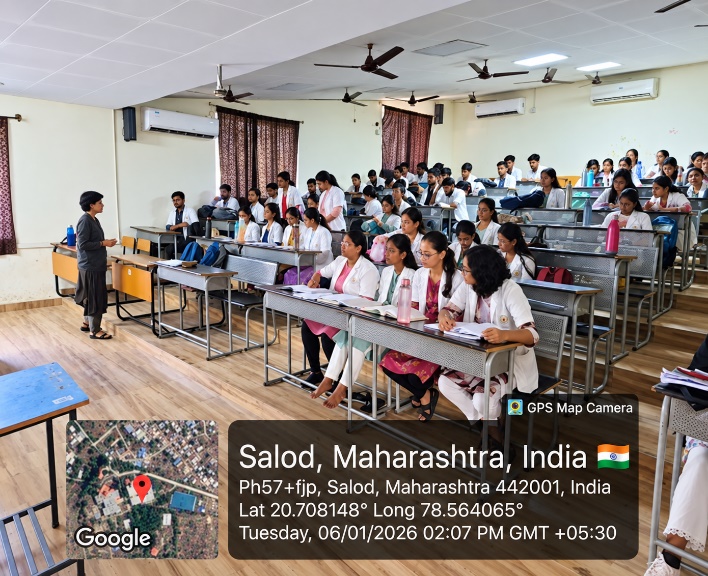
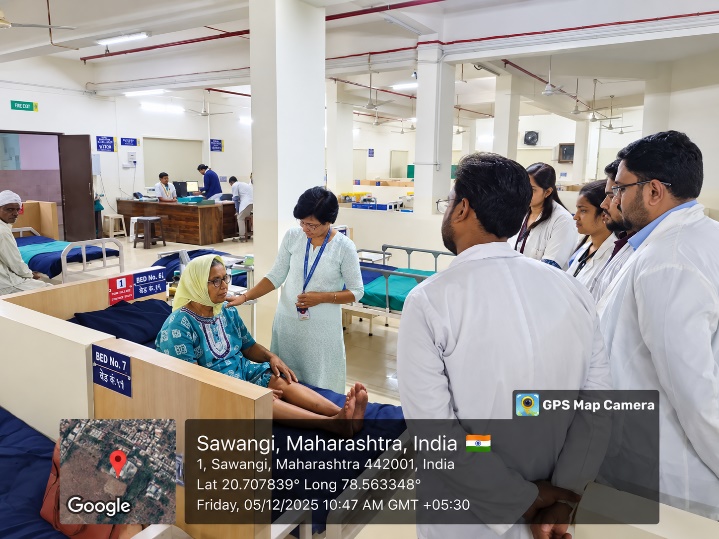
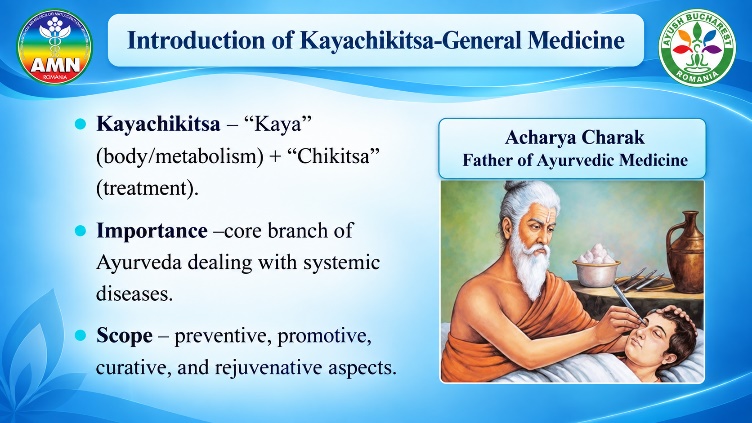
The first guest in the “Interviews” section is Professor Dr. Sadhana Misar (Wajpeyi), an Ayurvedic practitioner, professor, and Head of the Department of Kayachikitsa at Mahatma Gandhi Ayurved College, Hospital & Research Centre, Salod, Wardha, an institution of the Datta Meghe Institute of Higher Education and Research in India. Her work encompasses clinical practice, university teaching, postgraduate training, and research, with a sustained interest in developing Kayachikitsa and integrating classical Ayurvedic principles into contemporary research and clinical practice.
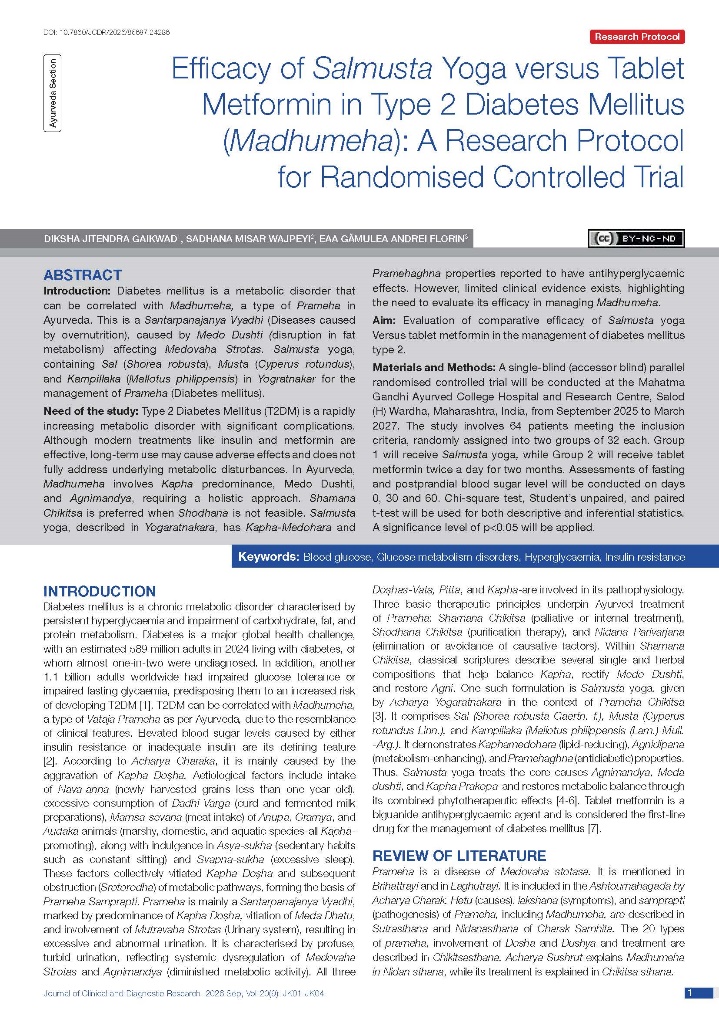
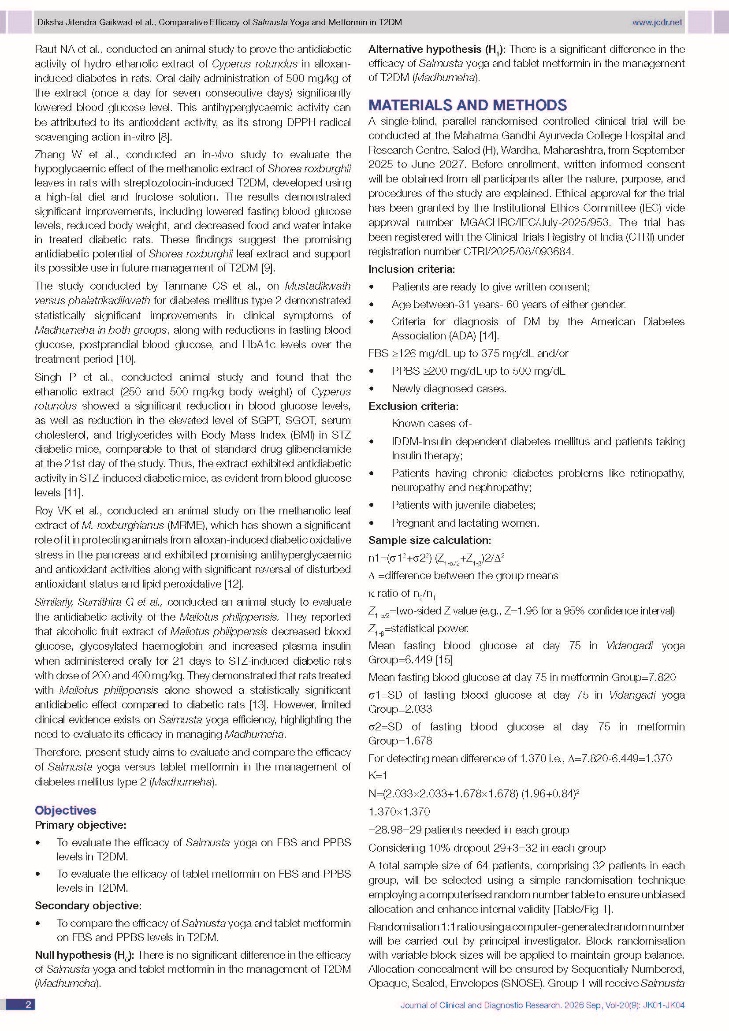
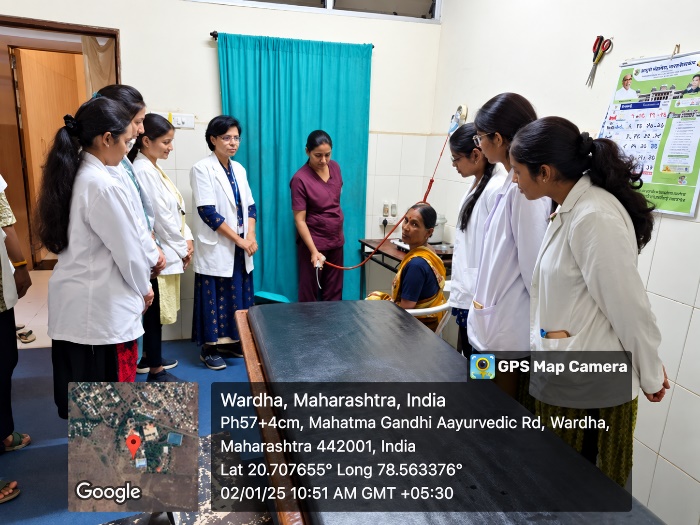
The interview was conducted by Andrei Gămulea, editor of Ayurveda Agenda, initiator of the Ayurveda in Romania project, and coordinator of Ayush Cell Romania—the AYUSH Information Center. It builds on an existing collaboration developed through lectures for students, assessment and discussion of research protocols, exchanges of scientific information, and participation in Ayurveda-related activities organized in Romania.
In her answers, Professor Dr. Sadhana Misar emphasizes the value of this collaboration and the potential to expand it through joint research projects, publications, and regular academic exchanges.
Choosing her to open the section therefore has particular significance. Professor Dr. Sadhana Misar represents an Indian Ayurvedic academic environment in which classical tradition, medical practice, teaching, and contemporary research naturally come together.
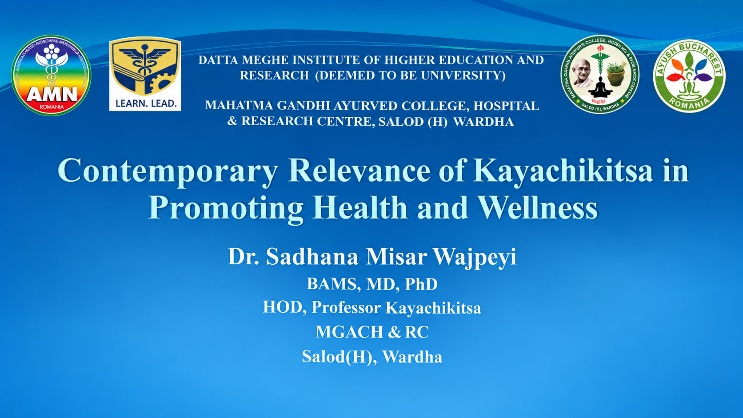
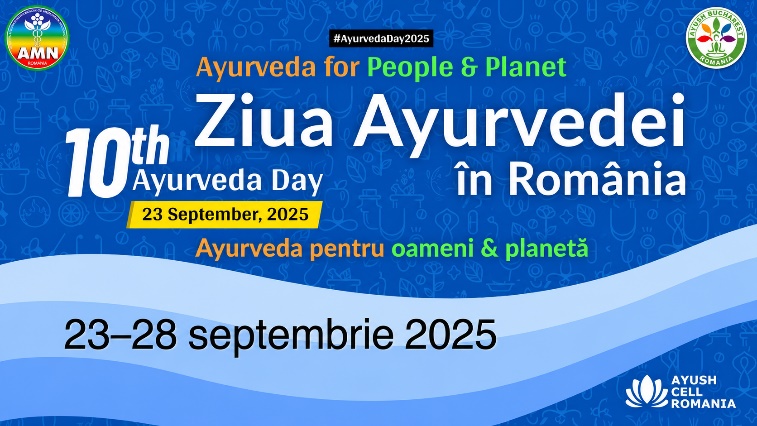
Her participation in the 2025 Ayurveda Day program organized in Romania and subsequent involvement in joint academic activities also laid the foundation for productive dialogue. This dialogue extends beyond a professional biography and reflects tangible, fruitful cooperation between India and Romania.
The interview's fifteen questions explore this broad perspective. The discussion starts with the guest's education and professional experience, continues through the distinctive nature of Kayachikitsa, the foundations of practitioner training, the relationship between classical texts and clinical experience, research methodology, and assessment of traditional plants and formulations, and concludes with Ayurveda's contemporary relevance and opportunities for international academic cooperation.
With this first interview, the “Interviews” section begins naturally, through a conversation about professional experience, research, education, and cooperation—areas that can genuinely help people understand Ayurveda and strengthen connections between academic environments and communities interested in India's traditional science of life.
Interview with Professor Dr. Sadhana Misar (Wajpeyi)
Important insights into Kayachikitsa, the training of Ayurvedic physicians, contemporary research, and academic cooperation between India and Romania.
1. Professional background and Kayachikitsa
Editor: You are an Ayurvedic physician, professor, and Head of the Department of Kayachikitsa at Mahatma Gandhi Ayurved College, Hospital & Research Centre in Wardha. Looking back on your career, what were its most important milestones, and what led you to specialize in Kayachikitsa in particular?
Explanatory notesExplanatory notes
2. Kayachikitsa and the personalized approach
Editor: Kayachikitsa is one of the central branches of Ayurveda and is often compared to internal medicine in contemporary terminology. How would you introduce this field to readers in Romania, and what distinguishes the therapeutic approach of Kayachikitsa?
Explanatory notesExplanatory notes
3. Classical texts, clinical experience, and research
Editor: In your view, what is the ideal relationship between studying classical Ayurvedic texts, developing clinical experience, and contemporary research in the training of an Ayurvedic physician?
Explanatory notes
4. Essential qualities of an Ayurvedic practitioner
Editor: As a professor and department head, you are directly involved in training undergraduate and postgraduate students. What essential qualities do you think a future Ayurvedic physician should develop beyond acquiring theoretical knowledge?
Explanatory notesExplanatory note
5. Building professional identity
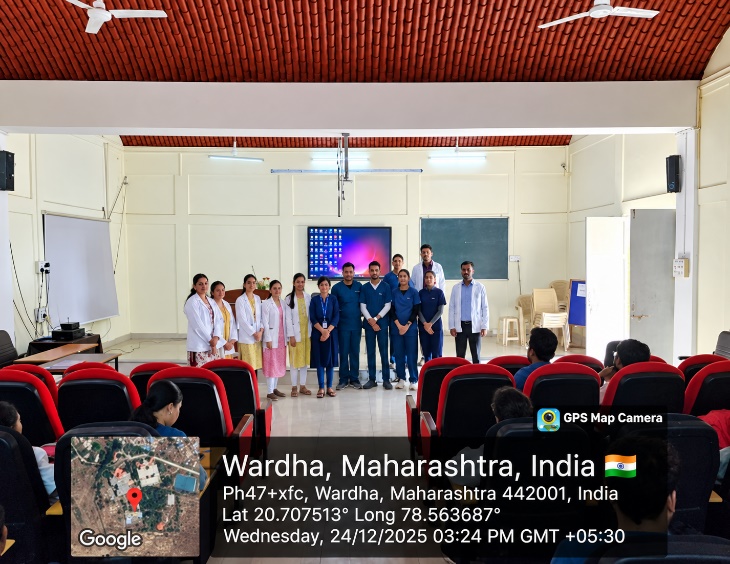
Editor: The Samskara orientation and training program for newly admitted postgraduate students places particular emphasis on professional orientation from the beginning of their studies. What role do such programs play in developing young physicians' professional identity and understanding of the responsibilities involved in practicing Ayurveda?
Explanatory notes
6. Preserving the depth of the ancient Ayurvedic tradition today
Editor: Today's Ayurvedic physicians are trained in an environment where the classical medical tradition increasingly interacts with modern research, technology, and contemporary social needs. How can the depth of Ayurvedic tradition be preserved while cultivating an ability to adapt to the modern context?
Explanatory notesExplanatory note
7. Ayurvedic clinical studies
Editor: An important part of your department's work involves postgraduate research and developing clinical research protocols. In your view, what are the essential criteria that make an Ayurvedic clinical study both scientifically rigorous and authentic to Ayurvedic principles?
Explanatory notesExplanatory notes
8. Quality of Ayurvedic research
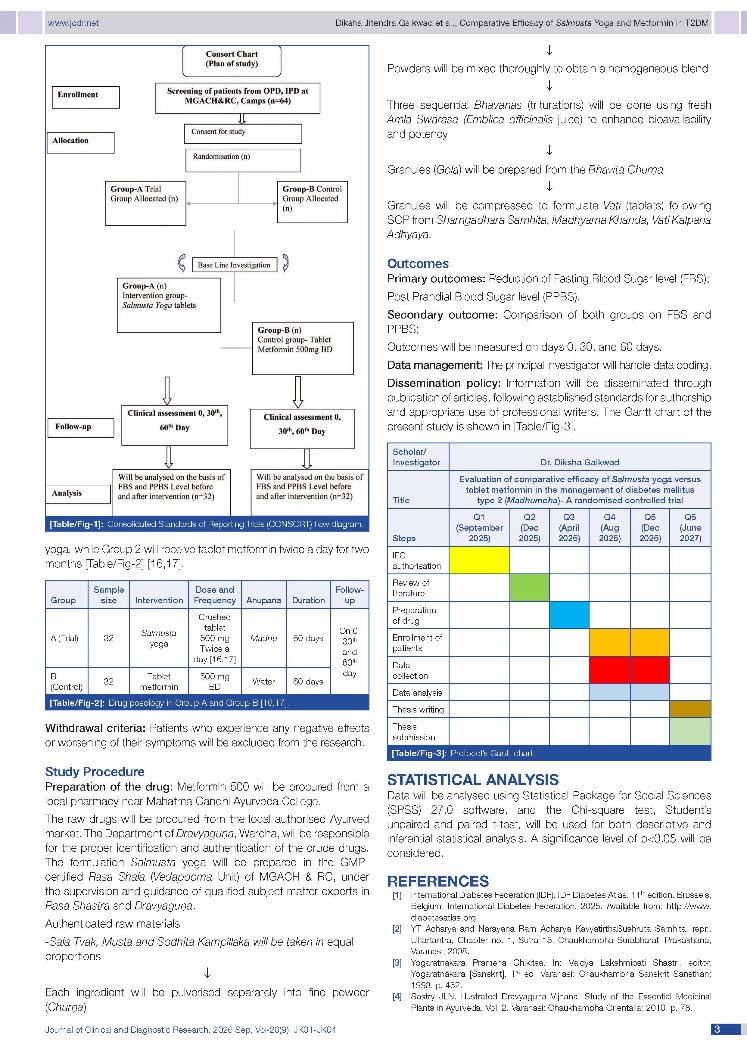
Editor: As part of our academic collaboration, we have reviewed research protocols developed by postgraduate students, after which observations were discussed and integrated within the already approved ethical and methodological framework. How important do you consider this process of evaluation, dialogue, and revision for improving the quality of Ayurvedic research?
Explanatory notesExplanatory notes
9. Evaluation of traditional formulations
Editor: One subject of our collaboration involved evaluating formulations described in the Charaka Samhita and relating the classical analysis of their ingredients to their clinical relevance in Kayachikitsa. How do you view the relationship between concepts such as rasa, virya, and vipaka and the contemporary clinical evaluation of an Ayurvedic formulation?
Explanatory notesExplanatory note
10. From traditional knowledge to modern assessment in medicinal plant research
Editor: Research on medicinal plants and traditional formulations must sometimes address questions arising in contexts very different from those in which Ayurveda first developed. Our discussion of Kapikacchu (Mucuna pruriens) illustrated this well. How do you think the transition from traditional knowledge to modern scientific evaluation should be handled while preserving the accuracy and relevance of conclusions?
Explanatory notesExplanatory note
1. The relevance of traditional Ayurveda to modern society
Editor: Ayurveda is attracting growing interest outside India. From your perspective, which aspects of this tradition are most relevant to contemporary society and to developing a deeper culture of health internationally?
Explanatory noteExplanatory note
12. Ayurveda Day
Editor: In 2025, you participated in the Ayurveda Day program held in Romania, where you presented “The Contemporary Relevance of Kayachikitsa in Promoting Health and Well-Being.” What significance do you attach to such international meetings and to direct dialogue between Indian specialists and communities studying Ayurveda in other countries?
Explanatory notesExplanatory notes
13. International cooperation to promote and develop Ayurveda
Editor: Collaboration between Ayurvedic institutions in India and educational organizations or centers in other countries can extend beyond information exchange to include research, teaching, conferences, and publishing projects. In your experience, which forms of international cooperation are most valuable for developing Ayurveda?
Explanatory notesExplanatory notes
14. Cooperation between India and Romania
Editor: Our collaborative activities over the past year have included academic lectures for students, assessments of research protocols, exchanges of scientific information, and participation in Ayurveda-related events in Romania. How would you assess this collaboration, and which directions could be developed further between India's Ayurvedic academic environment and Romanian initiatives?
Explanatory notes
15. A message for people studying Ayurveda in Romania
Editor: If you could convey one essential idea to Ayurveda Agenda readers—both those already studying Ayurveda and those encountering it for the first time—about Ayurveda's value for modern life, what would your message be?
Explanatory notes
Contents
4
Contents of Ayurveda Agenda digital magazine, issue 37
The table of contents of Ayurveda Agenda digital magazine issue 37 includes numerical references to articles in its various sections and details about the chapters of educational resources for each included study level. The references appear at the beginning of each table-of-contents entry and correspond to the numbers at the start of the articles.
Interviuri
pp. 01–11
Interviews – a new editorial space devoted to direct dialogue
“Interviews,” a new Ayurveda Agenda section devoted to experience, research, and dialogue
Interview with Professor Dr. Sadhana Misar Wajpeyi
Contents
p. 12
Contents of Ayurveda Agenda digital magazine, issue 37
Educational resources
pp. 12–13
pp. 14–16
p. 12
(5) Prakriti-Nikasha
C21 (R)
Ayurveda – Level 02
p. 13
(6) Dosha-Vaisamya
C28 (N)
Ayurveda – Level 03
p. 13
(7) Vimshati-Guna
C01 (A)
Current updates
pp. 14–16
Digital Educational Magazine on Medicinal Plants – August 2026
🞿
Educational resources
Ayurveda – Study Level 1 – AY01
5
One course revised from the Prakriti-Nikasha chapter on the erotic and romantic nature of pitta and kapha constitutions
Lesson 21 presents the erotic and romantic characteristics of pitta and kapha Ayurvedic types and the role of erotic continence, transmutation, and sublimation.
Lesson 21 belongs to study level 1 (AY01), Dosha-Prakriti section (A01), Prakriti-Nikasha chapter (A3), and is available as easy-to-read A4 and foldable A5 PDFs, under code: AY01-A01-A3-C21.
Course titles and their place in the Basic Ayurveda Course curriculum
Characteristics of the erotic and romantic nature in pitta and kapha constitutional types
Explanatory notes
Title: Dosha-Prakriti_Prakriti-Nikasha_C21
Ayurveda – Study Level 2 – AY02
6
One course new from the Dosha-Vaisamya chapter on the practical value of signs of imbalance
Lesson 28 examines overprotection, dependence on external conditions, and denial of spiritual possibilities, then summarizes the practical significance of signs of imbalance.
Lesson 28 belongs to study level 2 (AY02), main Svasthavritta section (A02), chapter Dosha-Vaisamya (A2), and is available as an easy-to-read A4 PDFand as a foldable A5 PDF, foldable, under the code: AY02-A02-A2-C28.
Course titles and their place in the Basic Ayurveda Course curriculum
Signs of dosha imbalance are practical tools for self-regulation
Explanatory notes
Title: Svasthavritta_Dosha-Vaisamya_C28
Ayurveda – Study Level 3 – AY03
7
One course updated from the Vimshati-Guna chapter on manifestations of the quality of heaviness (guru-guna)
Lesson 1 presents the general quality of heaviness (guru-guna), its manifestations in nature and the human being at the physical level, its harmonious effects, and the consequences of excess.
Lesson 1 belongs to study level 3 (AY03), Dravyaguna section (A03), the Vimshati-Guna chapter (A5), and is available as easy-to-read A4 and foldable A5 PDFs, under course code AY03-A03-A5-C01.
Course titles and their place in the Basic Ayurveda Course curriculum
Digital Educational Magazine on Medicinal Plants – August 2026
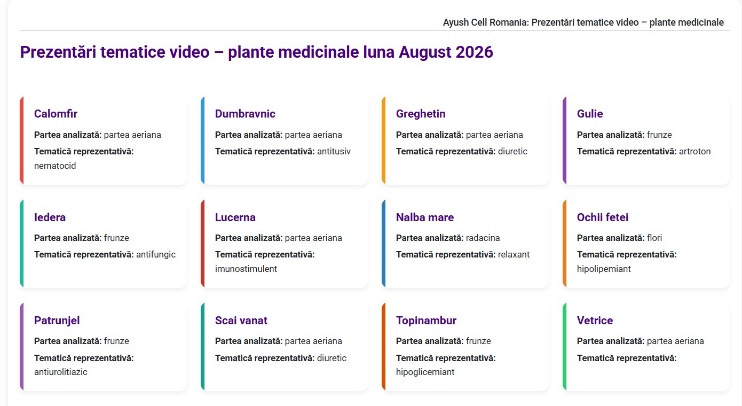
The August 2026 issue continues an interdisciplinary exploration of medicinal plants, bringing together traditional uses, ethnobotanical data, biological mechanisms, and modern research to highlight distinctive properties.
The August 2026 issue of the Digital Medicinal Plants Magazine has been published, continuing to expand the collection of video presentations produced by Ayush Cell Romania.
The twelve plants in this issue are especially diverse, ranging from familiar species in everyday use, such as parsley, alfalfa, ivy, and marsh mallow, to plants less commonly featured in popular materials, such as bastard balm, motherwort, costmary, and golden tickseed.
This diversity illustrates an important focus of the project: rediscovering plant resources by carefully investigating a specific property that can offer a fresh perspective on the plant.
The presentation method goes beyond a general description of the properties of a medicinal plant.
For each plant resource, a plant part and a representative topic are selected, and the review then examines how that topic can be supported by traditional evidence, phytochemical composition, biological mechanisms, and experimental or clinical research.
Sometimes a substantial body of documentation is available and allows well-supported correlations.
In other cases, the evidence is still limited, and the presentation remains exploratory, carefully distinguishing traditional use, experimental findings, and hypotheses deserving further research.
Distinguishing these levels of evidence is an important part of the series' educational value.
Explanatory note
The range of topics is significant. A single issue investigates effects on lipid and glucose metabolism, urinary function, the respiratory system, immunity, the musculoskeletal system, and relaxation, alongside antifungal, nematicidal, and antitoxemic properties.
The magazine thus shows how differently even seemingly familiar plants can be examined in terms of their functions.
Frunza de gulie, for example, is considered from the perspective of joint nourishment, while Jerusalem artichoke leaves are investigated in relation to glucose metabolism.
Choosing plant parts that are less commonly emphasized in phytotherapy presentations helps broaden the field of inquiry.
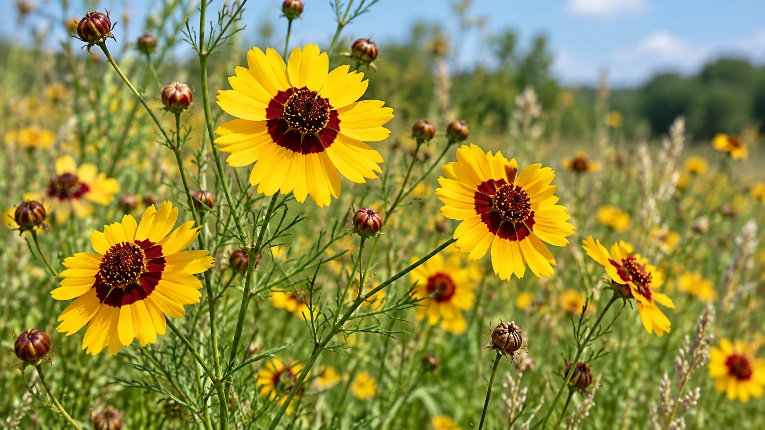
An illustrative example of this methodology is Ochii fetei (Coreopsis tinctoria), examined for lipid-lowering activity.
Reviewing this property allows several levels of research to be followed, from observations concerning triglycerides and cholesterol to recent investigations of marein, one of the plant's characteristic compounds, and cellular mechanisms involved in lipid metabolism. Experimental findings concerning lipophagy and the PI3K/AKT/mTOR pathways can thus be related to observed metabolic outcomes without confusing an experimental mechanism with proof of a clinical effect.
This distinction between promising findings, experimental demonstrations, and existing human observations provides readers with a more accurate view of current knowledge.
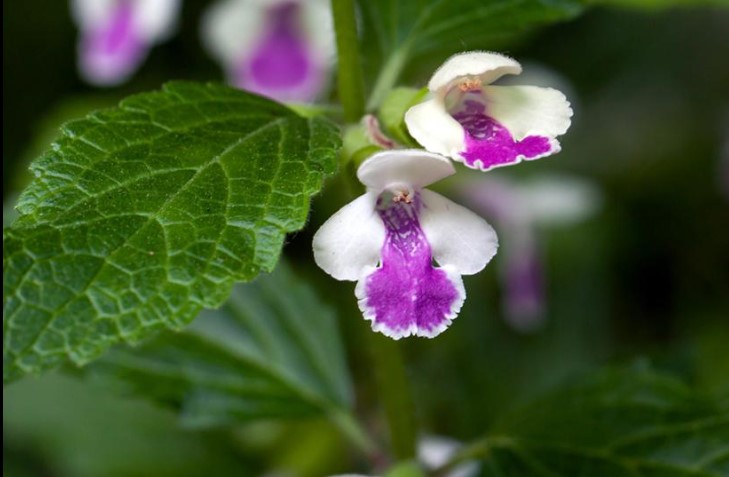
A different example is dumbravnic (Melittis melissophyllum), whose antitussive focus begins with documented traditional European uses, including remedies for cough and throat discomfort.
Research on antioxidant, anti-inflammatory, antispasmodic, or antimicrobial activity may offer complementary evidence for understanding this use, but direct clinical documentation remains more limited. In such a case, the presentation's value lies in carefully bringing together existing clues without treating a plausible convergence as therapeutic certainty.
The August issue also shows how familiar plants can be reconsidered from more specific angles. Ivy (Hedera helix), often associated with respiratory uses, is examined here for the antifungal action of its leaves. Alfalfa (Medicago sativa), primarily known as a nutritious, fortifying plant, is explored for immunostimulatory properties. Marsh mallow (Althaea officinalis) root is analyzed for relaxing potential, expanding the discussion beyond its familiar emollient and mucosal-protective effects. Familiar plants are thus viewed from less common but documentable perspectives.
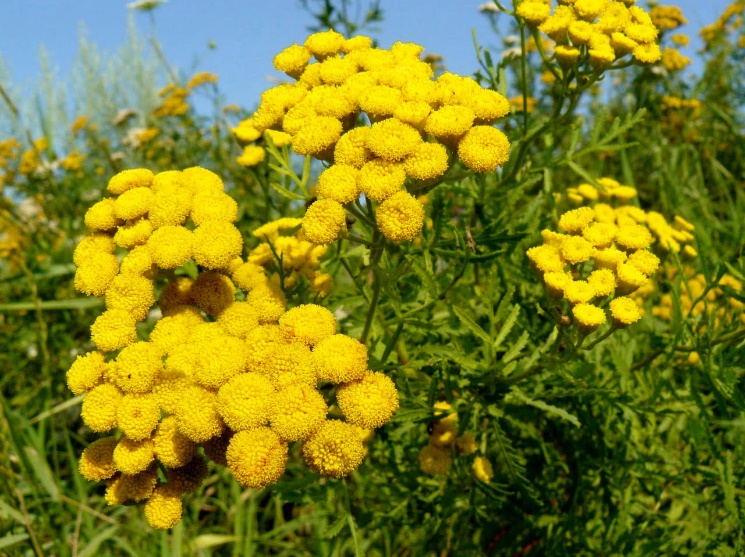
The same openness is present in the study of parsley (Petroselinum crispum) leaves for anti-urolithiasis activity, or vetricei (Tanacetum vulgare), for which the antitoxemic topic calls for careful correlation of traditional evidence with biological mechanisms and research.
In these cases, the presentations provide reference points for understanding and investigation while maintaining the distinction between traditional use, experimental evidence, and therapeutic applicability.
A presentation is not merely intended to confirm what is already well known about a medicinal plant.
Sometimes its value lies in identifying a less-investigated property, finding research conducted in countries with different phytotherapeutic traditions, or noticing convergence between ethnobotanical use and a mechanism identified by contemporary research.
For plants with less therapeutic documentation, this approach is especially important: information is presented as a starting point for deeper inquiry, with the available degree of certainty clearly delineated.
At the same time, the common structure of the presentations makes comparisons possible.
The plant part used, relevant composition, selected property, possible mechanisms, representative studies, traditional uses, and practical applications form a well-defined research pathway.
Cited research is placed in context, identifying authors, country, and year when relevant to understanding its development. In this way, scientific information becomes accessible.
The August 2026 issue demonstrates the increasing maturity of this editorial method. The twelve plants form more than a series of independent fact sheets: they are examples of how a plant resource can be investigated today.
Tradition sometimes provides the starting point, phytochemistry identifies relevant substances, pharmacology explores mechanisms, and modern research tests particular effects and raises new questions. The value lies in connecting these levels and presenting them with a degree of confidence appropriate to the available evidence.
Digital Medicinal Plants Magazine thus gradually develops a genuine video documentation library. Each monthly issue adds twelve more perspectives, while personalized selection makes it possible to group plants from different issues by properties, functional systems, botanical families, or individual study interests.
Successive issues and the ability to reorganize materials by theme turn the collection into a flexible resource for reference and deeper study.
Access to the video presentations is integrated into Ayush Cell Romania's platform and requires users to sign in.
The August 2026 issue adds twelve new resources—and, above all, twelve distinct avenues for exploring medicinal plants—helping create a perspective in which tradition, observation, research, and documentation complement one another.