| 1 | AMN-România Ayurveda Lecturers’ Meeting – September 12, 2026 |
Meeting on the start of the 2026–2027 study year, organizing course groups, and preparing upcoming Ayurveda educational activities and events.
On Saturday, September 12, 2026, beginning at 11:00 a.m., AMN-România Ayurveda lecturers will hold another online meeting to prepare for the new 2026–2027 study year and establish the main reference points for the coming educational period.
At the beginning of the new Ayurveda course year, presentation methods will be updated, the various curriculum components coordinated, and lecturers’ activities assigned.
The meeting provides an opportunity to present an overview of the new study year’s objectives and the ways they can be achieved.
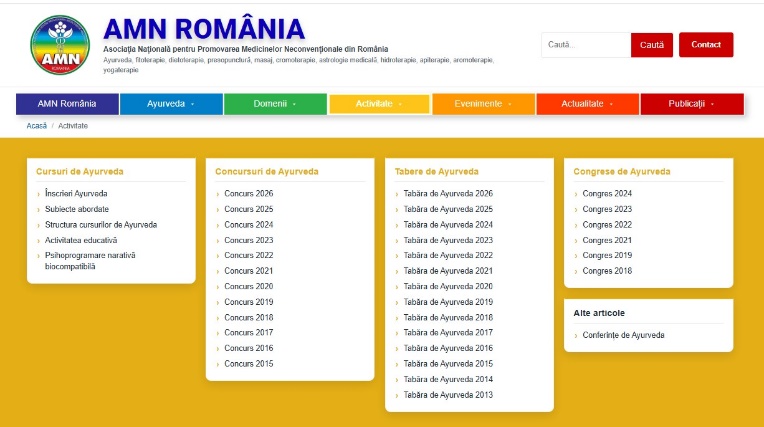
A major topic is the Ayurveda course curriculum for 2026–2027. Thematic areas to be studied in greater depth and the sequence of study materials will be presented.
The progression of the different Ayurveda curriculum sections will be explained. Emphasis will be placed on continuity of training and on integrating lectures, written materials, and digital resources made available to students.
The criteria for assigning study groups by section and chapter will be reviewed. This step is important to the smooth running of classes throughout the year because it aligns lecturers’ work with each group’s needs.
The meeting will address administrative matters associated with the start of a new study year, directly related to organizing educational activities, communicating with participants, and using available resources.
A separate topic will be the regular use of the Written Materials section on ayushcell.ro. This section is one of the central study resources for participants in the Ayurveda course.
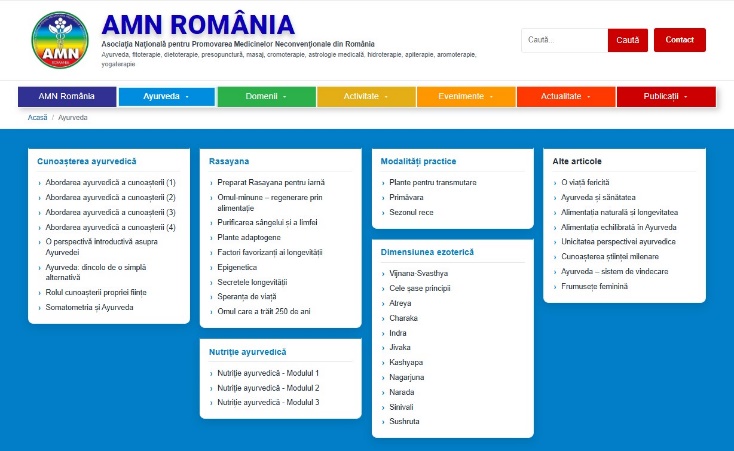
The Written Materials section brings together resources needed to explore Ayurveda course topics in greater depth and provides access to updated educational materials.
Regular consultation of this section helps lecturers navigate the curriculum and provides a common reference for different groups. In this way, the subjects presented, study materials, and overall pace of learning can remain aligned.
Regular use of this application enables the selection and organization of course materials for each stage of study.
By integrating this tool into their daily work, lecturers can track curriculum progress, match materials to the subjects taught, and guide participants along a well-organized learning path.
The ayushcell.ro online platform is a guide to the educational process as a whole.
Another important subject is preparations for Ayurveda Day 2026. The meeting will discuss the event’s general framework, planned topics, and how it highlights Ayurveda both as a traditional system of knowledge and as an active, established field of study in Romania.
In this context, activities carried out in cooperation with the Embassy of India in Romania will be presented, along with ways to continue this cooperation. Events organized in this framework allow a broad presentation of ancient Ayurvedic tradition and help develop a consistent, lasting cultural and educational bond between Romania and India.
The September 12, 2026 meeting brings together several complementary aspects of Ayurveda lecturers’ work: preparation for the new study year, group organization, consistent use of digital resources, preparations for Ayurveda Day, and events planned in cooperation with the Embassy of India.
The meeting will also introduce the Ayurveda lecturers’ application on ayushcell.ro, designed to simplify unified management of everyday educational activities. It will cover the main areas for students, study groups, attendance records, activity reports, and meeting schedules. Special attention will be paid to using these functions in sequence, from registering and assigning participants to organizing groups, completing reports, and monitoring outstanding matters.
The application for Ayurveda lecturers provides quick access to information on everyday operations, helping them use the available digital tools efficiently, consistently, and clearly.
Through this integrated approach, the AMN-România Ayurveda lecturers’ meeting aims to provide the organizational guidance needed for the beginning of the 2026–2027 study year and support continuity in regular, attentive educational work with good cooperation among everyone involved in the study of Ayurveda.
The „Written Materials”: ayushcell.ro/suport_scris