| 1 | State Visit to Romania by Her Excellency Shrimati Droupadi Murmu, President of the Republic of India |
Official Ceremonies Honoring Her Excellency Shrimati Droupadi Murmu Reaffirm the Continuity of Romanian–Indian Cooperation in Education, Culture, and Traditional Knowledge
The state visit to Romania by Her Excellency Shrimati Droupadi Murmu, President of the Republic of India, from July 23 to 25, 2026, marked one of the most important moments in Romanian–Indian relations in recent decades.
The first state visit to Romania by an Indian head of state in nearly three decades reaffirmed the high level of dialogue between the countries and their shared determination to deepen cooperation in education, culture, research, the economy, and people-to-people exchanges.
Through its diplomatic, academic, and cultural character, the visit reaffirmed the depth of bilateral relations and a common interest in strengthening cooperation based on education, research, intercultural dialogue, and appreciation of each nation's spiritual, cultural, and scientific heritage.
The occasion also highlighted that lasting partnerships rest not only on aligned institutional interests, but also on personal connections, exchanges of values, and mutual respect for each people's identity and traditions.
In this context, universities, research institutions, professional and cultural organizations, and centers dedicated to promoting traditional knowledge play an essential role in developing stable, coherent, forward-looking cooperation.
The visit thus conveyed a clear message about the importance of cultural and educational diplomacy in building lasting bridges between societies, encouraging the exchange of experience, and supporting joint initiatives in health, education, cultural heritage, research, and innovation. It reaffirmed that dialogue between civilizations, supported by knowledge and academic cooperation, provides one of the strongest foundations for deepening Romanian–Indian relations for the benefit of both countries.
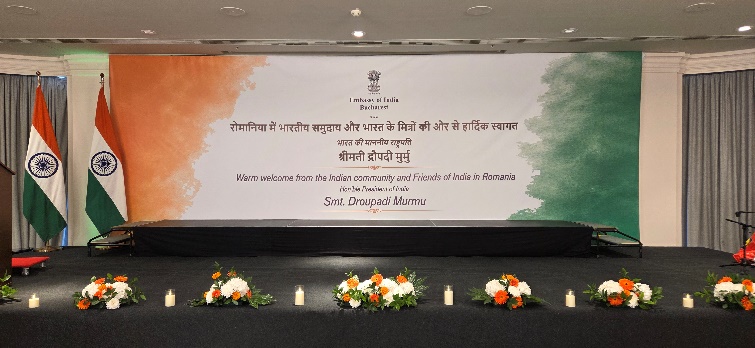
At the invitation of the Embassy of India in Bucharest, Andrei Gămulea, President of AMN-România and coordinator of Ayush Cell Romania – the AYUSH Information Center in Bucharest, and Aurora Nicolae, Vice President of AMN-România, had the honor of attending two official events during this historic visit: the Doctor Honoris Causa award ceremony at the Bucharest University of Economic Studies and the festive meeting of India's President with members of the Indian community and friends of India in Romania, held at the JW Marriott Bucharest Grand Hotel.
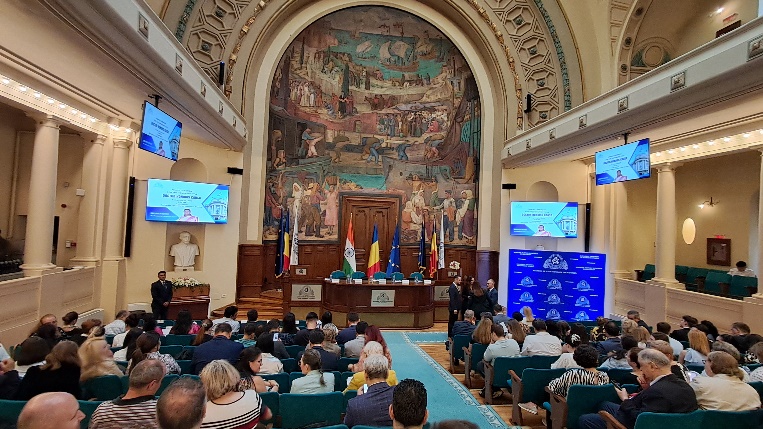
Their participation continued the cooperation developed over recent years with Indian institutions and reflected their sustained commitment to Ayurvedic education, dialogue, and cultural exchange between Romania and India.
The Ceremony at the Bucharest University of Economic Studies – A Tribute to Education and Knowledge
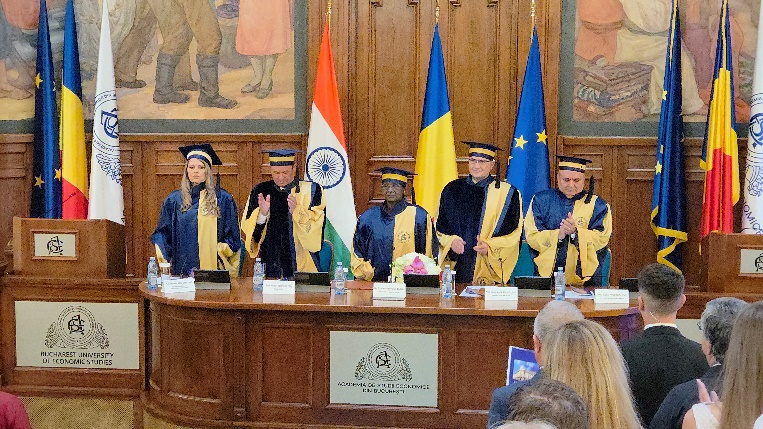
The official program began on Friday, July 24, at the Bucharest University of Economic Studies with the solemn ceremony conferring the title of Doctor Honoris Causa on Her Excellency Shrimati Droupadi Murmu.
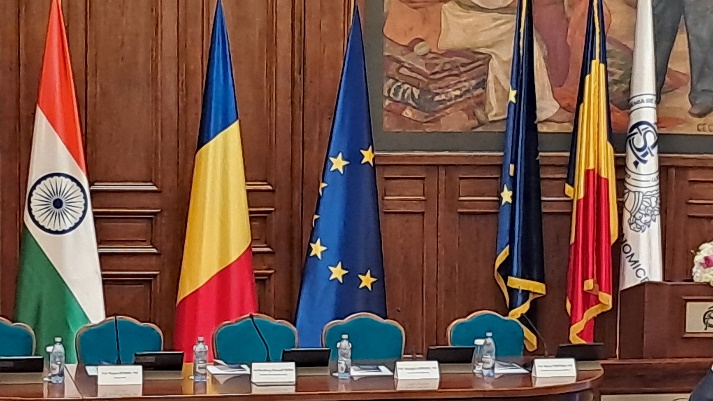
The event brought together university representatives, public authorities, diplomats, and many guests from Romania and India, in a setting that emphasized mutual respect and appreciation for the Indian President's contribution to education, international cooperation, and intercultural dialogue.
By granting its highest academic distinction, the university honored a figure embodying not only the constitutional authority of the world's most populous democracy, but also the values of public responsibility, balance, respect for knowledge, and human development through education.
The moment carried strong symbolic significance, reaffirming universities as privileged spaces for dialogue between civilizations and the role of free exchange of ideas, research, and international academic cooperation in social progress.
Education – The Foundation of Cooperation Between India and Romania
In her acceptance speech for the honorary doctorate, Her Excellency delivered a deeply future-oriented message, emphasizing education as one of the most important resources for bringing peoples closer and building a world based on trust, mutual respect, and collaboration.
The President of India highlighted the rich cultural heritage of both countries and noted that, despite the distance between them, India and Romania are united by shared values and respect for culture, knowledge, and human creativity.
Romania has given the world many remarkable artists, musicians, writers, and thinkers, while India continues to share its cultural heritage through Yoga, Ayurveda, dance, music, cinema, and Indian cuisine—all fields attracting growing interest in Romania.
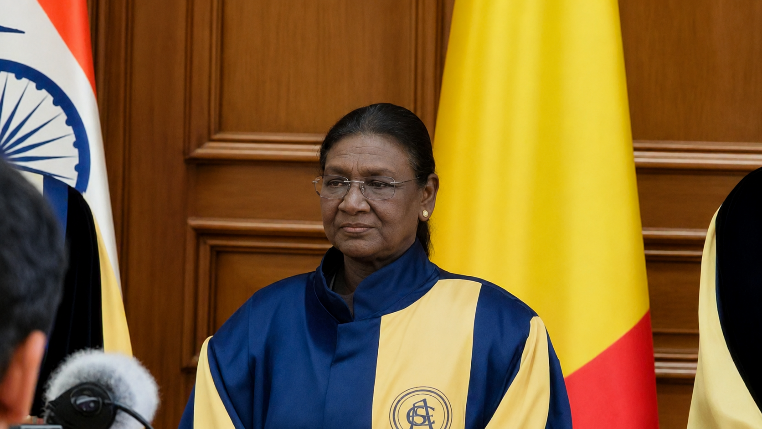
These references took the speech beyond ceremonial remarks, outlining a vision of international cooperation in which the exchange of cultural and educational values provides one of the strongest foundations for relations between states.
The message reaffirmed that sustainable development of modern societies requires cultivating knowledge, dialogue, and respect for cultural diversity, with universities playing a central role.
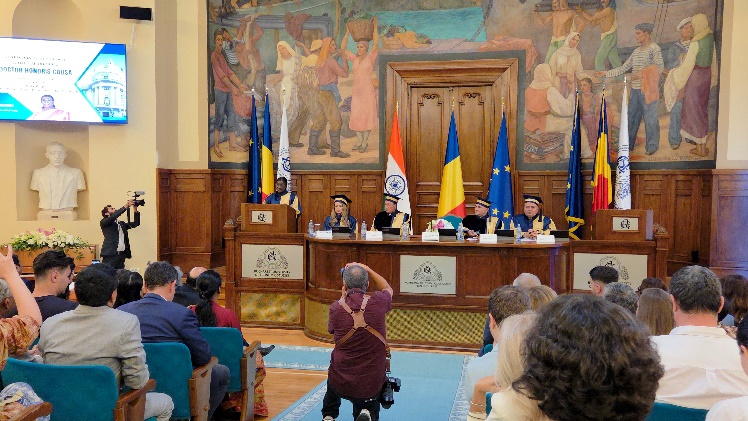
In particular, Ayurveda's inclusion among the cultural and scientific values India contributes to universal heritage had special significance. This reference confirms the place of traditional AYUSH systems in India's cultural diplomacy and highlights the importance of educational initiatives that foster authentic knowledge of these traditions abroad.
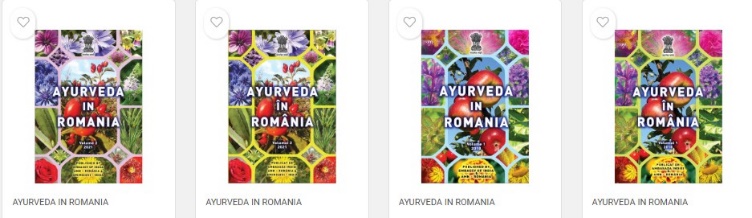
For Romania, where systematic Ayurvedic education has been conducted for more than three decades, this message encourages the continuation of educational and publishing projects developed in the spirit of Romanian–Indian cooperation, including Ayush Cell Romania's activities and the bilingual “Ayurveda in Romania” series, a continuing expression of this dialogue.
The university ceremony therefore went beyond the significance of an academic distinction, expressing mutual respect and reaffirming the belief that education, culture, and knowledge are the most enduring bridges between peoples.
The Meeting with the Indian Community Highlighted the Human Dimension and Genuine Closeness Between India and Romania
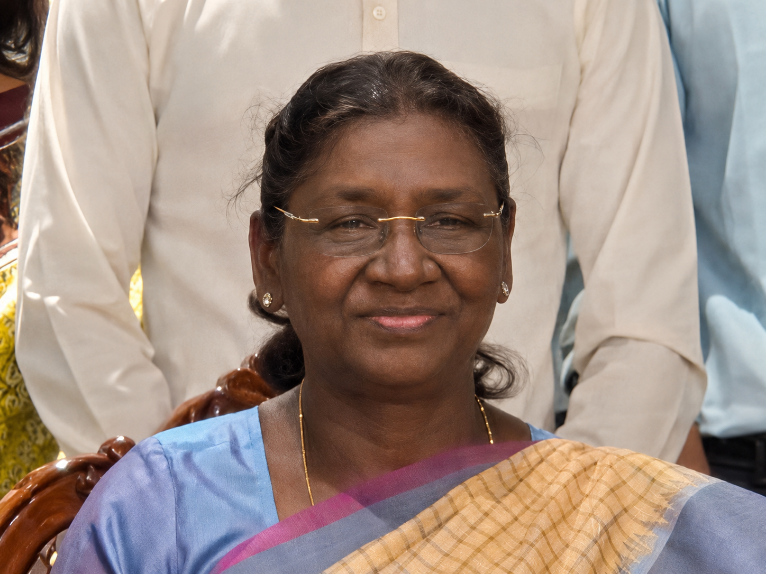
In the final part of the official state-visit program, Her Excellency Shrimati Droupadi Murmu met with members of the Indian community in Romania and many friends of India representing academic, cultural, economic, and diplomatic circles at the JW Marriott Bucharest Grand Hotel. The atmosphere reflected the deeply human character of relations between the two countries, complementing the institutional and academic dimension of the official ceremonies.
The meeting was characterized by remarkable naturalness, warmth, and human closeness, lending it a sense of authenticity and cordiality.
Through her gracious and balanced presence, Her Excellency Shrimati Droupadi Murmu created an atmosphere of trust, respect, and affection in which simplicity, elegance, and openness to dialogue came together naturally.
Her attention to each person, openness in communication, and warm, affectionate manner of interacting with those present conveyed a deep sense of closeness, inspiration, and mutual respect, making the meeting memorable for all participants.
Throughout the meeting, gestures of consideration, cordiality, and genuine interest in those present created an atmosphere of mutual respect and fellowship.
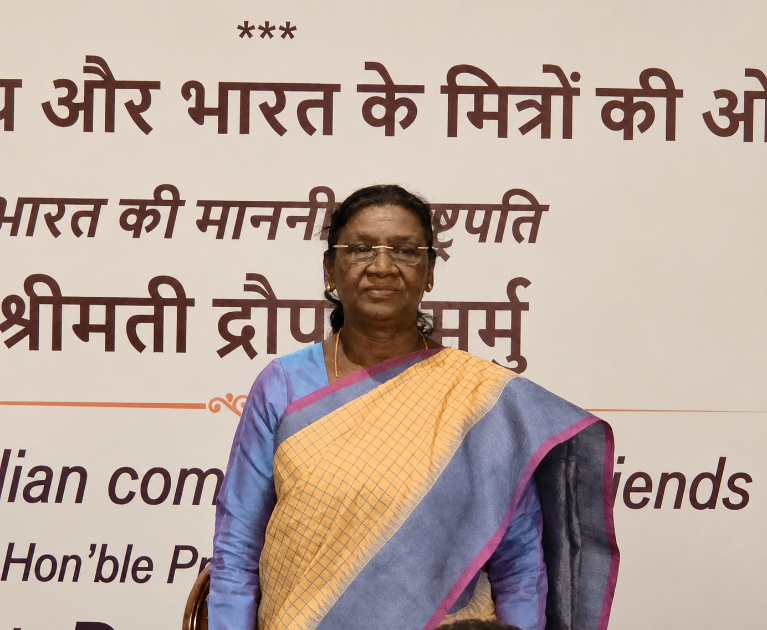
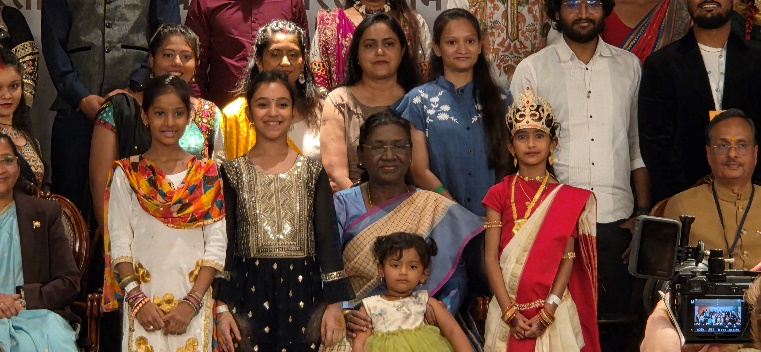
Her serenity, generosity of spirit, discreet and graceful affection, and natural manner of engaging with participants turned the official reception into a deeply human and memorable experience.
These qualities vividly illustrated the values India promotes in its international relations: respect for every person's dignity, open dialogue, and human closeness as the foundation of genuine cooperation.
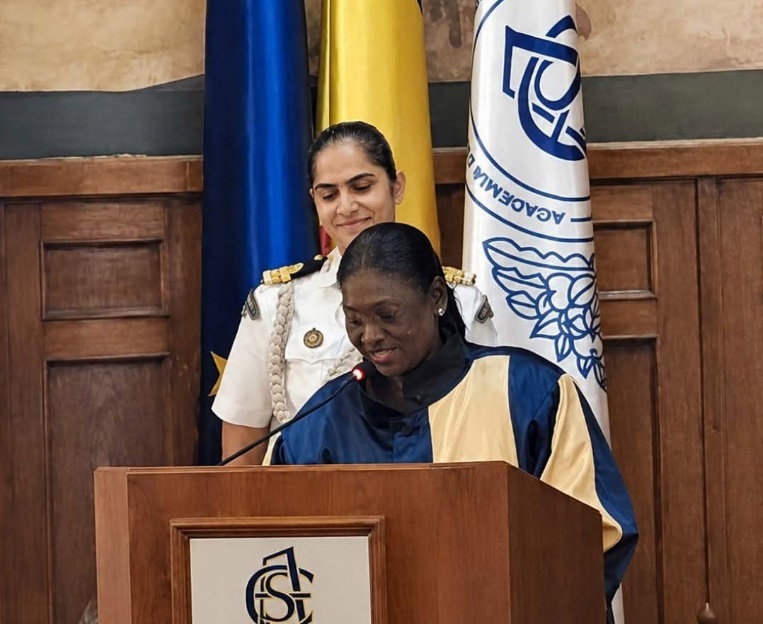
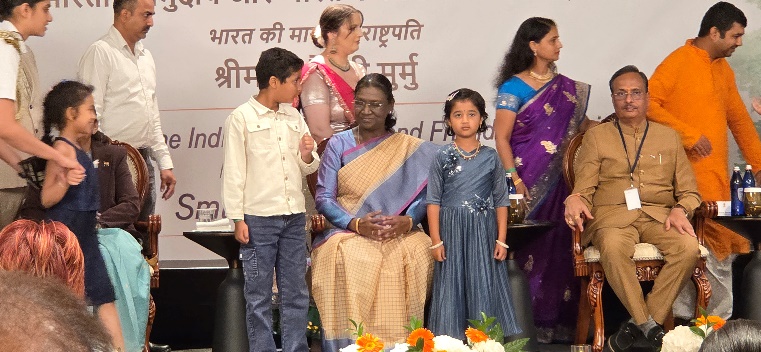
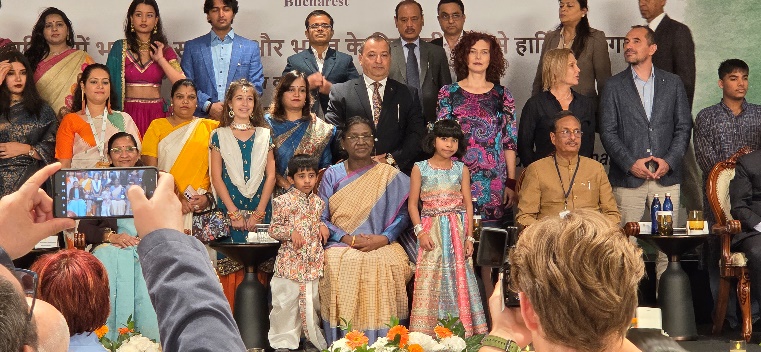
The participation of AMN-România representatives provided an opportunity to reaffirm relationships built over the years with Indian institutions in promoting traditional AYUSH systems. It also helped strengthen cultural and educational dialogue between India and Romania.
“Vasudhaiva Kutumbakam” – An Idea Brought to Life
The meeting's atmosphere offered a tangible expression of the fundamental Indian cultural principle “Vasudhaiva Kutumbakam,” according to which all humanity forms one great family. Far from remaining a symbolic phrase, this vision could be felt in the natural way people of different cultures, professions, and backgrounds shared a sense of closeness and mutual respect.
At a time when intercultural dialogue is increasingly important, the meeting showed that interstate relations can be strengthened not only through agreements and institutional cooperation, but also by cultivating genuine human bonds grounded in trust, friendship, and shared values.
This human dimension of diplomacy is a defining feature of India–Romania relations and largely explains the continuity of cooperation in education, culture, research, and the promotion of traditional heritage.
In the context of the state-visit messages, Her Excellency's reference to Ayurveda alongside Yoga, music, dance, cinema, and cuisine has particular significance. It confirms that India regards the traditional AYUSH systems not merely as expressions of its own cultural identity but also as valuable means of international dialogue that bring peoples closer through education and knowledge.
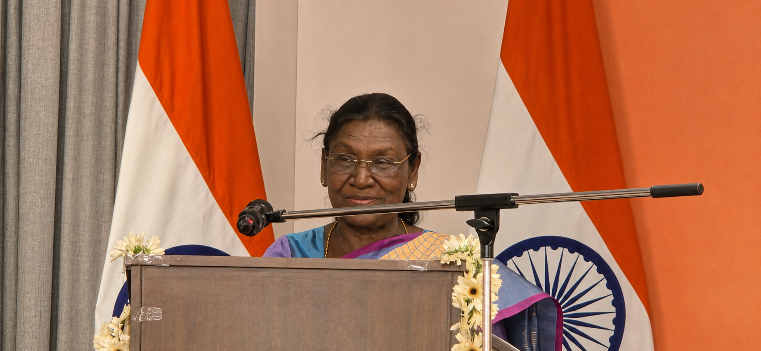
This perspective has particular resonance in Romania. For more than three decades, AMN-România, and more recently Ayush Cell Romania – the AYUSH Information Center in Bucharest, have promoted Ayurveda through a rigorous educational framework based on studying classical texts, cooperating with Indian academic institutions, and developing publishing projects.
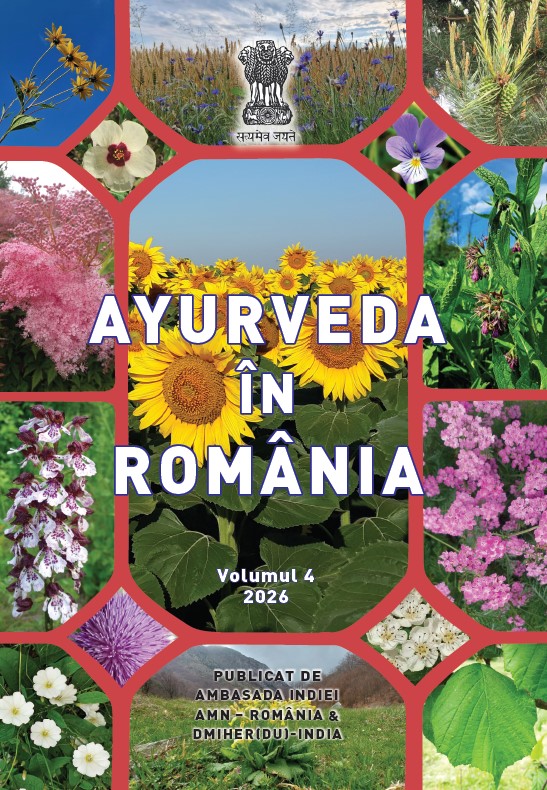
The bilingual “Ayurveda in Romania” series, now in its fourth volume, is part of this work. Published in Romanian and English, it documents the development of Ayurvedic studies in Romania and reflects the results of continuing cooperation between Romanian and Indian institutions. Preparing both editions of Volume 4 illustrates the project's continuity and contribution to strengthening bilateral cultural relations.
The festive meeting at the JW Marriott went beyond a formal reception to express values underpinning Romanian–Indian cooperation: mutual respect, human closeness, cultural dialogue, and the conviction that education and knowledge are the strongest bridges between nations.
The State Visit Strengthens the Framework for Educational and Cultural Cooperation Between Romania and India
The events of July 24 and 25, 2026, highlighted the continuity of cooperation developed over time between Romania and India, based on education, culture, research, and the promotion of India's traditional heritage. Relations have grown steadily over recent decades, with education emerging as one of the most productive areas of bilateral cooperation.
Ayurveda occupies a distinctive place in this process. Internationally recognized as one of the most systematically organized traditional approaches to health knowledge, Ayurveda is both an expression of India's cultural heritage and a growing field of scientific and educational interest.
The Indian President's reference to Ayurveda among the cultural values India contributes to universal heritage is particularly meaningful for initiatives promoting it beyond India's borders.
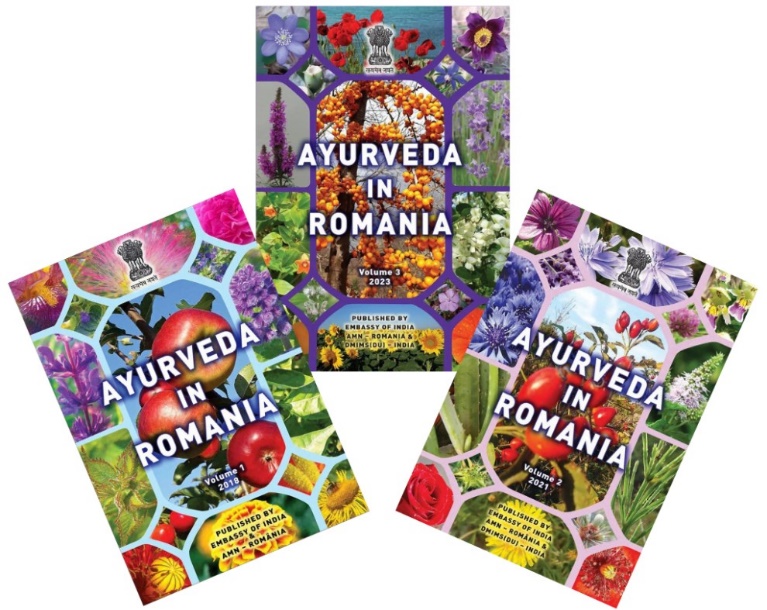
The editorial project “Ayurveda in Romania” is part of this development. Conceived as a bilingual documentary work, it systematically presents the evolution of Ayurvedic studies in Romania, institutional contributions, educational activities, and the integration of traditional Ayurvedic principles into a modern training framework.
The series began in 2018, when its first volume was launched in Bucharest during the official visit of India's Vice President.
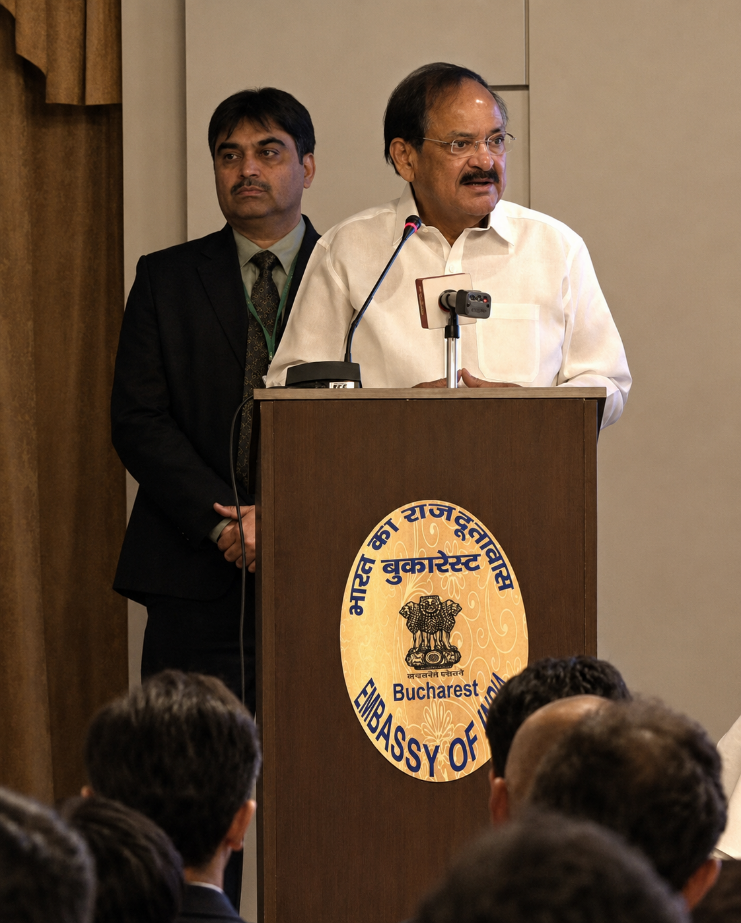
Publishing Romanian and English editions simultaneously expressed, from the outset, the intention to make Romania's experience in Ayurvedic education accessible to both a national and an international audience.
In subsequent years, each new volume documented further stages in this educational project, describing training programs, international partnerships, and research that strengthened Ayurvedic studies in Romania. The work became a record of sustained, future-oriented institutional cooperation.
Education Creates Lasting Bridges Between People, Institutions, and Cultures
A central theme throughout the state visit was education's role in bringing peoples closer together. The messages delivered at the university ceremony and the atmosphere of the meeting with the Indian community reflected the same conviction: genuine dialogue is built on knowledge, mutual respect, and exchange of values.
This view is naturally reflected in the work of AMN-România and Ayush Cell Romania – the AYUSH Information Center in Bucharest. Through courses, conferences, publications, editorial projects, and academic collaborations, these institutions promote rigorous, authentic knowledge of traditional AYUSH systems. Cooperation with universities and institutions in India demonstrates that education can be a privileged setting for international collaboration.
Exchanges among teachers, researchers, and students, joint conferences, and bilingual publishing projects help form a community united by an interest in studying and deepening Ayurvedic knowledge. From this perspective, the President's state visit confirmed that education, culture, and scientific dialogue remain the strongest foundations for sustainable cooperation between Romania and India.
A Milestone for the Future of Romanian–Indian Cooperation in Education and Traditional Knowledge
The state visit to Romania by Her Excellency Shrimati Droupadi Murmu, President of India, will undoubtedly remain an important milestone in contemporary bilateral relations.
Beyond its diplomatic dimension, the visit reaffirmed that closeness between states is built through people, institutions, and projects that generate trust, mutual respect, and long-term cooperation.
The university ceremony and the meeting with the Indian community and friends of India in Romania illustrated two complementary dimensions of modern diplomacy. The former emphasized education, research, and university cooperation as foundations of sustainable development; the latter highlighted human closeness, mutual respect, and the cultural ties that give substance to relations between two peoples.
For AMN-România representatives, attending these solemn occasions was a special honor and confirmation that Romanian projects in Ayurvedic education are aligned with areas of interest actively promoted by India internationally.
Ayush Cell Romania's activities as the AYUSH Information Center in Bucharest, training programs, conferences, university partnerships, and bilingual editorial projects each contribute to authentic educational and cultural dialogue between the countries.
Her Excellency's messages during the state visit reaffirmed education's essential role in bringing peoples closer, highlighting how India's cultural and scientific heritage continues to inspire millions worldwide.
The explicit reference to Ayurveda illustrates its place in India's living heritage and international cultural dialogue. For Romania's Ayurvedic study community, this recognition both affirms the value of work undertaken to date and encourages its continuation with the same rigor and responsibility.
The Indian President's state visit demonstrates that Romania–India relations extend beyond institutional cooperation and rest on universal values, including respect for knowledge, intercultural dialogue, education, and academic collaboration. These values lay the groundwork for lasting joint projects.
Her Excellency Shrimati Droupadi Murmu's state visit marks a new stage in Romanian–Indian cultural and educational relations, giving fresh impetus to joint projects and deeper dialogue on strategic priorities, particularly education, research, and the promotion of traditional knowledge.