| 1 | Romanian–Indian educational cooperation in Ayurveda continues through new publishing projects and training programs |
Working meeting at the Embassy of India on developing the “Ayurveda in Romania” project and strengthening educational cooperation between Romania and India
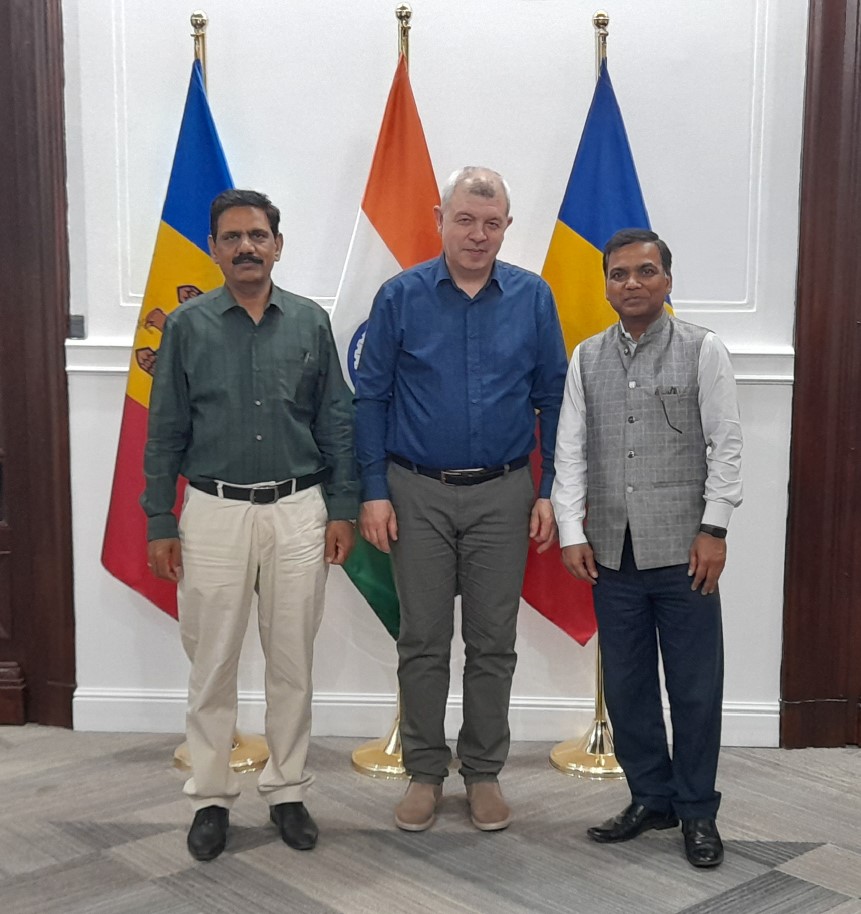
As part of the ongoing dialogue between institutions involved in promoting the traditional system of Ayurveda, a working meeting took place on Wednesday, July 8, 2026, at the Embassy of India in Bucharest. Participants included representatives of the Indian diplomatic mission, Mr. Sitesh Kumar and Mr. Mahesh Chand, and Andrei Gămulea, coordinator of Ayush Cell România – the AYUSH Information Center in Bucharest and president of AMN-România. The meeting focused on reviewing the current state of ongoing educational programs and identifying new avenues for collaboration in cultural and educational relations between Romania and India.
The discussions highlighted education as one of the most important tools for drawing upon India’s traditional heritage and developing intercultural dialogue. In this context, the activities organized through Ayush Cell România and AMN-România aim to create a coherent educational framework through courses, conferences, publications, and publishing projects devoted to understanding the traditional system of Ayurveda.
These initiatives continue a path begun in 1995 with the development of systematic Ayurveda study programs in Romania, later strengthened through institutional cooperation between Romanian and Indian partners.
Today, this cooperation represents one of the most extensive forms of educational promotion of Ayurveda in Central and Eastern Europe.
Volume 4 of “Ayurveda in Romania” marks a new stage in the project
An important part of the meeting was an update on preparations for the publication of the fourth volume of “Ayurveda in Romania,” a publishing project approaching completion.
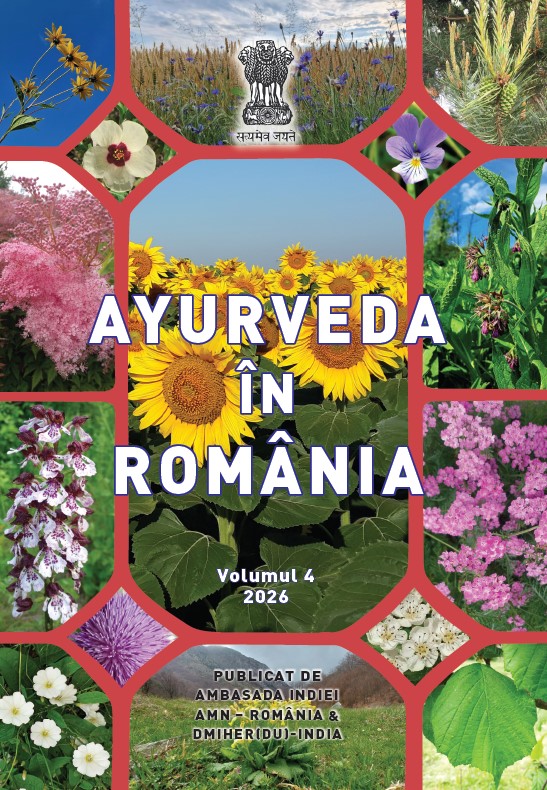
The stages of preparation for the official launch of both the Romanian edition and the English-language version, intended for an international readership, were reviewed.
The “Ayurveda in Romania” series holds a special place in Romanian–Indian cooperation because it systematically documents the development of Ayurveda studies in Romania, educational activities, research directions, and experience gained over recent decades.
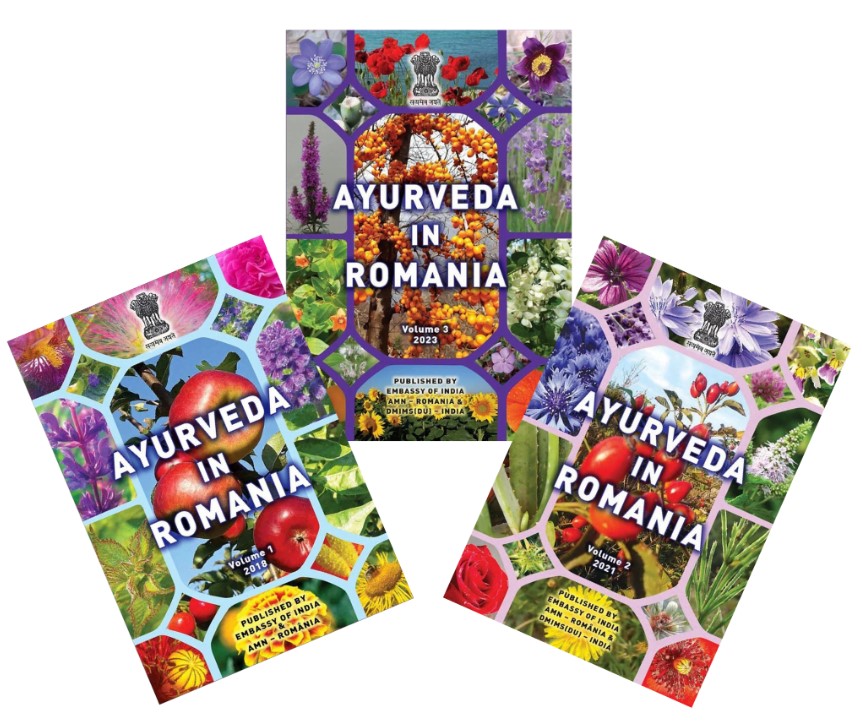
The earlier volumes highlight both the development of training programs and their contribution to raising awareness of a holistic perspective on health rooted in traditional Ayurvedic principles. The work is published in Romanian and English, giving the international community access to Romania’s experience in Ayurvedic education.
Cooperation built on solid institutional foundations
The meeting recalled the importance of the India–Romania Cooperation Forum held in Bucharest on September 19, 2018, when the first volume of “Ayurveda in Romania” was officially launched in the presence of the Vice President of the Republic of India. That event marked a significant milestone in strengthening cultural and educational cooperation between the two countries and demonstrated a shared interest in promoting traditional Indian knowledge in Romania.
In subsequent years, cooperation expanded through educational programs, Ayurveda conferences and retreats, specialist publications, and stronger academic ties with Indian universities.
Education remains the primary means of promoting the authentic values of the traditional science of Ayurveda
The participants emphasized that promoting Ayurveda begins with developing high-quality educational programs that provide an authentic, well-grounded understanding of this ancient tradition.
Ayurveda stands out for its systematic character, its integrative approach to health, and the applicability of its universal principles in different cultural contexts, including Romania.
In this sense, the publishing projects, training programs, and activities organized through Ayush Cell România and AMN-România are complementary parts of a broader educational effort to build a strong culture of health founded on knowledge, responsibility, and intercultural dialogue.
The meeting at the Embassy of India confirms the continuity of this cooperation and both parties’ openness to developing new projects.
Through initiatives such as the “Ayurveda in Romania” series, the organization of educational programs, and expanding academic and cultural dialogue, cooperation between Romania and India continues to offer a model for promoting traditional knowledge through education, research, and exchanges of experience.