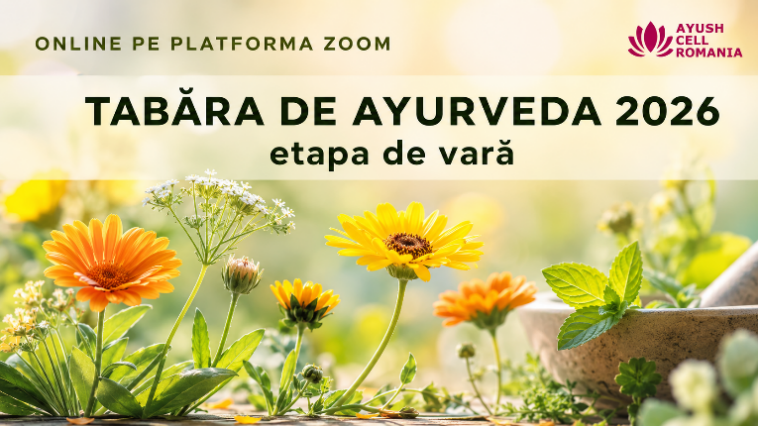
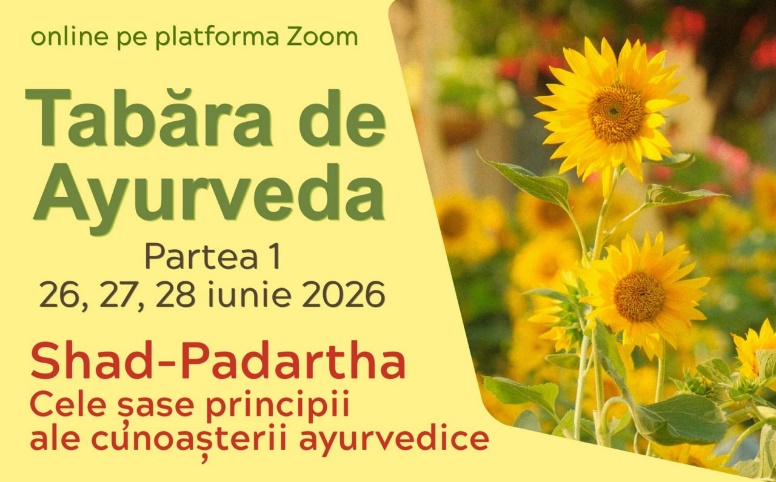
| 1 | Summer 2026 Ayurveda Retreat – Part 1 – June 26, 27, and 28, 2026 |

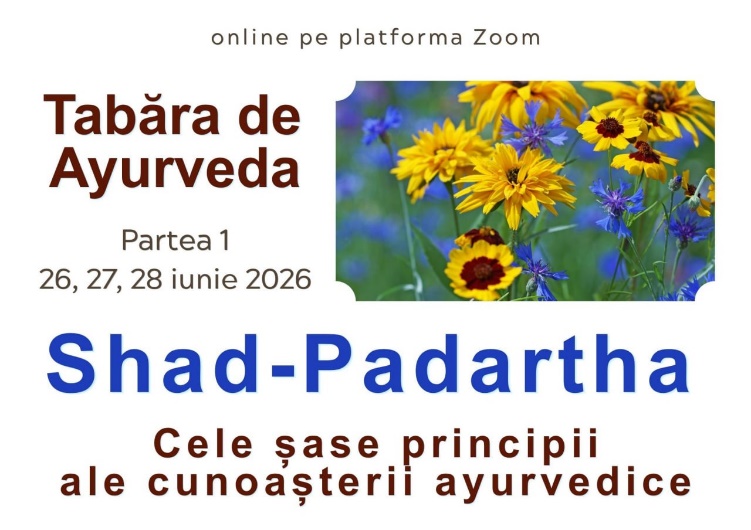
Program for Part 1 of the Summer 2026 Ayurveda Retreat – an in-depth exploration of Ṣaḍ-Padārtha
The first part of the 2026 Ayurveda Retreat, taking place June 26, 27, and 28, offers participants a broad, practical exploration of the six fundamental principles of Ayurvedic knowledge, known in Ayurveda as Ṣaḍ-Padārtha.
This first stage of the event comprises six successive sessions, held in the morning and afternoon, starting at 9:00 a.m. and 3:00 p.m., respectively.
This schedule allows participants to progress through a subject essential to understanding how Ayurveda describes reality, the human being, life processes, the relationships between natural substances and their qualities and actions, and the operational principles by which these relationships may be recognized, interpreted, and applied in daily life.
The first day, June 26, 2026, begins at 9:00 a.m. with a session entitled “Summer Ayurveda Retreat, Part One – Morning.” This session will introduce the retreat’s subject and include an invocation of the sage Kapila.
This traditional reference at the start of the program is intended to orient attention toward the study of the six principles within a broad philosophical and initiatory framework, in which traditional Ayurvedic knowledge can be understood as a way of relating to existential reality with clarity.
Access: ayushcell.ro/tabere/tayv26
On the same day, the afternoon session begins at 3:00 p.m. It will cover the first two fundamental principles: similarity, Sāmānya-Padārtha, and differentiation, Viśeṣa-Padārtha. Sāmānya-Padārtha illustrates the law by which similar aspects mutually reinforce one another, supporting the growth, accumulation, and consolidation of beneficial natural processes.
Viśeṣa-Padārtha explains the function of differentiation, through which traditional Ayurveda distinguishes qualities, tendencies, effects, and therapeutic or preventive approaches. Together, these two principles provide an important key to understanding relationships among nutrition, constitution, plants, remedies, and states of being.
The second day, June 27, 2026, begins at 9:00 a.m. It includes an invocation of the Ayurvedic sage Asita and continues with the principle of substantiality, Dravya-Padārtha. This topic allows participants to deepen their understanding of substance as the support of qualities (guna) and actions (karman) in Ayurveda.
The principle of substantiality (Dravya) indicates that universal substance is a living support of manifestation, capable of carrying qualities, producing effects, and entering into complex relationships with human beings.
This perspective is fundamental to understanding the action of medicinal plants, foods, remedies, and all the natural means through which Ayurveda seeks to restore balance in the human being.
At 3:00 p.m. that day, the afternoon session continues with the principle of qualitative ordering, Guṇa-Padārtha, and the principle of action, Karman-Padārtha.
Guṇa-Padārtha provides criteria for identifying the qualities of a substance, state, constitution, or process. In Ayurveda, qualities are operational reference points that help explain effects. Karman-Padārtha completes this perspective by examining action: how a substance, quality, or process produces concrete changes. This session will be particularly important for those seeking to understand the connection between quality and effect, nature and function, knowledge and application.
The third day, June 28, 2026, begins at 9:00 a.m. The program includes an invocation of the sage Vāriovida and focuses on the principle of inseparable simultaneity, Samavāya-Padārtha. This principle expresses the profound, inseparable bond between certain aspects of manifestation, showing that some realities cannot be understood in isolation because they exist and operate together. Samavāya-Padārtha opens a subtle perspective on the inner coherence of reality and the way Ayurveda recognizes the unity of support, quality, function, and manifestation.
On the same day at 3:00 p.m., the first part of the Summer 2026 Ayurveda Retreat concludes with a synthesis of the six principles, Saṃyoga-Sarva-Padārtha. This final session brings together the topics studied over the three days.
The final session highlights how Sāmānya-Padārtha, Viśeṣa-Padārtha, Dravya-Padārtha, Guṇa-Padārtha, Karman-Padārtha, and Samavāya-Padārtha form a coherent system of knowledge. The focus will be on an integrated understanding of the principles and their application in Ayurvedic practice, observation of one’s own constitution, and development of discernment.
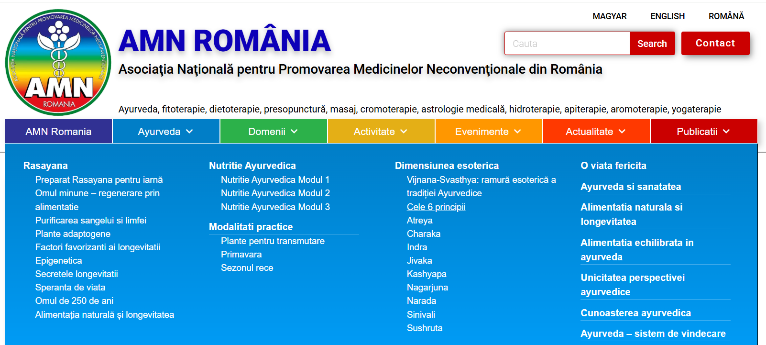
Shad-Padartha: amnromania.ro/cele-6-principii/
Part 1 of the Summer 2026 Ayurveda Retreat offers a structured course of study intended to lead progressively to a vivid, applicable, and deeply ordering understanding of Ayurvedic tradition. Studying Ṣaḍ-Padārtha in this context becomes a rigorous introduction to the Ayurvedic view of reality and an invitation to clarity, discernment, and a healthy orientation toward life.
Access: ayushcell.ro/tabere/tayv26