Ayurveda Agenda 23 / 2026 Contents

Events

1

An evening with Gurudev Sri Sri Ravi Shankar: a contemporary Romanian–Indian cultural dialogue

The event hosted by the Embassy of India in Bucharest creates a setting for an encounter between spirituality, humanistic values, and contemporary Indo-Romanian cultural cooperation.

On June 12, 2026, the event entitled “An Evening of Wisdom and Meditation with Gurudev Sri Sri Ravi Shankar”.

The event centers on Gurudev Sri Sri Ravi Shankar, an internationally renowned Indian spiritual leader recognized for his humanitarian work, promotion of peace, and contribution to spreading traditional spiritual practices and cultivating human values.
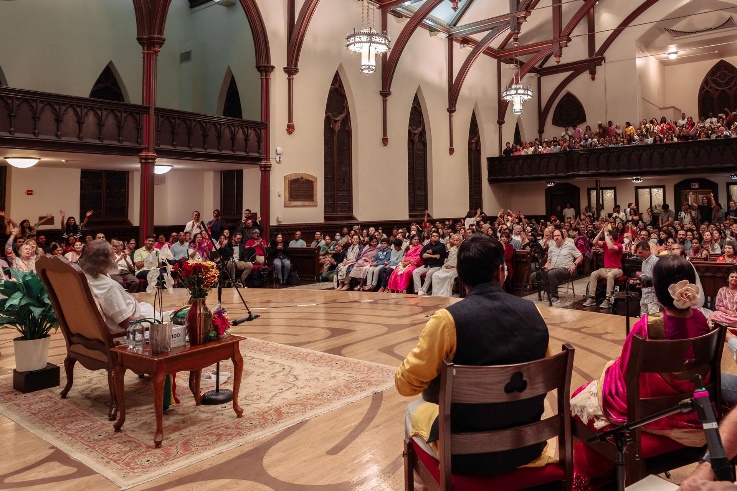
Through this meeting, the Embassy of India offers guests an excellent opportunity to engage with a vision in which wisdom, spirituality, inner balance, responsibility toward others, and the cultivation of peace are living, transformative points of reference in the dialogue between tradition and the present.

Founder of the Art of Living organization, established in 1981, Gurudev Sri Sri Ravi Shankar has developed programs focused on stress reduction, harmonizing personal life, education in human values, and fostering a global culture of peace.

His work is associated with the vision of a society free from stress and violence, where personal transformation, inner discipline, spirituality, awareness, and social engagement for the common good become complementary parts of a balanced life.

Through Art of Living programs, his message has reached many countries and communities, including educational and social settings, intercultural dialogue, humanitarian initiatives, and community rebuilding projects.

One of the central contributions associated with Gurudev Sri Sri Ravi Shankar is Sudarshan Kriya, a breathing practice incorporated into Art of Living programs. This method illustrates the importance that Indian tradition places on breathing as a bridge between body, energy, emotions, and consciousness. Such practices renew awareness that inner balance cannot be separated from quality of life, relationships, and participation in community.

The meeting at India House provides an opportunity to reflect on how traditional wisdom can be communicated today in an open, nonconfrontational, universally accessible form. Inner peace, the joy of life, and human values can transcend cultural and philosophical boundaries and become shared reference points in a world marked by tension, fragmentation, and excessive demands.
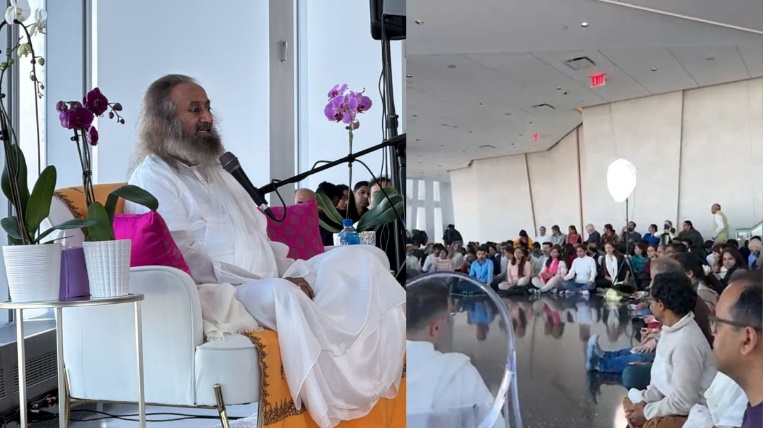
At the invitation of His Excellency Dr. Manoj Kumar Mohapatra, Ambassador of India to Romania, through the Embassy of India in Bucharest, AMN-România representatives will attend this event dedicated to the spiritual, cultural, and humanitarian values of contemporary India.
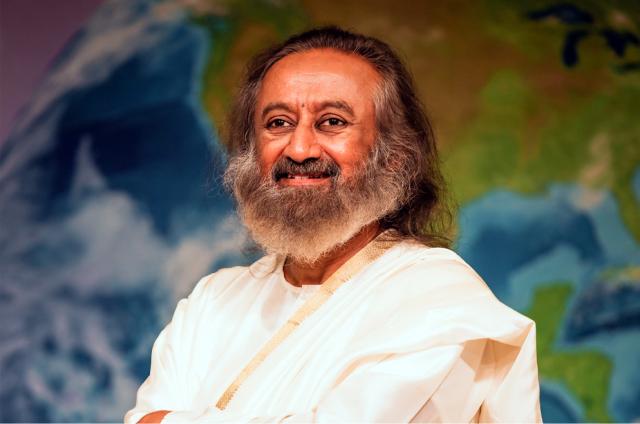
The presence of Mr. Andrei Gămulea, president of AMN-România, and Ms. Aurora Nicolae, vice president of AMN-România, reflects sustained openness to dialogue with India and initiatives bringing Romania and India closer through culture, knowledge, and diplomatic cooperation.

The traditional science of Ayurveda expresses a broad vision of life in which physical balance, harmony, clarity of consciousness, ethical conduct, and social integration are closely connected.
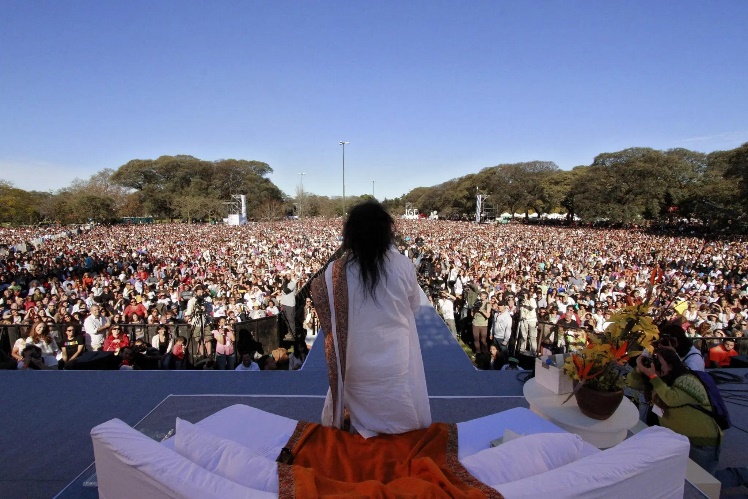
From this perspective, an evening devoted to Indian wisdom and tradition naturally aligns with values supporting a conscious, balanced, beneficial life.
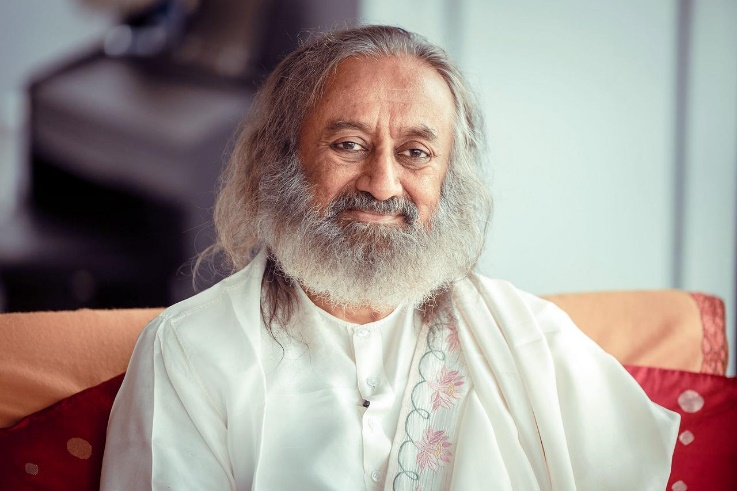
Such a meeting also holds special significance by bringing together two important dimensions: the living presence of Indian culture in Romania and the representation of a remarkable contemporary spiritual tradition.

The event illustrates how India’s values continue to become known in Romania not only through writings, concepts, and studied traditions, but also through direct encounters with figures who have helped spread these values worldwide.

The Embassy of India in Bucharest serves an active role in cultural mediation. Through such events, India House becomes a meeting place for tradition and modernity, spirituality and culture, notable figures from India, and people interested in Indian spiritual knowledge.

AMN-România’s participation confirms the continuity of a relationship of respect, openness, and cooperation with Indian institutions in Romania.

The evening with Gurudev Sri Sri Ravi Shankar represents a convergence of cultural diplomacy and the cultivation of human values. It also offers an encounter with a contemporary Indian figure who has contributed significantly to the worldwide spread of India’s traditional spiritual practices.

Contents

2

Contents of the current issue of the digital magazine Ayurveda Agenda

The table of contents of the digital magazine Ayurveda Agenda includes details about the chapters of educational resources at each study level covered.

Events

pp. 01–02

Contents

p. 03

Educational resources

pp. 03–06

Ayurveda – Level 01

p. 03

▶ Svasthya-Darshana

p. 03

Ayurveda – Level 02

p. 04

▶ Dosha-Sambandha

p. 04

Ayurveda – Level 03

p. 04

▶ Rasa

p. 04

Ayurveda – Level 04

p. 05

▶ Sapta-Dhatu

p. 05

Ayurveda – Level 05

p. 05

▶ Srota

p. 05

Ayurveda – Level 06

p. 06

▶ Ahamkara

p. 06

Ayurveda – Level 07

p. 06

▶ Cetas-Pravritti

p. 06

Educational resources

Ayurveda – Study Level 1 – AY01

3

One course new from the Svasthya-Darshana chapter on kshetra-anurupa-shakti-siddhanta and the five koshas

Course 20 explains the first principle of healing through the correspondence between the energy used and the specific sheath being addressed.

Course 20 is included in Study Level 1 (AY01), the Dosha-Prakriti section (A01), Chapter 2, Svasthya-Darshana (A2), and is available as an easy-to-read A4 PDF and a foldable A5 PDF. This Ayurveda course has the code: AY01-A01-A2-C20.

Course titles and their place in the Basic Ayurveda Course curriculum

📁 AY01
 ├─ 📁 A01: Dosha-Prakriti
  │   ├─📁 A1: Ayurveda-Padartha
  │   ├─📁 A2: Svasthya-Darshana
  │   │   └─ 📄 Dosha-Prakriti_Svasthya-Darshana_C20
  │   └─📁 A3: Prakriti-Nikasha
 ├─ 📁 B01: Amnaya
 └─ 📁 S01: Ayurveda-Parichaya

The appropriate energy for each level of the being

Explanatory notes

Title: Dosha-Prakriti_Svasthya-Darshana_C20

Ayurveda – Study Level 2 – AY02

4

Two courses revised from the Dosha-Sambandha chapter on interconstitutional relationship patterns

Courses 7 and 8 explain symmetrical and asymmetrical relationships through similarities and contrasts, indicating opportunities for constitutional harmony.

Courses 7 and 8 are part of Study Level 2 (AY02) of study, in the main Svasthavritta section (A02), chapter Dosha-Sambandha (A4), and are available in both PDF A4, easy-to-read, and PDF A5, foldable. These two courses have codes: AY02-A02-A4-C07 and AY02-A02-A4-C08.

Course titles and their place in the Basic Ayurveda Course curriculum

📁 AY02
└─ 📁 A02: Svasthavritta
   ├─ 📁 A1: Tridosha-Guna
   ├─ 📁 A2: Dosha-Vaisamya
   ├─ 📁 A3: Dosha-Samya
   └─ 📁 A4: Dosha-Sambandha
          └─ 📄 Svasthavritta_Dosha-Sambandha_C07&C08

Symmetrical, asymmetrical, and similar relationships in Dosha-Sambandha

Explanatory notes

Title: Svasthavritta_Dosha-Sambandha_C07&C08

Ayurveda – Study Level 3 – AY03

5

Two courses revised from the Rasa chapter on pungent taste (katu-rasa) and bitter taste (tikta-rasa) in Dravyaguna

Courses 7 and 8 describe pungent and bitter tastes through examples of plant resources, their subtle nature, therapeutic actions, and risks of excess.

Courses 7 and 8 are part of Study Level 3 (AY03), the Dravyaguna section (A03), the Rasa chapter (A2), and are available as easy-to-read A4 PDFs and foldable A5 PDFs. These two courses have codes: AY03-A03-A2-C07 and AY03-A03-A2-C08.

Course titles and their place in the Basic Ayurveda Course curriculum

📁 AY03
└─ 📁 A03: Dravyaguna
  ├─ 📁 A1: Dravya
  └─ 📁 A2: Rasa
         └─ 📄 Dravyaguna_Rasa_C07&C08

Description of pungent and bitter tastes in Dravyaguna

Explanatory notes

Title: Dravyaguna_Rasa_C07&C08

Ayurveda – Study Level 4 – AY04

6

One course new from the Sapta-Dhatu chapter on rakta-dhatu, blood groups, and temperamental profiles

Course 11 describes blood composition, blood groups, and indicative temperamental reference points analogically correlated with Ayurvedic analysis of rakta-dhatu.

Course 11 is part of Study Level 4 (AY04), the Sharira-Jnana section (A04), the Sapta-Dhatu chapter (A2), and is available as an easy-to-read A4 PDF and a foldable A5 PDF, under code AY04-A04-A2-C11.

Course titles and their place in the Basic Ayurveda Course curriculum

📁 AY04
└─ 📁 A04: Sharira-Jnana
  ├─ 📁 A1: Avastha-Dhatu
  └─ 📁 A2: Sapta-Dhatu
         └─ 📄 Sharira-Jnana_Sapta-Dhatu_C11

Rakta-dhatu, blood groups, and associated typological indicators

Explanatory notes

Title: Sharira-Jnana_Sapta-Dhatu_C11

Ayurveda – Study Level 5 – AY05

7

One course new from the Srota chapter on rasa-vaha-srota, rakta-vaha-srota, and mamsa-vaha-srota

Course 6 describes the first three dhatu-vaha-srota systems by presenting their origins, organs, functions, and roles in nutrition and dynamics.

Course 6 is part of Study Level 5 (AY05), the Kritya-Jnana section (A05), the Srota chapter (A1), and is available as an easy-to-read A4 PDF and a foldable A5 PDF, under code: AY05-A05-A1-C06.

Course titles and their place in the Basic Ayurveda Course curriculum

📁 AY05
└─ 📁 A05: Kritya-Jnana
    └─ 📁 A1: Srota
         └─ 📄 Kritya-Jnana_Srota_C06

Rasa-vaha-srota, rakta-vaha-srota, and mamsa-vaha-srota

Explanatory notes

Title: Kritya-Jnana_Srota_C06

Ayurveda – Study Level 6 – AY06

8

One course new from the Ahamkara chapter on ahamkara, concentration, and adaptive self-transcendence

Course 6 explains ahamkara’s stabilizing roles, the higher use of focus, and the distinction between adaptive self-transcendence and overexertion.

Course 6 is part of Study Level 6 (AY06), the Manasa-Jnana section (A06), the Ahamkara chapter (A5), and is available as an easy-to-read A4 PDF and a foldable A5 PDF, under code AY06-A06-A5-C06.

Course titles and their place in the Basic Ayurveda Course curriculum

📁 AY06
└─ 📁 A06: Manasa-Jnana
     ├─ 📁 A2: Citta
     ├─ 📁 A3: Buddhi
     ├─ 📁 A4: Manas
     └─ 📁 A5: Ahamkara
            └─ 📄 Manasa-Jnana_Ahamkara_C06

Ahamkara, focusing consciousness, and adaptive self-transcendence

Explanatory notes

Title: Manasa-Jnana_Ahamkara_C06

Ayurveda – Study Level 7 – AY07

9

One course new from the Cetas-Pravritti chapter on mano-vaha-srota and buddhi-vaha-srota

Course 4 explains the activation of buddhi-vaha-srota, the distinction between manas reactions and buddhi discernment, and vulnerability to rajas and tamas.

Course 4 is part of Study Level 7 (AY07), the Pravritti-Jnana section (A07), the Cetas-Pravritti chapter (A1), and is available as an easy-to-read A4 PDF and a foldable A5 PDF, under code: AY07-A07-A1-C04.

Course titles and their place in the Basic Ayurveda Course curriculum

📁 AY07
└─ 📁 A07: Pravritti-Jnana
       └─ 📁 A1: Cetas-Pravritti
              └─ 📄 Pravritti-Jnana_Cetas-Pravritti_C04

Activating buddhi-vaha-srota and functional discernment

Explanatory notes

Title: Pravritti-Jnana_Cetas-Pravritti_C04

Access: ayushcell.ro/suport_scris