Ayurveda Agenda 20 / 2026 Contents

Events

1

The Embassy of India in Bucharest hosts an event honoring Professor Achyuta Samanta, founder of the Art of Giving movement

The participation of AMN-Romania representatives reflects a shared interest in education, humanistic values, and lasting bridges of dialogue between Romania and India, in the spirit of mutual cultural cooperation.

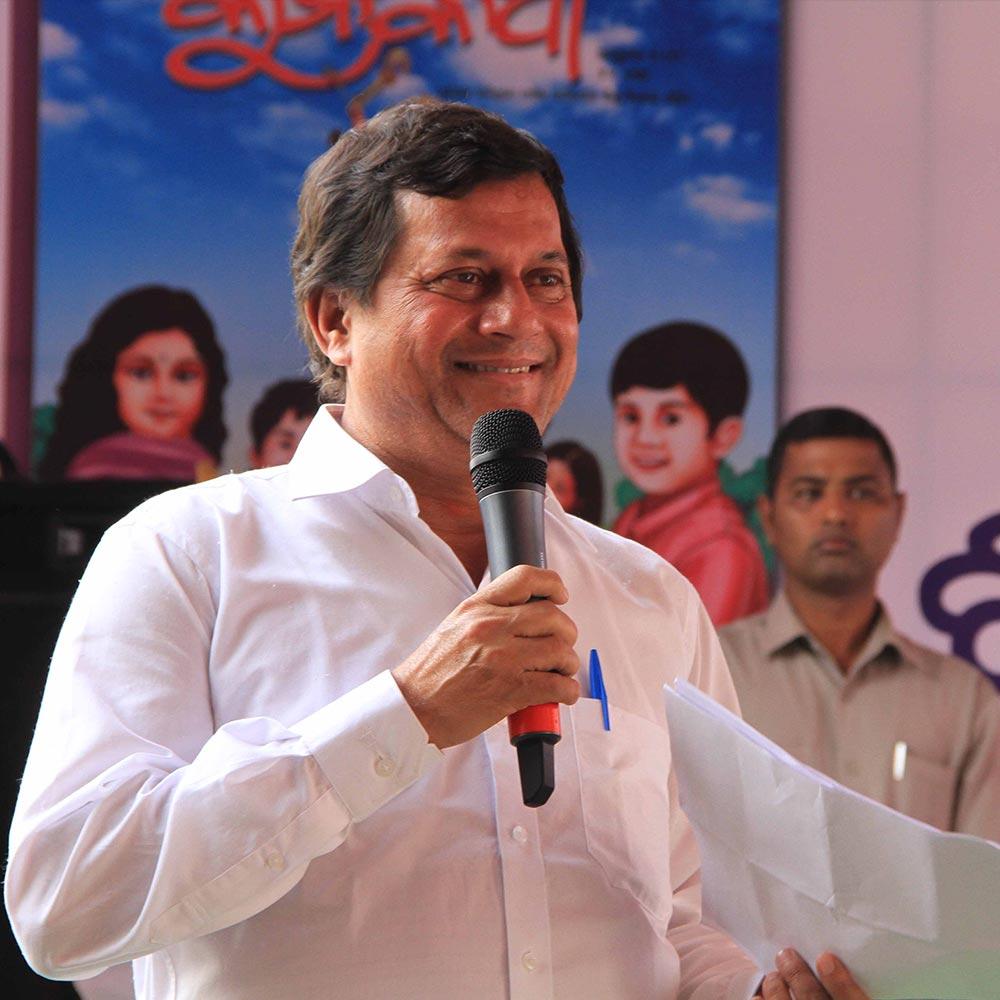
On May 22, 2026, at India House, the residence of the Ambassador of India in Bucharest, an official reception organized by the Embassy of India will be held in honor of Professor Achyuta Samanta, founder of KIIT (Kalinga Institute of Industrial Technology) and KISS (Kalinga Institute of Social Sciences), as well as the global Art of Giving movement. The event is part of diplomatic initiatives devoted to education, philanthropy, academic exchanges, and cultural dialogue between India and Romania.

At the invitation extended by the Embassy of India in Bucharest, AMN-Romania has confirmed the attendance of Mr. Andrei Gămulea, President of AMN-Romania, and Ms. Aurora Nicolae, Vice President of AMN-Romania. This participation reflects the ongoing openness of AMN-România to cultural and educational cooperation with India and an interest in learning firsthand about contemporary institutional models that put education in the service of human development, social solidarity, and responsible learning.

Professor Achyuta Samanta is recognized in India and international academic circles as a figure who has intrinsically connected higher education with social responsibility.

KIIT is now one of the leading higher education institutions in Bhubaneswar, Odisha, focused on professional training, research, technological development, and preparing young people for modern fields of applied knowledge. Alongside this university, KISS is a large-scale social and educational initiative dedicated to children and young people from tribal and Indigenous communities, providing access to education, residential support, and opportunities for dignified participation in society.
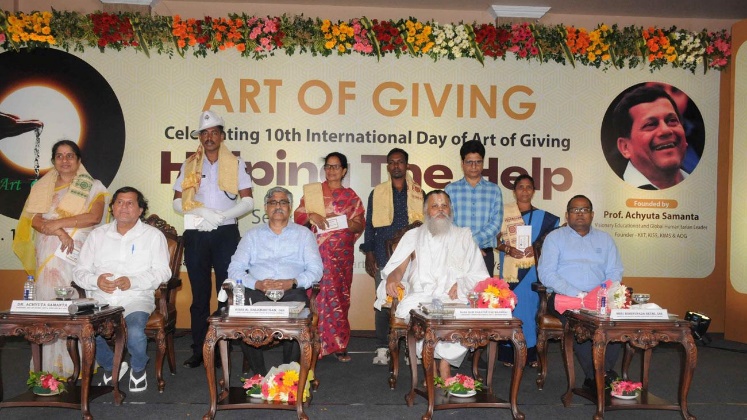
The meeting in Bucharest provides an opportunity for direct engagement with a contemporary Indian vision of education as a means of social transformation. From this perspective, philanthropy is understood as an organized form of human and social responsibility through which knowledge, institutional resources, time, attention, and compassion become tangible means of uplifting communities.

The Art of Giving movement, founded by Professor Achyuta Samanta, embodies this commitment to giving, generosity, compassion, and supporting others as values that can be cultivated in personal, educational, and social life.

For AMN-Romania, taking part in this event has particular significance. Over the years, the National Association for the Promotion of Non-Conventional Medicines has been dedicated to advancing systematic knowledge, intercultural dialogue, and authentic traditions of health and wisdom, with special emphasis on the traditional science of Ayurveda.
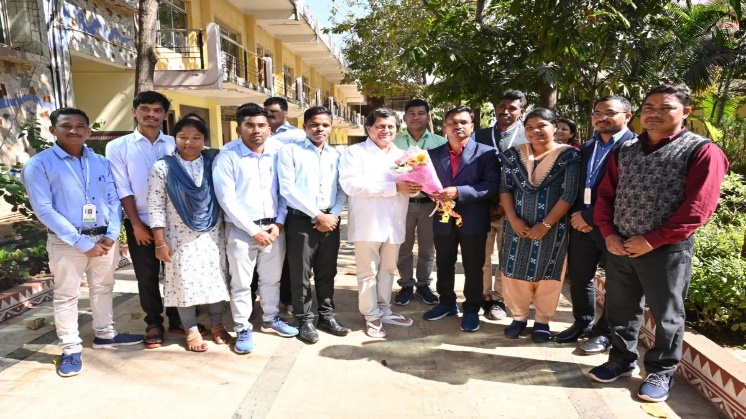
In this context, meeting an Indian leader who has brought together education, social inclusion, and philanthropy within a major institutional project offers an opportunity to reflect on how the traditional values of Indian culture can be expressed today through modern forms of organization, education, and community responsibility.

The event also confirms the active role of the Embassy of India in Bucharest in fostering cooperation between the two cultural spheres. Such encounters strengthen Romanian–Indian dialogue by bringing together institutions, people, educational projects, and initiatives capable of creating lasting connections.

Education, health, culture, the ethics of giving, and the development of younger generations are areas in which India and Romania can find many shared interests, fruitful connections, and converging priorities.

AMN-Romania appreciates the invitation and the opportunity to participate in an event dedicated to someone who has made education a path toward social transformation. The presence of its representatives reflects the interest of the community studying Ayurveda in Romania in educational initiatives and social responsibility.

From a broad Ayurvedic perspective, such initiatives can also be seen as expressions of a culture of social balance. A community becomes healthier when education, dignity, the continuity of values, and consideration for vulnerable people are integrated into sustained action.

Meeting Professor Achyuta Samanta provides a valuable opportunity to observe how India's humanistic principles can take shape in contemporary institutions, including those relevant to Romanian–Indian educational dialogue.

This participation confirms an interest in firsthand knowledge of contemporary initiatives that use education to elevate human beings and cultivate active social responsibility. In this sense, the event is an important meeting point for diplomacy, education, philanthropy, and the shared aspiration for a more aware, supportive society open to cooperation.
Contents

2

Contents of the current issue of the digital magazine Ayurveda Agenda

Editorial organization and section structure of Ayurveda Agenda issue 20/2026

Events

pp. 01–02

Contents

p. 03

Current updates

p. 03

Books and publications

pp. 04–05

Educational resources

pp. 05–10

🡺 Study level 01

p. 06

🡺 Study level 02

p. 07

🡺 Study level 03

p. 08

🡺 Study level 04

p. 08

🡺 Study level 05

p. 09

🡺 Platform features

pp. 09–11

🡺 Medicinal plants magazine

p. 12

Editorial information

Current updates

3

A new editorial model for the digital magazine Ayurveda Agenda

Placing the table of contents on the third page frees the first two pages of the magazine to highlight noteworthy events related to promoting Ayurveda in Romania.

The digital magazine's new editorial organization Ayurveda Agenda places the table of contents on the third page so that the first two pages can be devoted to major events in the promotion of Ayurvedic studies in Romania.

This editorial choice demonstrates the magazine's openness to representing, contextualizing, and highlighting significant moments that reflect the current presence of the Ayurvedic community.

The opening pages of a publication naturally establish the tone, direction, and importance of an issue. By featuring noteworthy events in this space, Ayurveda Agenda offers an immediate view of the meetings, collaborations, conferences, academic initiatives, and diplomatic occasions that help strengthen Ayurveda's presence in Romanian cultural life.

Moving the table of contents to page three places the summary where it best serves readers: they first encounter the current context of the issue, followed by its detailed structure.

This new editorial model supports a coherent, representative, and structured reading experience. It allows Ayurveda Agenda to serve both as a periodic source of information and as a record of important milestones in the current development of the social presence of people studying the traditional science of Ayurveda in Romania.

Through this reorganization, Ayurveda Agenda strengthens its role as a publication attentive to relevant events, people, and initiatives, offering readers both clearly organized information and an inspiring view of the ongoing promotion of Ayurveda in Romania within a constructive, interactive setting.

Books and publications

4

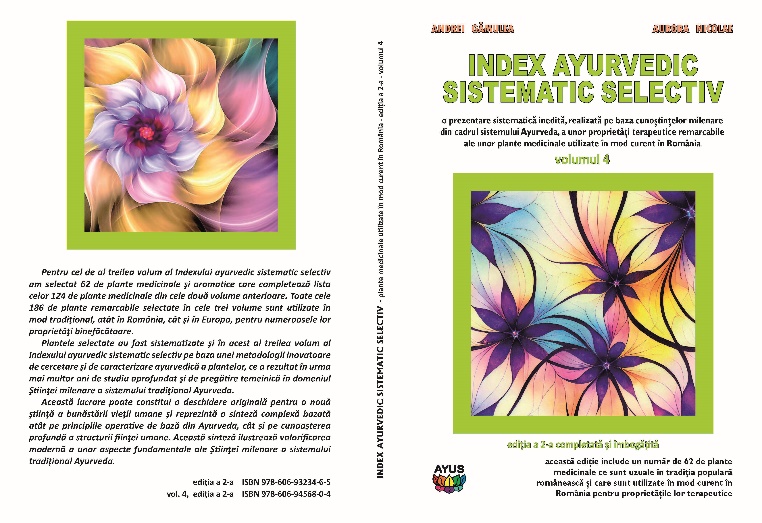
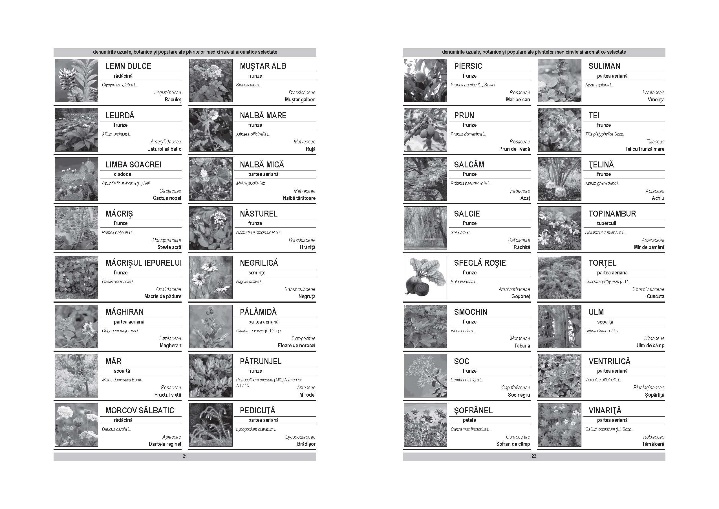
Selective Systematic Ayurvedic Index – medicinal plants from Romania – Volume 4 – December 2025

Continuing the presentation of the Ayurvedic system for characterizing medicinal plants traditionally used in Romania and Europe.

Selective Systematic Ayurvedic Index – Volume 4 is the newest volume in the series, published in December 2025. Volume 4 continues the systematic presentation of medicinal plants used in Romania and Europe, begun in the earlier volumes 1-3.

The 440-page book includes 62 medicinal plants, adding to the 186 plants covered in previous volumes. It forms part of the series authored by Andrei Gămulea and Aurora Nicolae and further explores the integration of European phytotherapy with the Ayurvedic perspective.

The work draws attention to medicinal plants that are sometimes less familiar or underused, examining them from an original perspective based on the traditional Ayurvedic system of channels (srota) in the human body.

Volume 4 highlights many specific therapeutic properties and actions of the selected plants, some formulated or updated in light of recent research in the field, as well as practical observations arising from their use in different folk traditions around the world.

These include actions described as resorptive, anti-echinococcal, phlebotonic, creatinine-lowering, urea-lowering, anti-dementia, nicotine-degrading, joint-toning, voice-enhancing, headache-relieving, androgen-stimulating, anti-rigidity, moisturizing, tendon-pain-relieving, nootropic, psychotonic, and neurotonic—properties relevant to a modern, more precise and nuanced understanding of the therapeutic potential of plants.

With its extensive, modern, systematic, and practical approach, Selective Systematic Ayurvedic Index – Volume 4 it is a valuable resource for studying phytotherapy and deepening our understanding of the relationship between medicinal plants, their therapeutic properties, and traditional Ayurvedic principles.

The book is available at: animaplant.ro/produs/index-ayurvedic-sistematic-selectiv-v4/

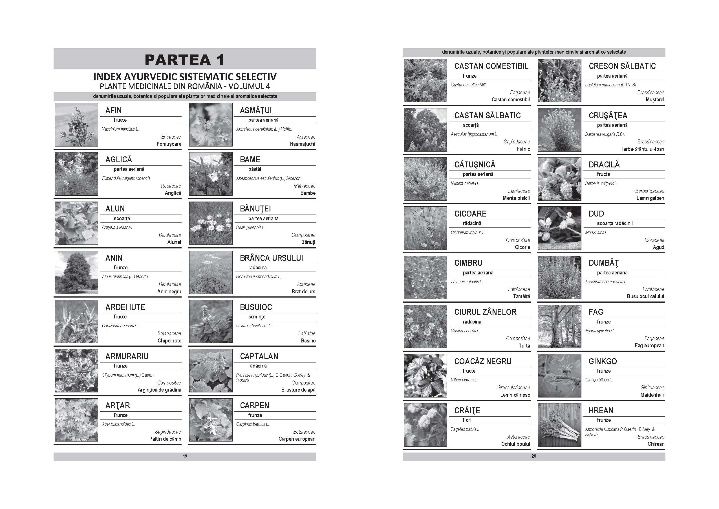
Native medicinal plants included in Volume 4 of the Ayurvedic Index

common name

plant part

botanical name

BILBERRY

fruits

Vaccinium myrtillus L.

DROPWORT

aerial parts

Filipendula vulgaris Moench

HAZEL

bark

Corylus avellana L.

BLACK ALDER

leaves

Alnus glutinosa (L.) Gaertn.

HOT PEPPER

fruits

Capsicum annuum L.

MILK THISTLE

leaves

Silybum marianum (L.) Gaertn.

NORWAY MAPLE

leaves

Acer platanoides L.

CHERVIL

aerial parts

Anthriscus cerefolium (L.) Hoffm.

OKRA

pods

Abelmoschus esculentus (L.) Moench

DAISY

aerial parts

Bellis perennis L.

COMMON HOGWEED

root

Heracleum sphondylium L.

BASIL

seeds

Ocimum basilicum L.

BUTTERBUR

root

Petasites hybridus (L.) G.Gaertn., B.Mey. & Scherb.

HORNBEAM

leaves

Carpinus betulus L.

SWEET CHESTNUT

leaves

Castanea sativa Mill.

HORSE CHESTNUT

bark

Aesculus hippocastanum L.

CATNIP

aerial parts

Nepeta cataria L.

CHICORY

root

Cichorium intybus L.

THYME

aerial parts

Thymus vulgaris L.

STEMLESS CARLINE THISTLE

root

Carlina acaulis L.

BLACKCURRANT

fruits

Ribes nigrum L.

FRENCH MARIGOLD

flowers

Tagetes patula L.

FIELD PEPPERWORT

aerial parts

Lepidium campestre (L.) R. Br.

WINTERCRESS

aerial parts

Barbarea vulgaris R.Br.

BARBERRY

fruits

Berberis vulgaris L.

DUD

root bark

Morus alba L.

WALL GERMANDER

aerial parts

Teucrium chamaedrys L.

BEECH

leaves

Fagus sylvatica L.

GINKGO

leaves

Ginkgo biloba L.

HORSERADISH

leaves

Armoracia rusticana P.Gaertn., B.Mey. & Scherb.

LICORICE

root

Glycyrrhiza glabra L.

WILD GARLIC

leaves

Allium ursinum L.

PRICKLY PEAR

cladodes

Opuntia ficus-indica (L.) Mill.

DOCK

leaves

Rumex patientia L.

WOOD SORREL

leaves

Oxalis acetosella L.

MARJORAM

aerial parts

Origanum majorana L.

APPLE

bark

Malus domestica Borkh.

WILD CARROT

root

Daucus carota L.

WHITE MUSTARD

leaves

Sinapis alba L.

MARSH MALLOW

leaves

Althaea officinalis L.

SMALL MALLOW

aerial parts

Malva pusilla Sm.

WATERCRESS

leaves

Nasturtium officinale R.Br.

BLACK CUMIN

seeds

Nigella sativa L.

CREEPING THISTLE

aerial parts

Cirsium arvense (L.) Scop.

PARSLEY

leaves

Petroselinum crispum (Mill.) Nyman ex A.W.Hil.

STAG'S-HORN CLUBMOSS

aerial parts

Lycopodium clavatum L.

PEACH

leaves

Prunus persica (L.) Batsch

PLUM

leaves

Prunus domestica L.

BLACK LOCUST

leaves

Robinia pseudacacia L.

WILLOW

leaves

Salix alba L.

BEETROOT

leaves

Beta vulgaris L.

FIG

leaves

Ficus carica L.

ELDER

leaves

Sambucus nigra L.

SAFFLOWER

petals

Carthamus tinctorius L.

BUGLEWEED

aerial parts

Ajuga reptans L.

LINDEN

leaves

Tilia platyphyllos Scop.

CELERY

leaves

Apium graveolens L.

JERUSALEM ARTICHOKE

tubers

Helianthus tuberosus L.

DODDER

aerial parts

Cuscuta epithymum (L.) L.

ELM

bark

Ulmus Campestris L.

SPEEDWELL

aerial parts

Veronica officinalis L.

SWEET WOODRUFF

aerial parts

Galium odoratum (L.) Scop.

Educational resources

Ayurveda – Study Level 1 – AY01

5

Two courses revised from the Svasthya-Darshana chapter on the principles of healing in the Ayurvedic tradition

Lessons 7 and 8 present healing from the perspective of energy transformation and inner awakening through the application of the operative principles of healing.

Lessons 7 and 8 are included in study level 1 (AY01), Dosha-Prakriti section (A01), chapter 2, Svasthya-Darshana (A2), and are available in easy-to-read A4 PDF and foldable A5 PDF formats. These two Ayurveda lessons have the following codes: AY01-A01-A2-C07 and AY01-A01-A2-C08.

Course titles and their place in the Basic Ayurveda Course curriculum

📁 AY01
 ├─ 📁 A01: Dosha-Prakriti
  │   ├─📁 A1: Ayurveda-Padartha
  │   ├─📁 A2: Svasthya-Darshana
  │   │   └─ 📄 Dosha-Prakriti_Svasthya-Darshana_C07&C08
  │   └─📁 A3: Prakriti-Nikasha
 ├─ 📁 B01: Amnaya
 └─ 📁 S01: Ayurveda-Parichaya

Energy processes and inner transformation in healing

Explanatory notes

Title: Dosha-Prakriti_Svasthya-Darshana_C07&C08

6

Three new lessons from the Prakriti-Nikasha chapter on sleep and its role in Ayurvedic constitutional assessment

Lessons 37, 38, and 39 present sleep as a major constitutional indicator, emphasizing the distinctive characteristics of vata, pitta, and kapha.

Lessons 37, 38, and 39 are included in study level 1 (AY01), Dosha-Prakriti section (A01), Chapter 3, Prakriti-Nikasha (A3), and are available in easy-to-read A4 PDF and foldable A5 PDF formats. These lessons have the following codes: AY01-A01-A3-C37, AY01-A01-A3-C38 and AY01-A01-A3-C39.

Course titles and their place in the Basic Ayurveda Course curriculum

📁 AY01
 ├─ 📁 A01: Dosha-Prakriti
  │   ├─📁 A1: Ayurveda-Padartha
  │   ├─📁 A2: Svasthya-Darshana
  │   └─📁 A3: Prakriti-Nikasha
  │         └─ 📄 Dosha-Prakriti_Prakriti-Nikasha_C37-C39
 ├─ 📁 B01: Amnaya
 └─ 📁 S01: Ayurveda-Parichaya

Sleep as a constitutional indicator in Ayurvedic assessment

Explanatory notes

Title: Dosha-Prakriti_Prakriti-Nikasha_C37-C39

Ayurveda – Study Level 2 – AY02

7

One course new from the Dosha-Vaisamya chapter on the signs of kapha-dosha imbalance

Lesson 23 presents the main signs of worsening kapha-dosha imbalance, highlighting stagnation, inertia, accumulation, and related behavioral disturbances.

Lesson 23 belongs to study level 2 (AY02) of study, the main Svasthavritta section (A02), Chapter Dosha-Vaisamya (A2), and is available both in A4 PDF, an easy-to-read format, and as A5 PDF, foldable, under the code: AY02-A02-A2-C23.

Course titles and their place in the Basic Ayurveda Course curriculum

📁 AY02
└─ 📁 A02: Svasthavritta
   ├─ 📁 A1: Tridosha-Guna
   └─ 📁 A2: Dosha-Vaisamya
          └─ 📄 Svasthavritta_Dosha-Vaisamya_C23

Some tendencies toward aggravated kapha-dosha in everyday life

Explanatory notes

Title: Svasthavritta_Dosha-Vaisamya_C23

8

Two courses revised from the Dosha-Sambandha chapter on the roles of doshas in human relationships

Lessons 1 and 2 explain the constitutional roles of the doshas and how they also subtly shape interpersonal relationships.

Lessons 1 and 2 belong to study level 2 (AY02) of study, the main Svasthavritta section (A02), Chapter Dosha-Sambandha (A4), and are available both in A4 PDF, an easy-to-read format, and as A5 PDF, foldable. These two lessons have the codes: AY02-A02-A4-C01 and AY02-A02-A4-C02.

Course titles and their place in the Basic Ayurveda Course curriculum

📁 AY02
└─ 📁 A02: Svasthavritta
   ├─ 📁 A1: Tridosha-Guna
   ├─ 📁 A2: Dosha-Vaisamya
   ├─ 📁 A3: Dosha-Samya
   └─ 📁 A4: Dosha-Sambandha
          └─ 📄 Svasthavritta_Dosha-Sambandha_C01&C02

The roles of the doshas and the dynamics of interpersonal relationships in Ayurveda

Explanatory notes

Title: Svasthavritta_Dosha-Sambandha_C01&C02

Ayurveda – Study Level 3 – AY03

9

Two courses revised from the Rasa chapter on taste and the meanings of the Sanskrit term rasa

Lessons 1 and 2 explain the therapeutic significance of taste and the multiple meanings of rasa in traditional Ayurvedic knowledge.

Lessons 1 and 2 belong to study level 3 (AY03), the Dravyaguna section (A03), the Rasa chapter (A2), and are available in easy-to-read A4 PDF and foldable A5 PDF formats. These two lessons have the codes: AY03-A03-A2-C01 and AY03-A03-A2-C02.

Course titles and their place in the Basic Ayurveda Course curriculum

📁 AY03
└─ 📁 A03: Dravyaguna
  ├─ 📁 A1: Dravya
  └─ 📁 A2: Rasa
     └─ 📄 Dravyaguna_Rasa_C01&C02

Taste as a therapeutic indicator and subtle experience in Ayurveda

Explanatory notes

Title: Dravyaguna_Rasa_C01&C02

Ayurveda – Study Level 4 – AY04

10

Two courses revised from the Sapta-Dhatu chapter on the first constituent (rasa-dhatu), its function (prinana), and subtle nourishment

Lessons 6 and 7 explain the subtle function of rasa-dhatu and explore why romantic love (prinana) is described in Ayurveda as a basis for understanding physical and emotional nourishment.

Lessons 4 and 5 belong to study level 4 (AY04), the Sharira-Jnana section (A04), the Sapta-Dhatu chapter (A2), and are available in easy-to-read A4 PDF and foldable A5 PDF formats. These lessons have the codes AY04-A04-A2-C06 and AY04-A04-A2-C07.

Course titles and their place in the Basic Ayurveda Course curriculum

📁 AY04
└─ 📁 A04: Sharira-Jnana
  ├─ 📁 A1: Avastha-Dhatu
  └─ 📁 A2: Sapta-Dhatu
     └─ 📄 Sharira-Jnana_Sapta-Dhatu_C06&C07

Romantic love (prinana) and the subtle nourishing function of rasa-dhatu

Explanatory notes

Title: Sharira-Jnana_Sapta-Dhatu_C06&C07

Features of the Written Support application

11

Two new features for quick access and accurate tracking of the study of written materials

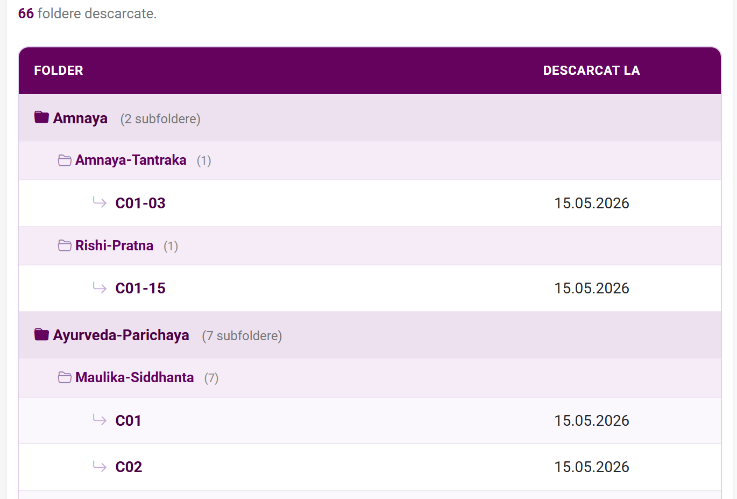
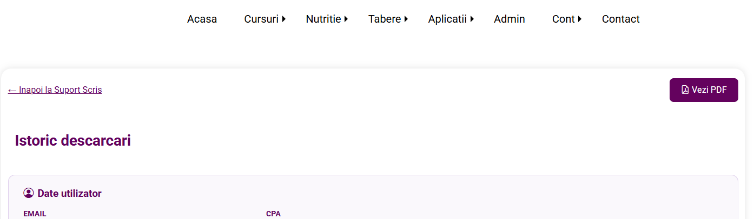
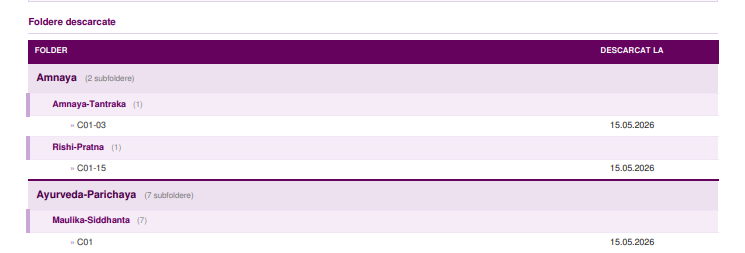
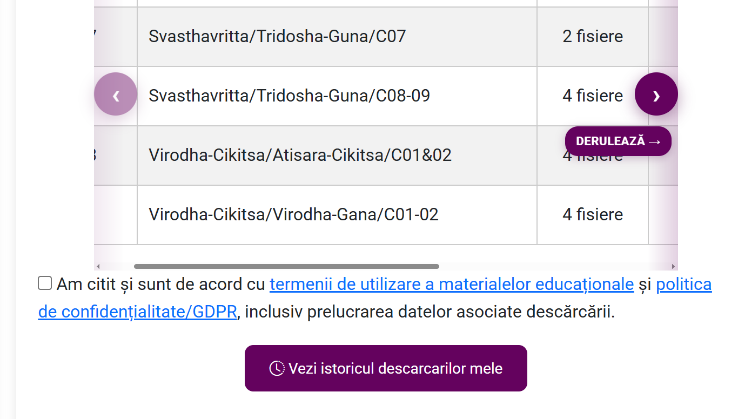
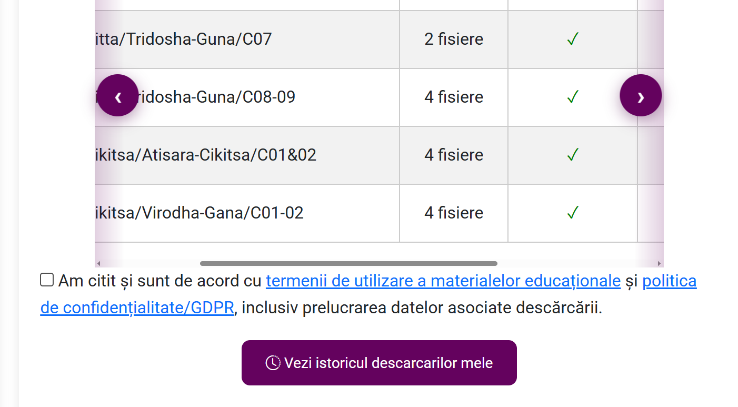
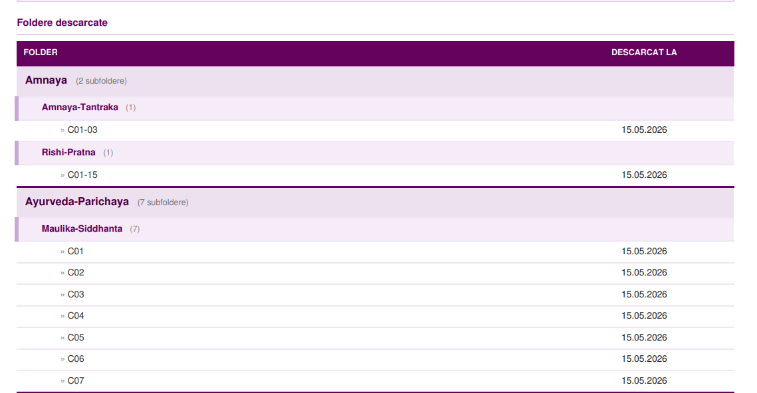
The Written Support application introduces a Personal Download Report, available on-screen and as a PDF export, along with intuitive horizontal scrolling for small screens.

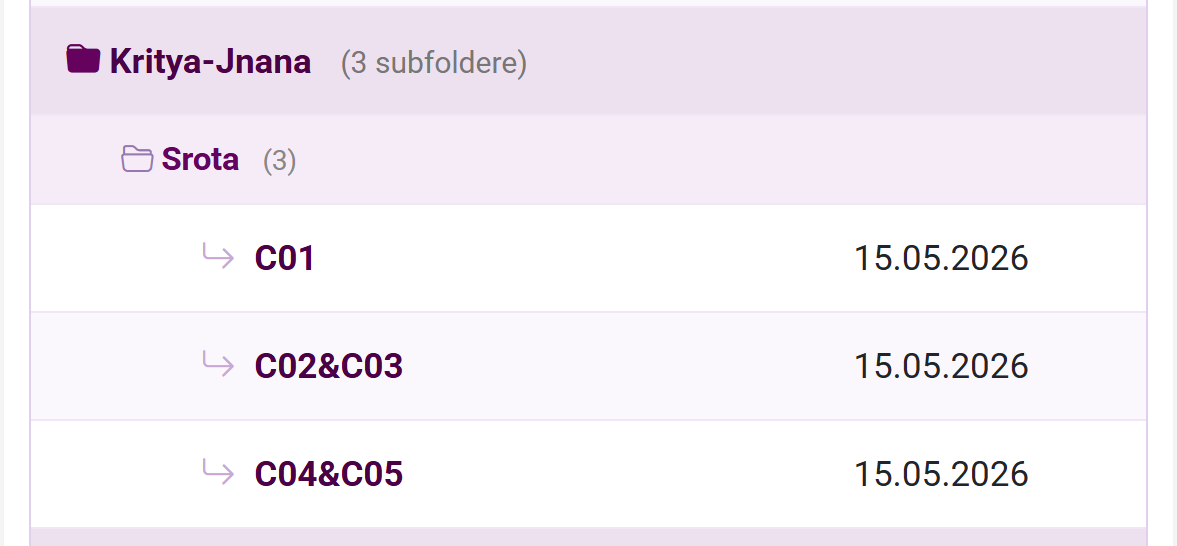
The new improvements to the “Written Support” page on the platform. address two practical needs of students, graduates, and lecturers: easier navigation, especially on small-screen devices, and a clear, organized, section-based record of downloaded course materials that can be reviewed periodically.

From this perspective, the two newly introduced features are practical tools for organizing study, checking progress through its stages, and accurately referencing educational resources available in the “Written Support”.

File Download History feature

Explanatory notes
Explanatory notes
Explanatory note
Explanatory notes
Explanatory note

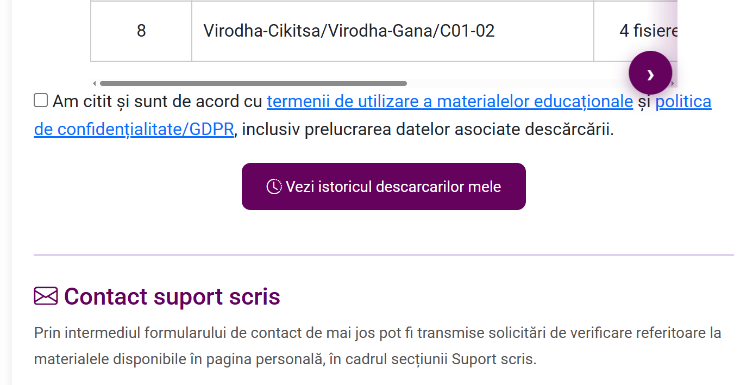
Horizontal screen navigation feature

Explanatory notes

The platform's two new features platform. complement each other. Smart horizontal scrolling improves visibility and navigation within the personal page, while the download report provides oversight, organization, and a way to periodically check previously accessed written resources.

The horizontal screen navigation feature helps users find archive download buttons and relevant information without difficulty.

The “File Download History” feature helps users know exactly which files they have available, which ones are missing, what they have downloaded, and how they can organize their personal study systematically and rigorously.

These new features improve the accessibility of the platform platform., support clear management of all available educational resources, and encourage a disciplined, individualized, structured, and well-documented approach to study.

12

The Written Support message box enables precise communication and efficient verification of educational materials

A useful tool for clear administrative requests and specific questions about written educational resources, with precise references to study materials.

The message box on the Written Support page was designed to facilitate prompt, clear requests concerning educational materials for the user's level of study.

Its main purpose is to allow users to report situations requiring review, updates, or administrative clarification directly, so that each request can be examined accurately and efficiently.

To use this feature effectively, readers are encouraged to consult the “Educational Resources” section of Ayurveda Agenda before sending a message, so that the request concerns specific issues that can be identified in relation to the announced materials.

The message box can also be used to ask questions about the content of written course materials. In such cases, the question should identify the relevant educational passage as precisely as possible, including the section, chapter, lesson number, page, column, and paragraph.

This method of referencing helps identify the passage immediately and allows a response based on the text being studied. The message box can support direct, focused communication about learning.

Access: ayushcell.ro/suport_scris

Digital Medicinal Plants Magazine

13

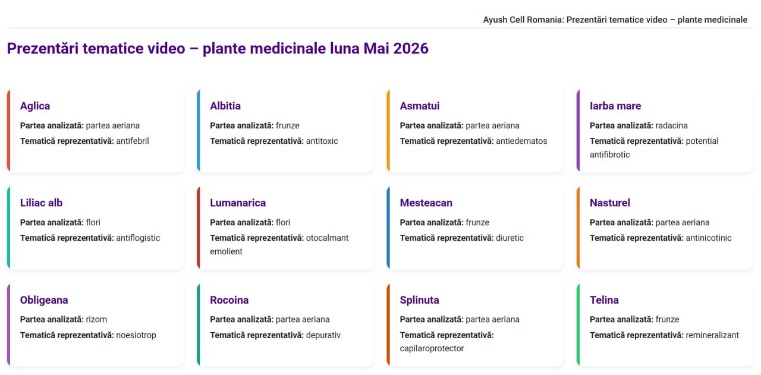
A new series of 12 presentations on the properties of medicinal plants – May 2026

May 2026 issue of the digital medicinal plants magazine: 12 additional valuable plant resources examined through their functions in 12 accessible video presentations.

Presentation: youtube.com/watch?v=Goho90Lqwfo

Exploring medicinal plants: traditional properties, functional applications, and practical uses in an easy-to-follow format

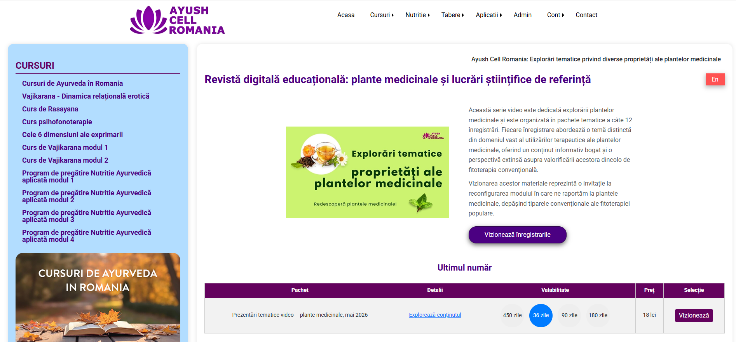
The May 2026 issue of the Digital Medicinal Plants Magazine has been released, continuing its series of thematic videos with a new selection of valuable plants explored from functional, traditional, and practical perspectives.

Explanatory notes

All plant presentations selected for this issue of the Digital Medicinal Plants Magazine are brought together in an accessible, updated format designed for quick identification of topics of interest.

Access to the video presentations is integrated into the platform infrastructure platform. and requires users to sign in. Those wishing to stay informed about recent releases can also subscribe to the newsletter.

Selective access to each monthly issue:
ayushcell.ro/prezentari_plante_medicinale