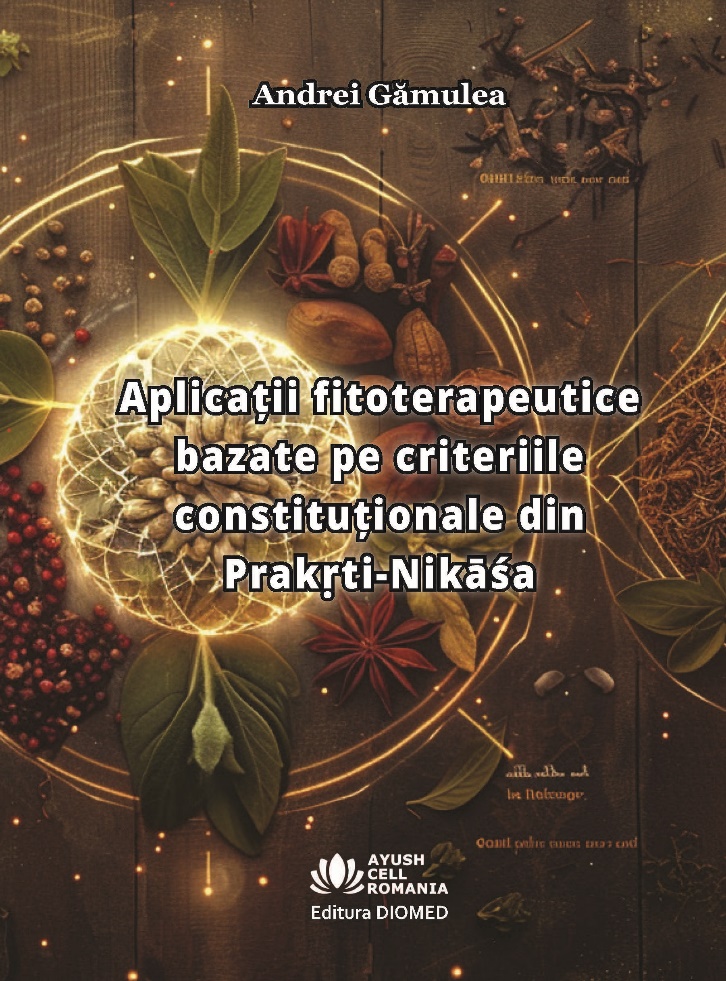
Phytotherapeutic Applications Based on Constitutional Criteria from Prakṛti-Nikāśa, 2026 Edition
The work presents the practical foundations of Ayurvedic constitutional assessment and how it can guide the selection of medicinal plants according to specific criteria.
The book “Phytotherapeutic Applications Based on Constitutional Criteria from Prakṛti-Nikāśa” develops the conceptual framework of the Prakṛti-Nikāśa branch of Ayurvedic constitutional analysis, highlighting the role of constitutional criteria in phytotherapeutic choices. This approach makes it possible to distinguish natural constitutional traits from tendencies toward imbalance, providing a basis for appropriate, selectively targeted intervention.
It explains the relationship between Ayurvedic constitutional structure and phytotherapy by correlating fundamental qualities. In this framework, phytotherapy is presented as a process of adapting to context, in which choices are calibrated to the predominance of the doṣa and the specific ways they manifest.
The work emphasizes the importance of constitutional criteria (nikāśa) as analytical tools that provide a nuanced understanding of physiological, psychological, and behavioral characteristics. These criteria serve as practical reference points for choosing phytotherapeutic interventions, helping to build a coherent, applicable model.
Ayurvedic constitutional assessment is presented as a dynamic process focused on prevention and early correction, allowing tendencies to be identified before imbalances become established. This perspective underscores Ayurveda's preventive and educational nature.
Integrating traditional concepts such as guṇa, doṣa-vṛtti, and nija-Prakṛti supports a deeper understanding of how a person's subtle structure influences concrete manifestations. On this basis, the selection of medicinal plants becomes precise and differentiated. When grounded in constitutional assessment, phytotherapy becomes a tool for overall harmonization. The result is an original practical model integrating constitutional assessment with phytotherapeutic selection in a unified preventive and corrective approach tailored to each individual.
Organization by Study Level, Section, and Chapter in the Ayurveda Course Structure
Clarifying the Educational Structure of the Ayurveda Course and Its Role in a Coherent Understanding of Ayurvedic Knowledge
In the study of Ayurveda, the term study level refers to a distinct stage of learning corresponding to a particular degree of complexity and conceptual understanding. Ayurveda course levels are conventionally coded (for example, AY01, AY02, AY06) and reflect progression from fundamental notions to increasingly specialized subjects, allowing the educational path to be structured coherently and helping students navigate the entire learning system.
A study level may correspond to a complete educational stage comparable to a university academic year, but it does not necessarily represent a predetermined period such as a year, semester, or quarter. Above all, it reflects achievement of educational objectives and completion of a particular body of subject matter; it is defined by knowledge acquired, rather than by a strict time limit.
Within each level, content is arranged into sections, which distinguish major subject areas and different kinds of educational activities. Sections within a study level may be of several types. The main section, designated A, is the core of the basic course and contains the essential curriculum concepts.
For example, at level AY01, section A01 addresses fundamental subjects relating to Ayurvedic constitutional typology (Dosha-Prakriti), serving as a central reference for understanding constitutional types in Ayurveda.
Type B sections contain complementary material, such as section B01 at level AY01, which covers Ayurvedic tradition (Amnaya-Tantraka). These subjects are generally covered in supplementary activities, such as seminars or thematic presentations, and are intended to expand and contextualize the basic course material.
Type S sections contain materials for independent study and further exploration. For example, section S01 at level AY01 offers introductory resources concerning the traditional Ayurvedic system (Ayurveda-Parichaya), providing supplementary reading without being part of the main course presentations.
Each section is divided into chaptersthat organize information into well-defined, narrower thematic units that are easier to work through. For example, in section A01, Dosha-Prakriti, chapter A1, Ayurveda-Padartha, introduces basic concepts and principles of Ayurveda; chapter A2 presents the Ayurvedic perspective on health (Svasthya-Darshana); and chapter A3 develops a practical approach to constitutional criteria (Prakriti-Nikasha), essential to constitutional assessment.
Within each chapter, lessons are numbered progressively starting at 1, enabling students to follow the material in a logical sequence, whether through guided instruction or independent study.
This organization into levels, sections, chapters and lessons has major educational value: it allows information to be organized rigorously, supports progressive learning, and makes the materials easy to navigate precisely. It also reflects, to some extent, the traditional systematization of knowledge found in classical Ayurvedic treatises, helping preserve a coherent and integrated perspective on Ayurveda while providing a stable framework for accumulating and connecting information over time.
Ayurveda – Study Level 1 – AY01
3
One course updated in the Ayurveda-Parichaya section on practical Ayurvedic methods
Lesson 2 lists a range of natural practical methods used in Ayurveda to maintain health, prevent illness, and support longevity through balance and awareness.
Lesson 2 belongs to study level 1 (AY01) of Ayurveda, in the supplementary Ayurveda-Parichaya section (S01), chapter 1, Maulika-Siddhanta (S1), and is available in easy-to-read A4 and foldable A5 PDF formats.
Practice in Ayurveda – Fundamental Methods for Maintaining Health and Longevity
Explanatory noteExplanatory notes
Archive name:
Ayurveda-Parichaya_Maulika-Siddhanta_C02
4
One course new in the Svasthya-Darshana series on refining constitutional perception
Lesson 17 examines the role of the human being's sheaths in refining observation and establishing a foundation for Ayurvedic constitutional analysis by integrating the levels of human existence (pancha-kosha).
Lesson 17 belongs to study level 1 (AY01), section Dosha-Prakriti (A01), chapter Svasthya-Darshana (A01A2), and is available as an easy-to-read A4 PDFand foldable A5 PDF.
From an Integrative Vision of the Human Being to Ayurvedic Constitutional Analysis
One course revised from the Avastha-Dhatu chapter on the functions of bodily constituents
Lesson 5 presents the functions of the seven bodily constituents and their role in maintaining the health and functional balance of the human being.
The lesson belongs to study level 4 (AY04), Sharira-Jnana section (A04), Avastha-Dhatu chapter (A04A1), and is available in easy-to-read A4 and foldable A5 PDF formats.
Sapta-Dhatu – Essential Functions of Bodily Constituents (dhatu) and Their Role in Human Health
Explanatory notes
Archive name: Sharira-Jnana_Avastha-Dhatu_C05
Ayurveda – Study Level 6 – AY06
6
One course new in the Manasa-Jnana series on the role of attribution in forming a limited identity
Lesson 2 presents the mechanisms of identity-based consciousness (ahamkara) and the role of the power of attribution in generating and sustaining the feeling of separate individuality.
The lesson belongs to study level 6 (AY06), Manasa-Jnana section (A06), Ahamkara chapter (A06A5), and is available in easy-to-read A4 and foldable A5 PDF formats.
Ahamkara and the Mechanism of Attribution – Formation and Transcendence of a Limited Identity
Explanatory notes
Archive name: Manasa-Jnana_Ahamkara_C02
Ayurveda – Study Level 32 – AY32
7
Three new lessons in the Siddhi-Sthāna series on differentiated application of enema therapy (basti)
Lessons 1–3 present principles for formulating and applying enema therapy (basti), emphasizing contextual assessment and the therapeutic discernment required.
The lessons belong to study level 32 (AY32), Siddhi-Sthana section (A32), Basti-Siddhi chapter (A32A2), and are available as easy-to-read A4 and foldable A5 PDFs. Basti-Siddhi is the tenth chapter of the Siddhi-Sthana section of the classical Ayurvedic work Caraka Saṃhitā. The Basti-Siddhi chapter (A32A2) is followed by the Phalamātrā-Siddhi chapter, whose updated designation is A32A3, replacing earlier designations.
Basti-Siddhi – Therapeutic Discernment and Differentiated Application of Ayurvedic Enema Treatment (basti)
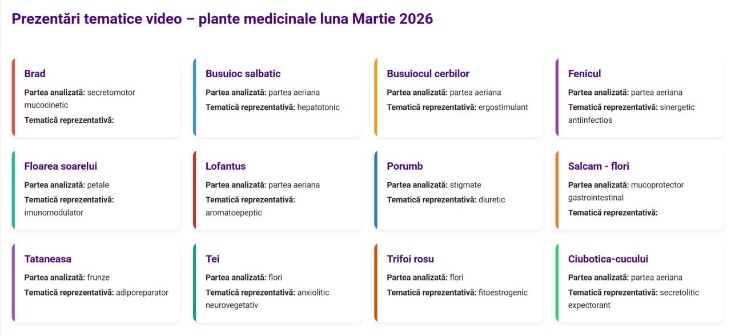
Digital Medicinal Plants Magazine: Presentation Series for March 2026
The New March 2026 Issue of the Digital Medicinal Plants Magazine: A New Series of 12 Valuable Plant Resources Analyzed Functionally in Accessible Video Presentations