Ayurveda Agenda Issue: 11 / 2026 Contents

Contents

Events

pp. 01–02

Books and publications

p. 02

Educational resources

pp. 03–05

🡺 Study Level 01

pp. 03–04

🡺 Study Level 04

p. 04

🡺 Study Level 06

p. 05

Current updates

pp. 06–08

Events

1

Meeting of AMN-România Ayurveda Instructors – Teaching Coordination Session – March 29

Thematic Discussion on Organizing Educational Activities and Access to Study Resources for Different Levels of Ayurveda Training

On March 29, 2026, starting at 11:00 a.m., another online meeting of Ayurveda instructors within AMN-România will take place. It will focus on coordinating educational activities and strengthening the informational support required to update and develop training programs for the Ayurveda course.

The purpose of this meeting is to provide Ayurveda instructors involved in training with an up-to-date framework for information and coordination. Its agenda includes several topics relevant to organizing and delivering ongoing Ayurveda education programs.

Among the subjects for discussion are online access to written course materials available on the dedicated educational platform, as well as clarifications regarding how these study materials are organized and managed in course participants' personal accounts.

Information resource: ayushcell.ro/suport_scris

The meeting will also review the structure of the Ayurveda course curriculum, organized into thematic sections and study chapters, to maintain a comprehensive approach throughout participants' educational journey and instructors' teaching activities.

Information resource: amnromania.ro/activitate/cursuri-de-ayurveda/subiecte-abordate/

Another agenda item is current information on the teaching and organizational activities of AMN-România Ayurveda instructors, with an emphasis on arranging educational activities.

Information resource: amnromania.ro/structura-cursurilor-de-ayurveda/

The meeting will also present the current state of development and promotion of the digital magazine “Ayurveda Agenda,” along with its structure, which includes sections devoted to educational events, specialist publications, educational resources, and news about Ayurveda activities.

Information resource: ayushcell.ro/ayurveda_agenda
This periodic meeting forms part of AMN-România's ongoing efforts to maintain a structured educational environment based on relevant information, collaboration, exchanges of experience, and stronger standards for Ayurveda education in Romania. The meeting is coordinated by Andrei Gămulea, president of AMN-România.

This event is part of the internal programs organized by the National Association for the Promotion of Non-Conventional Medicines, intended to provide a solid foundation for developing Ayurveda educational activities in Romania.

Information resource: amnromania.ro/activitate/cursuri-de-ayurveda/

Both instructors currently teaching Ayurveda within AMN-România and those who have done so previously may attend. Instructors can participate through the meeting link shared via AMN-România communication channels or by requesting the access link directly.

Instructors choosing this option may send a request to the email address ayurvedaromania@gmail.com, with the subject line “Request for Participation Link – March 29, 2026.” The request should also include the Ayurvedic Practitioner Code (CPA).

Information resource: amnromania.ro/ayurveda/
Books and publications

2

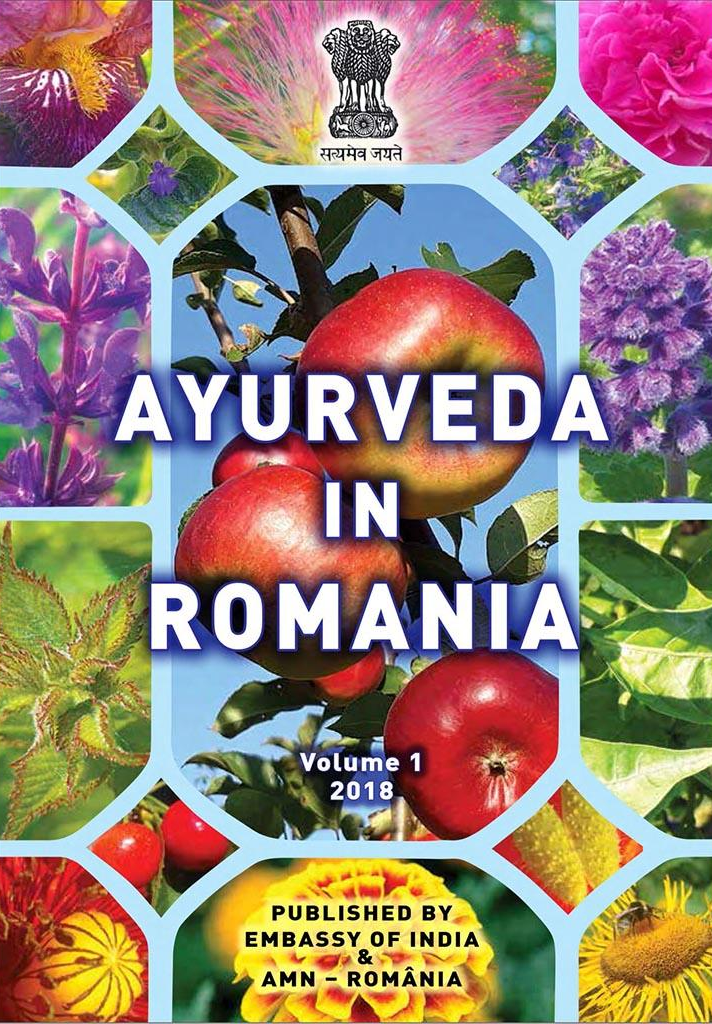
Ayurveda in Romania – Volume 1 – 2018 Edition – English Edition

“Ayurveda in Romania” – Volume 1 – English Edition, Available to International Readers

The first volume of the “Ayurveda in Romania” series, published in English, provides international readers with a systematic overview of the main milestones marking the beginning and development of Ayurvedic studies in Romania.

The work aims to present as broad and complete a picture as possible of how Ayurveda began to be studied and integrated into Romania within a European cultural and educational context.

The book is available at: animaplant.ro/produs/ayurveda-in-romania-vol-1-en/

Educational resources

Educational Resources for Ayurveda Course Study Level 1 (AY01)

3

One course updated in the Ayurveda-Parichaya section on the fundamentals of Ayurveda

Lesson 1 presents the distinctive nature of the Ayurvedic perspective and the essential guidelines for applying Ayurveda to lifestyle choices.

This lesson belongs to study level 1 (AY01) of Ayurveda, in the supplementary Ayurveda-Parichaya section (S01), chapter 1, Maulika-Siddhanta (S1). It is available as easy-to-read A4 and foldable A5 PDFs. This course provides the introductory foundation needed to understand the principles of Ayurveda and begins the Maulika-Siddhanta chapter's course series.

The Ayurveda-Parichaya section (S01) is a supplementary section containing educational materials for personal, complementary, optional study alongside the Level 1 Ayurveda course (AY01).

The Unique Perspective Offered by the Ancient Ayurvedic Tradition

Explanatory notes

Archive name:

Ayurveda-Parichaya_Maulika-Siddhanta_C01

4

One course new in the Svasthya-Darshana series on the structure of the human being in Ayurvedic tradition

Lesson 16 describes how Ayurvedic tradition understands the human being's inner structure through five sheaths (kosha) and their relationship to the three bodies.

Lesson 16 is part of study level 1 (AY01), section Dosha-Prakriti (A01), chapter Svasthya-Darshana (A01A2), and is available as A4 PDF, in an easy-to-read format, and as a foldable A5 PDF. This new course provides practical conceptual tools for understanding the subtle dimensions of the human being as described in Ayurvedic tradition and deepens the perspective on the relationship between levels of existence (kosha), consciousness, and self-knowledge.

The Five Sheaths of the Human Being – The Ayurvedic Perspective on the Structure of the Human Sheaths (pancha-kosha)

Explanatory notes

Archive name: Dosha-Prakriti_Svasthya-Darshana_C16

Educational Resources for Ayurveda Course Study Level 04 (AY04)

5

One course revised in the Sharira-Jnana series on the structure of the body

Lesson 4 highlights the role of the seven bodily constituents (dhatu) and the transformative processes occurring within the body's living substance.

The lesson belongs to study level 4 (AY04), Sharira-Jnana section (A04), Avastha-Dhatu chapter (A04A1), and is available as easy-to-read A4 and foldable A5 PDFs.

The Seven Bodily Constituents – The Foundation of Bodily Structure in Ayurveda

Explanatory notes

Archive name: Sharira-Jnana_Avastha-Dhatu_C04

Educational Resources for Ayurveda Course Study Level 06 (AY06)

6

One course new in the Manasa-Jnana series on the role of sensory awareness (manas)

Lesson 1 introduces the role of sensory awareness (manas), showing how it gathers, organizes, and conveys sensory impressions to higher structures.

The lesson belongs to study level 6 (AY06), Manasa-Jnana section (A06), Manas chapter (A06A4), and is available as easy-to-read A4 and foldable A5 PDFs. This new lesson opens the Manas chapter (A06A4), 2026 edition.

Sensory Awareness (manas) – The Gateway Between the Human Being and the World of Perception

Explanatory notes

Archive name: Manasa-Jnana_Manas_C01

7

One course new in the Manasa-Jnana series on the role of identity-based consciousness (ahamkara)

Lesson 1 presents the function of identity-based consciousness (ahamkara) within the internal instrument of consciousness (antahkarana).

The lesson belongs to study level 6 (AY06), Manasa-Jnana section (A06), Ahamkara chapter (A06A5), and is available as easy-to-read A4 and foldable A5 PDFs. This new course opens the Ahamkara chapter series (A06A5), 2026 edition. Ahamkara is the fifth chapter of the Manasa-Jnana section, following the Manas chapter.

Identity-Based Consciousness (ahamkara) and Its Role in the Instrumental Structure of Consciousness

Explanatory notes

Archive name: Manasa-Jnana_Ahamkara_C01

Access: ayushcell.ro/suport_scris

Current updates

8

A Video Presentation in the Series on Ayurvedic Tradition (Amnaya): Sage Aśmarathya

The Ayurvedic sage Aśmarathya is a representative figure in Ayurvedic tradition, illustrating continuity between precision in ritual practice and precision in healing.

The Connection Between Cosmic Order and the Science of Life in Ayurvedic Tradition

Explanatory notes
Access: ayushcell.ro/traditia_ayurvedica/ashmarathya
9

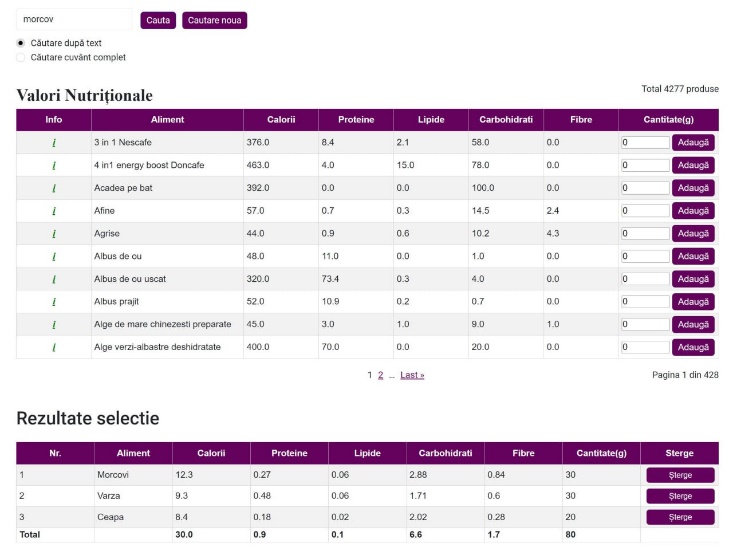
A Nutritional Calculation Application Useful in the Study of Ayurvedic Nutrition

A digital tool for quickly assessing the nutritional composition of foods and estimating the calorie content of meals.

The nutrition calculator on the ayushcell.ro website offers a simple, effective way to analyze the nutritional values of foods consumed. Using an extensive database and automated calculations, users can determine calories, protein, fat, carbohydrates, and fiber for various foods and combinations.

The application contains a database of more than 4,000 foods, each with detailed nutritional information. Its search function makes it easy to find foods by name or partial words. The application includes automatic calculation and results-display features.

The application is a useful tool for monitoring daily food intake.

Access: ayushcell.ro/aplicatie-calcul-nutritional
10

Updated Organization of Ayurveda Educational Resources by Study Level

Organization of Educational Resources by Study Level, Section, and Chapter Within the Ayurveda Course Curriculum

The educational resources featured on the platform and in Ayurveda Agenda are organized systematically to support progressive study and help students navigate the training process.

For clarity and ease of use, materials are grouped by study level, each identified by a specific code such as AY01, AY02, AY03, and so on. Each level corresponds to a distinct stage in the educational journey and brings together materials appropriate to that degree of study.

Within each level are several types of sections, each with a clearly defined educational purpose. Sections labeled A are the main course sections for that study level. They contain materials belonging to the core Ayurveda curriculum and presented during the principal teaching activities.

The fundamental chapters within these A sections are arranged in a logical sequence so that students can work through the information progressively.

Alongside each level's core section (section A), other types of sections may be available at the same level to broaden or supplement the learning process.

Complementary sections labeled B are devoted to alternative study through seminars, additional presentations, or activities related to the basic Ayurveda course.

These B sections address subjects that supplement or expand aspects of the core curriculum (A sections), providing further perspectives or deeper thematic exploration. They extend the scope of study without altering the fundamental structure of the main curriculum.

Each level may also include supplementary sections labeled S, which contain educational resources intended primarily for reading and individual study. These materials are not part of the presentations included in the core Ayurveda curriculum and are not used directly in the main teaching activities. Their purpose is to provide additional reference material so that interested students and readers can explore selected topics in greater depth or broaden their knowledge through structured reading.

The organization by level and section type makes educational resources easy to identify by training level, educational activity, and their role in learning.

This approach helps maintain a coherent collection of learning materials and enables gradual access to information suited to participants' preparation.

Below is an updated example showing how all educational resources mentioned in issues 1–11 of the digital magazine Ayurveda Agenda are organized by study level. They are grouped by sections (including the three types A, B, and S described above), chapters, and course archives.

Ayurveda Study Level 1 (AY01)

📁 AY01
├─ 📁 A01
│   ├─ 📁 A1
│   │   └─ 📄 Dosha-Prakriti_Ayurveda-Padartha_C19&C20
│   ├─ 📁 A2
│   │   ├─ 📄 Dosha-Prakriti_Svasthya-Darshana_C09-14
│   │   ├─ 📄 Dosha-Prakriti_Svasthya-Darshana_C01&C15
│   │   └─ 📄 Dosha-Prakriti_Svasthya-Darshana_C16
│   └─ 📁 A3
│       ├─ 📄 Dosha-Prakriti_Prakriti-Nikasha_C08-12
│       ├─ 📄 Dosha-Prakriti_Prakriti-Nikasha_C27-31
│       ├─ 📄 Dosha-Prakriti_Prakriti-Nikasha_C25-26_C32-33
│       └─ 📄 Dosha-Prakriti_Prakriti-Nikasha_C34-36
├─ 📁 B01
│   ├─ 📁 B1
│   │   └─ 📄 Amnaya_Amnaya-Tantraka_C01-03
│   └─ 📁 B3
│       └─ 📄 Amnaya_Rishi-Pratna_C01-15
└─ 📁 S01
    └─ 📁 S1
        └─ 📄 Ayurveda-Parichaya_Maulika-Siddhanta_C01
📁 AY02
└─ 📁 A02
    ├─ 📁 A1
    │   └─ 📄 Svasthavritta_Tridosha-Guna_C08-09
    └─ 📁 A2
        ├─ 📄 Svasthavritta_Dosha-Vaisamya_C12-19
        └─ 📄 Svasthavritta_Dosha-Vaisamya_C20-22
📁 AY04
└─ 📁 A04
    └─ 📁 A1
        ├─ 📄 Sharira-Jnana_Avastha-Dhatu_C01
        ├─ 📄 Sharira-Jnana_Avastha-Dhatu_C02&C03
        └─ 📄 Sharira-Jnana_Avastha-Dhatu_C04

Ayurveda Study Level 2 (AY02)

Ayurveda Study Level 4 (AY04)

Ayurveda Study Level 6 (AY06)

Study level 6 of the Ayurveda course (AY06) currently includes (as of Ayurveda Agenda issue 11) educational materials from three distinct chapters of the Manasa-Jnana section (A06): chapters 2, 4, and 5.

📁 AY06
└─ 📁 A06
    ├─ 📁 A2
    │   ├─ 📄 Manasa-Jnana_Citta_C01-07
    │   ├─ 📄 Manasa-Jnana_Citta_C08-16
    │   ├─ 📄 Manasa-Jnana_Citta_C17
    │   └─ 📄 Manasa-Jnana_Citta_C18&C19
    ├─ 📁 A4
    │   └─ 📄 Manasa-Jnana_Manas_C01
    └─ 📁 A5
        └─ 📄 Manasa-Jnana_Ahamkara_C01
📁 AY10
└─ 📁 A10
    └─ 📁 A1
        └─ 📄 Nidana-Sthana_Sandhana-Karaniya_C12-C14
📁 AY15
└─ 📁 A15
    └─ 📁 A1
        └─ 📄 Virodha-Cikitsa_Virodha-Gana_C01-02
📁 AY32
└─ 📁 A32
    └─ 📁 A1
        └─ 📄 Siddhi-Sthana_Phalamatra-Siddhi_C01-03

Ayurveda Study Level 10 (AY10)

Ayurveda Study Level 15 (AY15)

Ayurveda Study Level 32 (AY32)

Archive Structure for Educational Resources Featured in Issues 1–11 of Ayurveda Agenda

Explanatory note

Level

Section

Chapter

Archive name

AA

AY01

A01

A1

Dosha-Prakriti_Ayurveda-Padartha_C19&C20

10

AY01

A01

A2

Dosha-Prakriti_Svasthya-Darshana_C01&C15

9

AY01

A01

A2

Dosha-Prakriti_Svasthya-Darshana_C09-14

5

AY01

A01

A2

Dosha-Prakriti_Svasthya-Darshana_C16

11

AY01

A01

A3

Dosha-Prakriti_Prakriti-Nikasha_C08-12

2

AY01

A01

A3

Dosha-Prakriti_Prakriti-Nikasha_C25-26_C32-33

7

AY01

A01

A3

Dosha-Prakriti_Prakriti-Nikasha_C27-31

3

AY01

A01

A3

Dosha-Prakriti_Prakriti-Nikasha_C34-36

8

AY01

B01

B1

Amnaya_Amnaya-Tantraka_C01-03

6

AY01

B01

B3

Amnaya_Rishi-Pratna_C01-15

6

AY01

S01

S1

Ayurveda-Parichaya_Maulika-Siddhanta_C01

11

AY02

A02

A1

Svasthavritta_Tridosha-Guna_C08-09

2

AY02

A02

A2

Svasthavritta_Dosha-Vaisamya_C12-19

1

AY02

A02

A2

Svasthavritta_Dosha-Vaisamya_C20-22

4

AY04

A04

A1

Sharira-Jnana_Avastha-Dhatu_C01

9

AY04

A04

A1

Sharira-Jnana_Avastha-Dhatu_C02&C03

10

AY04

A04

A1

Sharira-Jnana_Avastha-Dhatu_C04

11

AY06

A06

A2

Manasa-Jnana_Citta_C01-07

1

AY06

A06

A2

Manasa-Jnana_Citta_C08-16

2

AY06

A06

A2

Manasa-Jnana_Citta_C17

8

AY06

A06

A2

Manasa-Jnana_Citta_C18&C19

10

AY06

A06

A4

Manasa-Jnana_Manas_C01

11

AY06

A06

A5

Manasa-Jnana_Ahamkara_C01

11

AY10

A10

A1

Nidana-Sthana_Sandhana-Karaniya_C12-C14

3

AY15

A15

A1

Virodha-Cikitsa_Virodha-Gana_C01-02

8

AY32

A32

A1

Siddhi-Sthana_Phalamatra-Siddhi_C01-03

4